Kiev, June 29, 2026
 Photo: uoc-news.church
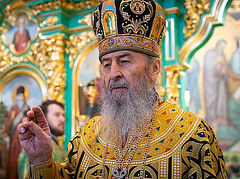
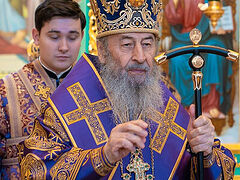
In his Sunday homily, His Beatitude Metropolitan Onuphry of Kiev and All Ukraine reflected on the Gospel account of the healing of the centurion’s servant, drawing from it a teaching on the nature of genuine faith and its inseparable companion, humility.
The Metropolitan then turned to the spiritual lesson at the heart of the passage: “There are two kinds of faith,” His Beatitude said, reports the Information-Education Department of the UOC. “There is faith of the mind and faith of the heart.”
Faith of the mind, he explained, is born from hearing or reading the word of God—from someone telling us about God, from Scripture, or from the voice of conscience. It produces a genuine intellectual conviction that God exists and is the creator of the world. However, the Metropolitan cautioned that this form of faith is insufficient for salvation. “A man who has faith of the mind can live entirely by his own rules, not by God’s laws,” he said.
Faith of the heart, by contrast, is born from actually living according to God’s commandments—from entrusting oneself to the will of God. Through this lived experience, a man comes to know in practice that nothing is accomplished by human strength alone.
“When a man lives according to God’s commandments, he becomes convinced many times over that even when he wants to do something good, it’s God Who helps—and without that help, it can’t be done,” he said.
Met. Onuphry identified humility as the defining mark that distinguishes faith of the heart from faith of the mind. Whereas intellectual faith often tends toward pride—a sense of knowing more than others—genuine heart-faith produces the opposite disposition. “When a person has faith of the heart, humility is its companion,” he said. This was precisely the spirit the centurion demonstrated: instead of rejoicing that the Savior would honor his home with a visit, he declared himself unworthy of it.
The Metropolitan acknowledged that walking the path of the Divine commandments and truly entrusting oneself to God isn’t easy. “It requires an effort of will. It requires patience and suffering, many times over,” he said. Yet the soul that sets out on this path already begins to experience an inner spiritual sweetness—“like a child who hasn’t yet been brought to its mother, but already sees her and rejoices.”
He concluded by calling this life of entrusting oneself to God the blessed life for which humanity was created—the life that leads to eternal salvation, and for which the Lord Himself came to earth, to restore the lost Paradise and to grant mankind the strength, hope, and love that lead to life everlasting.
Follow OrthoChristian on Facebook, Twitter, Vkontakte, Telegram, WhatsApp, and MeWe!