In the name of the Father, and of the Son, and of the Holy Spirit!
Dear brothers and sisters, over the course of the many centuries of its existence, the Church has considered the issue of Church unity to be very important, that all Christians who truly believe in Christ should be part of the one Church, having the opportunity to commune together of the Holy Mysteries of Christ and participate in the other Sacraments of the Church.
Unity is the most important value and the main goal of the Church’s existence, and we Orthodox Christians are all called to strive to build a united Church during our earthly lives. This unity depends not only on the bishops of our Orthodox Church, on its clergy, on its theologians, but also on every one of us, on our deeds—our words and actions—which we direct outwards to those around us.
One of the most significant problems, which has often been a source of division in the Church, is the commitment of certain Christians to the teachings, theology, or pastoral authority of a single priest, bishop, or teacher. In the Epistle reading today, we heard the words of the Apostle Paul, addressed to the Corinthians, in which he reproaches the inhabitants of this large ancient city for neglecting the unity of the Church in favor of glorifying what they considered to be great teachers. Some in Corinth said they were of Paul, some of Apollos, some of Cephas, that is, Peter, and others were attached to other teachers and teachings. They all formed a single Orthodox Church, but within this unity they were divided into various groups, arguing about certain aspects of Church life. Such disputes have remained throughout the existence of the Church.
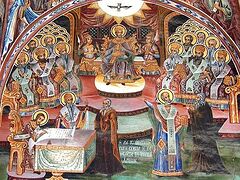
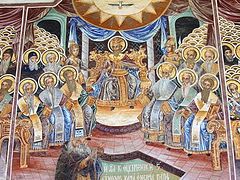
Today [the Eighth Sunday After Pentecost], the Church honors the memory of the Fathers of the first Six Ecumenical Councils, who opposed various heretical teachings, denounced heresiarchs, and articulated the true dogmas of the Church. Quite often, false teachings arose from this very partisanship, from adherence to a certain authority without for the Gospel truth, and without an inner search for the genuine truth in Christ. The Church denounces this and calls every Christian to be united in Christ, as the Apostle Paul writes in his Epistle to the Corinthians: All who abide in the one Church belong first of all to Christ, and only then do we adhere to this or that authority, including our spiritual fathers, other priests, and theologians. We’re called to be united around the Gospel truth and the testimony that the Lord has left us (cf. 1 Cor. 1:10–18).
It’s not uncommon for us to have disputes about important, and often minor, things. How to make the sign of the Cross, how to pray, how to fast, how often to commune, how much to be well-disposed toward our neighbors, where to make allowances for them, and where to firmly stand up for the truth. There’s disagreement about these things in the Church. Many spiritual fathers teach us different approaches to various practical questions of Church life. But we have to remember that these sometimes important questions should by no means become a source of division within the one Orthodox Church; they mustn’t erect an impenetrable wall between us and other Orthodox Christians, who are part of one Church. We must understand that within the Church there are sometimes different positions on the same questions, and various opinions and approaches are possible. And what we choose for ourselves as the norm shouldn’t always and in every case be the same for other faithful children of our Orthodox Church.
 Let us remember, dear brothers and sisters, the necessity of being united in Christ, of being united in our Church, and not to allow any divisions, misunderstandings, still less disputes, quarrels, and discord of any kind, either within ourselves or within our Church community.
Today we will commune together of the Holy Mysteries of Christ. People are very different, but we will partake together of the Body and Blood of our Lord from the chalice, and become truly brothers and sisters, closer than is possible even in the kinship of the flesh. And when we commune together from the same chalice, is it really possible after that to feel hostility and to take part in disputes and quarrels about various issues?
Let us strive for peace in our souls, for peace and unity in Christ. And if we can draw closer to the Kingdom of Heaven in our hearts, if we can strive to receive everyone in our hearts, and especially our brothers and sisters in Christ, then we’ll truly draw near to the Kingdom of Heaven, and all together we will be only Christ’s.
Amen.