Kumanovo, North Macedonia, September 23, 2026
 Photo: liturgija.mk
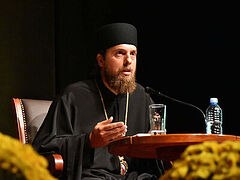
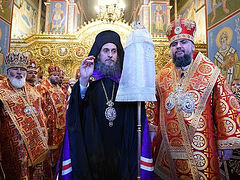
His Eminence Metropolitan Grigorij of Kumanovo and Osogovo of the Macedonian Orthodox Church-Ohrid Archbishopric has published a detailed canonical analysis arguing that the autocephaly granted to the Macedonian Church by the Serbian Orthodox Church (SPC) in 2022 is legally final and beyond challenge, and that the Patriarchate of Constantinople has no authority to reopen or duplicate it.
The Macedonian Church spent 55 years in schism after breaking from Serbia in 1967. That ended in 2022: Constantinople restored its own communion with the MOC in May, then it returned to the Serbian Church as an autonomous body, which restored it to communion with the whole of Orthodoxy.
Weeks later, on June 5, Serbian Patriarch Porfirije handed Archbishop Stefan of Ohrid a tomos of autocephaly. The Churches of Russia, Bulgaria, Romania, Poland, the Czech Lands and Slovakia, Ukraine, and the Orthodox Church in America have since recognized it. Constantinople and a few other Churches, however, haven’t recognized MOC autocephaly.
Metropolitan Grigorij grounds his argument in the Fourth (1993) and Fifth (2015) Pre-Conciliar Commissions in Chambésy, which he says establish that only a Mother Church—not Constantinople—can grant autocephaly to its own territory. Constantinople’s role, he writes, is limited to its “honorary” duty of circulating the decision for consensus; invoking the maxim nemo dat quod non habet (“no one gives what he does not have”), he insists Constantinople cannot claim authority the Commissions never granted it.
Borrowing concepts from administrative law—finality, enforceability, res judicata—he argues the Serbian tomos became final and unchallengeable the moment it was issued, since the Macedonian Church has no interest in contesting a decision that gave it exactly what it sought. He extends this to a hypothetical Bulgarian claim over wartime-era jurisdiction in Macedonia, dismissing it outright: jurisdiction imposed under military occupation, he writes, “cannot serve as a legitimate legal foundation.”
The Metropolitan reserves his sharpest criticism for Constantinople’s inaction, calling Patriarch Bartholomew’s refusal to process the tomos an unlawful omission rather than neutral delay. He accuses the Patriarch of “judicial activism”—deciding matters by political preference rather than canon law—and draws a direct parallel to Constantinople’s 2019 tomos for the schismatic “Orthodox Church of Ukraine,” granted unilaterally and recognized by only three Churches. Any similar move on the Macedonian Church, he warns, would be actus non legitimus, since Constantinople has no jurisdiction over what was Serbian canonical territory.
He closes with a broader warning that Constantinople’s ambitions extend toward centralized authority over canonization, episcopal judgment, and Patriarchal enthronement Church-wide—a trajectory he likens to an emerging “Orthodox papacy” at odds with the equal standing of the Local Churches, or aequalitas ante legem.
The analysis stands as both a defense of the Serbian-granted tomos and a preemptive rebuttal of any future Constantinople move to revisit it—echoing the fault lines already exposed by the unresolved Ukrainian dispute.
Follow OrthoChristian on Facebook, Twitter, Vkontakte, Telegram, WhatsApp, and MeWe!