Athens, October 8, 2026
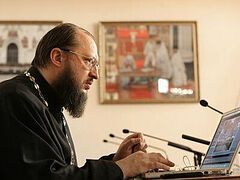
 Met. Chrysostomos of Chalcis. Photo: The National Herald
“The cleric remains a cleric on the internet, too,” Metropolitan Chrysostomos of Chalcis emphasized in a recent presentation to hierarchs of the Church of Greece in which he offered principles for the clergy conduct online.
The Metropolitan presented the paper, titled “The Growing Presence of Clergy on the Internet,” at a session of the Council of Bishops yesterday, reports Romfea.
He said the internet is now an objective reality, and that clergy presence there draws mixed reactions. Some see it as progress and a welcome outreach to the world, especially the young. Others are cautious, and some wonder whether it signals secularization or abuse, and where the limit lies.
After detailing the positives and negatives of clergy use of the internet, he said these lead to the need for a framework of pastoral principles for clergy use of the internet, since neither uncritical acceptance nor a fearful approach that would lead to a general ban on social media is right. In addition to vigilance, he said, what’s needed here is the virtue of virtues: discernment.
He then proposed the following basic principles for the digital presence of clergy:
1. The cleric remains a cleric on the internet, too.
2. No individual cleric is an autonomous ecclesiastical authority, so his public presence must express his ecclesiological relationship with the bishop and the local Church or the Holy Synod.
3. The cleric must understand, exercising self-restraint, that he doesn’t need to take a public position on every issue and every event.
4. No information should be reproduced without prior verification, especially when it concerns individuals or serious social and ecclesiastical matters.
5. No public confrontation justifies insults, mockery, public shaming or personal disparagement.
6. Confidential pastoral relationships aren’t material for publicity.
7. Particular care is required in personal digital communications.
8. Digital activity must not build a personal “brand,” a cleric’s idol-like trademark, but should point to Christ and the Church.
9. Online communication should, where possible, lead to real encounter, to the parish, to liturgical life and to the communion of persons.
10. Finally, basic training of clergy in digital communication is also necessary, not so that they turn into communication professionals, but so that they know how digital platforms work, how mechanisms of addiction and polarization are created, what new problems artificial intelligence creates, and so on.
“We don’t need a Church that’s fearful of technology. Nor one that uncritically adopts its rules,” he said in closing. “We need clergy who can use modern means without being used by them. To have presence without self-promotion. To defend the truth without passion. To create communication that leads to communion. To use technology without allowing technology to determine or alter their pastoral identity. What’s needed isn’t simply more presence of the Church on the internet. It’s something harder and more essential: more ecclesiastical character in our presence on the internet.”
In July, the Eastern American Diocese of ROCOR issued social media guidelines for its clergy.
Follow OrthoChristian on Facebook, Twitter, Vkontakte, Telegram, WhatsApp, and MeWe!