Chicago, October 19, 2026
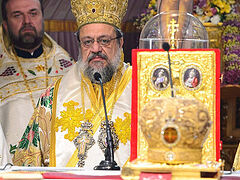
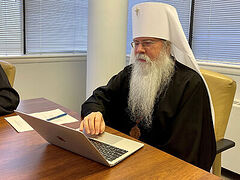
 Photo: pravmir.ru
No clergyman in the Diocese of Chicago and Mid-America of the Russian Orthodox Church Outside of Russia (ROCOR) may run an online ministry without the written blessing of the bishop. A new Social Media Policy, signed by His Grace Bishop Spyridon of Chicago and Mid-America, says any ministry that doesn’t have one must immediately cease and be deleted.
The policy is binding on all diocesan clergy, and it applies to the Lesser Orders, lay employees, and volunteers. It overrules all previous blessings and permissions, and no existing online ministry may proceed without the approvals it describes. Oral blessings aren’t sufficient, and the diocese may rescind a blessing at any time and for any reason.
In a circular letter to the clergy dated September 25/October 8, 2026, Bishop Spyridon says that among ROCOR’s bishops, the diocese has become known as an especially active online diocese, “particularly because of the online activity of some of our clergy—and, unfortunately, not always in a positive way.”
The diocese includes Archpriest John Whiteford, Archpriest Seraphim Holland, and Fr. Moses McPherson, who are all well known for their online ministries.
In the letter, Bishop Spyridon encourages clergy to focus first and foremost on their own parishes. He says the diocese should still be present online, since parishioners, especially younger ones, “live” much of their lives there, but that online ministry should help people come into worship, fellowship, Confession, and Communion at the parish. He adds that some clergy are frequently away from their parishes at conferences, which can be valuable but shouldn’t distract from their primary responsibility.
Under the policy, clergy should behave online as though they were speaking from the ambo, and the focus shouldn’t be on amassing followers or building influence. Confession and sustained spiritual counsel should ordinarily take place in person, clergy shouldn’t accept remote spiritual children, and catechism must take place in a parish. All media appearances, including podcasts and YouTube, must be approved by the diocese, and no clergyman or monastic may operate a public account without its blessing. Clergy may keep personal accounts for family and friends, and parish accounts for communicating with parishioners, as long as these don’t become a personal “brand.”
The policy says the Gospel, Sacraments, catechism, and pastoral counsel must not be sold. Clergy may not charge for catechism materials, endorse products, or receive commercial sponsorship, and revenue from an approved online ministry belongs to the parish or ministry, not the priest.
Clergy are prohibited from publicly criticizing the hierarchs, clergy, practices, or traditions of other Orthodox jurisdictions, and they should refrain from online disputes over Church matters, politics, or personal disagreements. Monastics, the policy says, should have little to no online presence.
To request a blessing, a clergyman must email the diocesan office a description of the proposed ministry, including its purpose, scope, frequency, and platforms. He must also explain the need for it, his qualifications, how much time he’ll devote to it, any monetary elements, and its legal structure. Priests are presumptively blessed to take part in their parish’s social media, including newsletters, websites, and livestreams of services.


Follow OrthoChristian on Facebook, Twitter, Vkontakte, Telegram, WhatsApp, and MeWe!