The question of spiritual fatherhood is one of the most perennial and, at the same time, most difficult questions in the life of the Church. What is spirituality? Who is a spiritual father? What are the limits of his authority and responsibility? Where is the boundary between genuine spiritual guidance and a destructive intrusion into the mystery of the human soul? These questions confront every Christian seeking a spiritual guide, and every priest approached by people asking him to become their spiritual father.
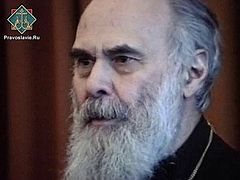
 Metropolitan Anthony of Sourozh
, who reflected on spiritual fatherhood over the course of many decades, offers a profound and sober understanding of the subject, grounded in the experience of the Holy Fathers and his own pastoral ministry. His words are addressed to everyone—to laypeople seeking guidance and to priests who, often through inexperience or spiritual immaturity, assume a role to which they have not been called. Metropolitan Anthony offers no ready-made formulas, but points to the very essence of spiritual fatherhood: reverently listening for the action of the Holy Spirit within a person, and humbly recognizing that a spiritual father is merely a witness and companion, not a master or judge.
Metropolitan Anthony insists on the need to distinguish three levels of spiritual guidance: the parish priest, who celebrates the sacraments; the spiritual father, who is capable of offering counsel drawn from his own experience; and the elder (starets)—a charismatic figure whose spiritual gifts are bestowed by grace and cannot be acquired through any amount of effort. One cannot simply “become” an elder or learn to be one, any more than one can learn to be a genius. Elders are people who have been touched by the grace of the Holy Spirit and have responded to it.
A young priest who imagines himself an elder merely by virtue of his ordination becomes what we call a mladostarets, a self-appointed “young elder”—a phenomenon destructive to the souls entrusted to his care. Ordination bestows upon a man neither intelligence, nor learning, nor experience, nor spiritual maturity. It grants him the awesome privilege of standing before the altar of God, where Christ alone has the right to stand.
A priest is an icon, but he becomes an icon in the fullest sense only when, through the grace of the Holy Spirit, the Light of Christ shines through him—when people looking at him no longer see the priest himself, but see Christ through him.
Spirituality consists not in our exercises in prayer or ascetic labors, but in the work of the Holy Spirit within us. In this regard, the task of a spiritual father is not to “educate” a person according to preconceived patterns, nor to train him to conform to some model that seems correct, but to discern attentively what God is accomplishing within that person and to safeguard this divine work from temptations and falls. A spiritual father is called to see in every person the image of God, which can never be taken away, even when it has been marred by sin, and to stand in reverence before this beauty, helping to remove everything that disfigures the divine image.
Just as a gardener must understand the nature of the soil and of the plant in order to help it develop according to its own nature, so a spiritual father must discern the unique, inimitable qualities of each person and allow him to become truly himself, rather than a replica of his mentor or a reproduction of some predetermined pattern. An example of this is the relationship between Sts. Anthony and Theodosius of the Kiev Caves. Theodosius was formed under Anthony’s guidance, yet their ways of life were entirely different: Anthony was a hermit, while Theodosius became the founder of communal monastic life. A spiritual father must distinguish between the desire to make someone like himself and the desire to make him like Christ.
Obedience, in the Orthodox understanding, is above all a matter of “listening” with all the powers of the soul, rather than blind submission. It requires humility on both sides: the disciple listens attentively to his spiritual guide’s words, the tone of his voice, and every manifestation of his personality, striving through this encounter to grow beyond himself. The spiritual father, in turn, must listen with all his experience and prayer to what the Holy Spirit is accomplishing in the person who has entrusted himself to his care.
Every human being is potentially a “burning bush,” and a spiritual father may step onto this holy ground only after “removing his shoes,” approaching with reverence and trembling, like the publican standing at the threshold of the Temple, not daring to enter unless God Himself commands him to do so.
Humility is a state of reconciliation with the will of God, of openness before Him, and of readiness to receive everything as His gift. It is like fertile soil lying silent, open, and vulnurable beneath the heavens, receiving the scorching heat, the rain, and the nourishment that comes to it, and bringing forth fruit.
A spiritual father is not a judge but a witness, the “friend of the Bridegroom,” who stands in the presence of the mystery of a repentant person’s encounter with God and reverently beholds this miracle. If even the most inexperienced priest approaches Confession in this spirit, he would already be a true celebrant of the Mystery.
One of the principal tasks of a spiritual father is to nurture a person in spiritual freedom, in the “royal freedom of the children of God,” so that he does not remain spiritually immature throughout his life, constantly running to his spiritual father over every trivial matter, but grows to the point where he himself learns to hear what the Holy Spirit is saying within his heart.
Metropolitan Anthony emphatically warns against coercion in spiritual life. One must never impose monasticism or marriage upon another person, sever existing relationships, or interfere in decisions that a person must make freely. If someone does not know whether to embrace monasticism or to get married, this means that he is ready for neither, that he has not yet matured sufficiently for either calling. A priest who issues an ultimatum, saying, “Find yourself a bride and get married within a week, because I need you to become a priest,” is committing a grave offense.
A spiritual father must be capable of saying, “I do not know,” as St. Ambrose of Optina did when, receiving no answer from the Mother of God, he declined to answer those who came to him with questions.
Authentic spiritual fatherhood is not about authority and control, but about compassion, companionship, and reverent service to the mystery of the encounter between God and man. For God does not seek slaves for Himself, but children, brothers, and sisters.

Metropolitan Anthony addresses a solemn warning to priests: “Beware, my brothers, my fellow priests! Beware of assuming a role that does not correspond to your spiritual maturity. Be simple! Be simply priests—that in itself is already very much!”
To be someone who, through the grace of the Holy Spirit, can celebrate the Divine Liturgy, baptize a child, and anoint with Holy Chrism is no small thing. It is something so great that it requires no additional claims to the status of an elder.
A priest’s humility begins when he looks upon what is taking place between God and man and realizes that he has no part in bringing it about, that he cannot make it happen, and that he has merely been granted the privilege of standing in awe, trembling, and reverence before this miracle.
The cult of personality that often develops around experienced spiritual fathers must be eradicated first and foremost by the priest himself, who must constantly remind himself that he is nothing unless he is guided by the grace of God.
The Church is built like an inverted pyramid, resting on the very tip of its apex. The closer a person draws to God, the lower and lower, the deeper and deeper he must descend. And ultimately, at the very point of this inverted pyramid stands Christ Himself, upon Whom everything rests.
Spiritual fatherhood thus becomes part of that spiritual life and growth in holiness to which each of us is called, and toward which every spiritual father must help his spiritual children advance.