Hieromonk Athanasius (Deryugin)
What comes to the mind of the average Russian when someone mentions the town of Petushki? Well, most people probably recall the immortal work of Venedikt Yerofeyev. Some might remember that it lies somewhere around the 101st kilometer, or that it has a museum dedicated to roosters. But for me personally, this little town is inseparably linked with the name of St. Athanasius of Kovrov.
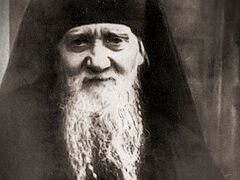
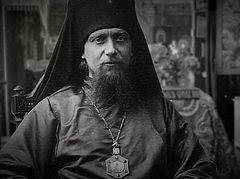
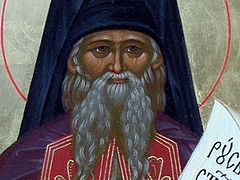
 St. Afanasy (Sakharov) Bishop Athanasius (Sakharov) of Kovrov was one of the remarkable Confessors of the twentieth century, having spent more than thirty years in captivity. After regaining his freedom in 1955, the holy hierarch lived with people close to him. He spent the last three years of his life in the town of Petushki, where his devoted spiritual children helped him purchase a house. It was here that he departed to the Lord. The house where Bishop Athanasius lived has been preserved with all its original furnishings. Some time ago, a dependency of the Kazan Convent was established here, along with a house museum dedicated to the saint.
I first visited this place about six years ago, before my monastic tonsure. And when I became a monk, I received the name of St. Athanasius, and so I naturally became a frequent visitor. Fortunately, the sisters of the Kazan Convent, who look after the little house, are exceedingly hospitable.
On January 24–25 (2020), a small group of us—several seminary students and some of our monastery's young people—made a pilgrimage to Petushki. We wanted not merely to visit the house museum, but also to celebrate the divine services there. A year earlier, a house chapel dedicated to the Iveron Icon of the Mother of God had been consecrated on the premises, and services are now held there regularly. Mother Varvara, abbess of the Kazan Convent, gladly welcomed us.


Whenever I find myself in places associated with the life of a saint, I am overcome by a certain reverent awe. It is extraordinary to realize that you are walking upon the very floor on which the saint once walked, wearing his vestments, standing in his room. I could vividly imagine Bishop Athanasius walking through this little house in the early morning some sixty years ago, awakening his spiritual children for prayer with the words: “Arise, arise, ye slothful ones!”

Here is the holy altar upon which he celebrated the Divine Liturgy. It was made from the wooden crates in which parcels had been sent to the bishop during his imprisonment. Here is the icon of the Appearance of the Most Holy Theotokos to St. Sergius, with which the saint’s mother, Matrona Andreyevna Sakharova, blessed her son when he entered the monastic life. Here, too, is the bishop's eagle rug, embroidered by the bishop's own hands—St. Athanasius was remarkably skilled in handicrafts and loved embroidering ecclesiastical items. And all around are the objects that surrounded the holy hierarch during his lifetime.


The services here begin early: Matins starts at six in the morning, and almost nothing is abbreviated. What was especially meaningful to me was that we celebrated the entire service ourselves. The seminarians assisted in the altar, while the young people sang and read—a small offering of prayer to St. Athanasius.

Through the prayers of St. Athanasius, may the Lord save us all!