This description of one man’s journey to the true faith was sent to us from Africa.
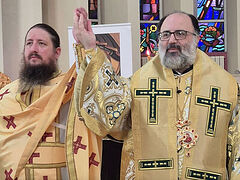
 Photo: elohov.ru
My parents did not impose any religion on me; however, I was taught that God exists. From a very young age, I had existential questions. Why are we here? What is our purpose? Most importantly, who is God? My grandparents were Muslim and Hindu.
Therefore, I was introduced to these religions, but I rejected both of them. My mother took us to a Pentecostal church when I was ten years old. When the service was almost over, the pastor shared the gospel that Jesus was crucified for our sin, but He is resurrected. It was the Eureka moment for me; I just knew that Jesus is God. I did not know anything; it was the simple faith of a child.
I grew up in that Pentecostal church. However, when I started asking theological questions as a young adult, the pastors prayed over me, “Lord, let him not use his mind.” I thought I heard wrong the first time, but the second time I knew I had to leave. I started doing my own research, and it led me to the reformation. It did not take long for me to swallow reformed theology and become a Baptist for over ten years.
As a reformed Baptist who read many books and the scriptures, I sincerely believed that I had the truth. I also believed that it was okay if we have some theological differences as long as we believed in the “essentials.” As long as we are not directly concerned or involved, the differences, whether essential or not, do not seem to matter much. But I experienced real situations whereby the theological differences hit differently in reality.
Consequences of Theological Differences
It started with a relationship with a woman. At first, our theological views were aligned. However, as the relationship progressed, she started changing from traditional to liberal views. We started having more disagreements and arguments. She would defend her views using the Scriptures and tell me that I was wrong. I believed that the Bible would resolve our differences. However, it had to be interpreted. Thus, we relied on pastors and online resources to figure out who was right. The problem is that we can have people side with us or find resources that align with our views. When we could not reach an agreement, it sometimes led to insults and personal attacks. When the person whom you love makes serious accusations against your character, we don’t simply call it a theological difference. It hurts, badly. We want to know if it is true in order to repent. It made me realize that Sola Scriptura did not provide an objective absolute standard because we interpret the text in a way and claim that it is the right way. In other words, she believed she was right, and I believed I was right. However, we had two different opposing views. It was a logical fallacy because both cannot be true. We eventually broke up.
Another situation arose at church whereby the pastors started insulting and attacking me irrespective of my sin. The pastors were the prosecutor, judge, and jury. Therefore,
there was no point in trying to defend myself. Losing a community I’d been part of for over a decade, along with relationships that have lasted more than 20 years, is excruciatingly painful. It drove me into a form of self-loathing and depression. If a stranger insulted you, you can move on easily. When the person you intended to marry accuses you of many things, it becomes difficult, yet you can still survive by telling yourself she was not the right person. But when your whole community vilifies you, you don’t see any reason to live. If everybody is qualifying me as a devil, then surely I must be. I had no strength to fight for myself; I simply believed all the accusations “made out of love.” The theological differences mattered; it had huge psychological impacts which made me contemplate suicide.
Realization and Repentance
I was devastated, and I just wondered, what if I was wrong and truly that evil? I could not objectively know despite reading many books and thousands of hours of sermons and podcasts, all from the reformed community. The framework as a Protestant is to evaluate all the different views and then choose what seems best. However, we would refrain from using that language. Instead, we would say, “I believe this view because it is biblical.” The problem is that one man at church wanted to impose polygamy on his wife. You can guess what he said: Polygamy is biblical. In that dark moment of my life, I spent a lot of time in the Bible and wrote down my beliefs as a statement of faith. I used that document on ChatGPT to help me find a Protestant denomination that would fit my ideologies. In that moment, I realized my hypocrisy and idolatry. I was interested in a theology that fits me as much as my ex wanted her liberal views and as the man who wanted polygamy. I judged the latter by saying, “You are full of pride; everyone is wrong, and you are the only who hold the truth.” That is exactly how the pastors judged me, believing that I was prideful and their interpretation was flawless. God showed me I am no better. I was doing exactly the same thing by judging people and their views according to my own standards. When the same was done to me, it almost cost me my life.
When I realized this, I felt like the most wicked person alive. The pain was to the uttermost, and I wanted to die. But the Lord was merciful, reminding me of a verse: “Have I any pleasure in the death of the wicked?” declares the Lord GOD, and not rather that he should turn from his way and live? I broke down in tears. I was driven to listen to psalms and tried to read the words, but I could not. I tried but could not find words. I got into bed and curled into a fetal position. I cried out, “Lord, please,” and I repeated these two words of prayer until I fell asleep. The dilemma was, how can I interpret or know what is correct as a sinful wretched man? I might read and sincerely believe the doctrines are true and correct, but how can I be sure? Faith? My faith in Christ did not change, but I did not know what the correct beliefs were.
The Search
The next day, a verse popped into my mind: The church is the pillar of truth. I knew that it could not be a Protestant church because within one denomination there are multiple truths, and it was a fallacy. I developed a great curiosity to know what this church is. Therefore, I began to research church history beyond the Reformation timeline. I discovered the Oriental Orthodox, Eastern Orthodox, and Roman Catholics. Evaluating each and every doctrine of the Oriental Orthodox, Eastern Orthodox, and Roman Catholics was not an option. However, since they shared the writings of the early Church Fathers from AD 100 to 400, I began reading their letters. My theological bias started to fall apart. First, St. Irenaeus obliterated Calvinism and reformed theology. As a Reformed Baptist, I believed in the Nicene Creed, but I did not understand the word “Apostolic” in the creed, “One Holy Catholic and Apostolic Church.” The letters of St.
Clement of Rome taught me the doctrine of apostolic succession. Then the famous quote from Ignatius of Antioch, “Where the bishop appears, there let the people be, just as where Jesus Christ is, there is the Catholic Church.” However, I asked myself an important question. Just as much as any theologian could be wrong, these fathers could be wrong as well. I cannot just believe everything.
When Protestant Apologetics undermines Protestantism
Another reason for leaving Pentecostalism was because it seemed too recent, dating to around AD 1900. But then I realized that the Reformation was not so distant either, beginning around AD 1500. Islam, which began in the seventh century, is older than Protestantism. One argument against Islam is that Christians rely on much earlier witnesses—those of the first and second centuries—rather than a witness who came centuries later. I found that argument persuasive. Therefore, it seemed more reasonable to trust the teaching of the apostles’ disciples, who had lived alongside them, than that of a theologian who came 1500 years later.
I had also used apologetics to defend the idea of absolute, unchanging truth rather than relative truth. After all, something considered sinful fifty years ago might be acceptable today. By this standard, I had been inconsistent: Protestant doctrines had developed and changed over time, sometimes adapting to fit a particular system. This led me to think that it made more sense to trust the earliest teachings rather than the most recent.
Man can err
At the same time, I knew the early Church Fathers were not infallible. So I began to wonder: How did the Church preserve the truth? When heresies arose, how did the Church discern them? And if a Church Father taught something false, how did the Church prevent that teaching from spreading?
I knew the answer from Acts 15, it was through a council gathering bishops, and they would collectively reach a verdict. It is called the rule of faith and Consensus Patrum. The
fact that one man can err, the church always operated with a governance of multiple bishops. Whenever there was an issue, it would be a collective decision to preserve the truth. That’s how I knew that Arianism was not true, because they were anathema by the Church in the First Council of Nicaea. I always believed in the Nicene Creed but without understanding the authority and church governance. I had no problem submitting to that decision. However, I had to answer the question why I do not believe the other councils? Back in the day, Arianism was considered outside the church and not Christian. Nowadays, there are Protestant groups who reject the divinity of Christ and are still called Christian. I started seeing the problem that if someone has a disagreement or divergence, then he can start a new church. That’s the reason why we have thousands of protestant denominations.
Church as authority but which one?
As a layperson, if 500 bishops are all saying these things are heresy and here is the correct apostolic view, who am I to defy them or think that my judgement is greater than those whom God placed as authority over me? I had to simply submit and obey.
I shifted from adhering to my own theology but instead to receiving the apostolic teachings. It was not easy. I visited a Coptic church for several months and I was very uncomfortable. I was not used to the icons, incense and liturgy style. But I understood that I had no say into these things because if these were the primitive practices, I am the one who needed to adapt and not the other way round. I did not want to commit the same sin of being my own pope, believing that my views or interpretations are correct and everyone else’s are wrong.
The problem was that the Oriental Orthodox, Eastern Orthodox, and Roman Catholic all claim apostolic succession. They all participated in some councils. Before Chalcedon, they were all one. If there were no schism, it would have been so simple and beautiful. Unfortunately, it was another dilemma: what church to join? Protestants were already out of the picture because, first, they do not have apostolic succession, secondly, due to the relative interpretation of the scripture. I was not particularly attracted to Roman Catholic because of my understanding of the Reformation; however, I could not exclude them yet.
I tried reading as much as I could of the church councils to discern the truth and listening to YouTube apologetics. However, I quickly realized that I was operating on my Protestant framework to compare ideologies and choose what seemed best to me.
Again, how do I discern the truth without relying exclusively on the intellectual? So I began to pray and fast fervently. For example, how would I know for sure if the Oriental Orthodox or Eastern Orthodox has the right view on the nature of Christ? The debate is over 1500 years. Who am I to suddenly discern and have the conviction that what I choose would be the correct one? I knew that I needed something beyond comparative theology to convince me. The reason being that I do not know which theology is the correct one as a layperson. It took me a few months to figure it out. I prayed and fasted.
Eureka
One day I woke up with a question in mind: among these three churches, who maintained the same church governance or was most similar to the model as in Acts 15? For the first 400 years, the church operated in this manner. I began to research this question. I discovered that Oriental churches adopted the Orthodox name around 1965 in the Addis Ababa conference. However, their governance remained independent as per jurisdiction. In other words, each group has their own pope, and they do not really interfere in other jurisdictions. They always operated as independent groups. The suspicion centered around the Eucharist, whereby the Pope Shenouda taught that we do not partake in the Divinity of Christ in the Eucharist. It was a direct opposition to the previous Coptic pope. The Armenian Oriental Orthodox church used unleavened bread as compared to leavened bread in the other Oriental Orthodox groups. It was inconsistent with the Acts 15 model because a core doctrine was taught differently across time and jurisdiction.
As for the Roman Catholics, I already knew about the papal infallibility, which was clearly different from the model used in Acts 15 and all councils before the great schism in AD 1054. As such, I concluded that the continuity claim from the Eastern Orthodox had legitimate grounds. Understanding who had the authority meant that I did not have to solve theological dilemmas anymore. I simply had to abide and submit to the Church.
Conclusion
My journey to find true church was not a matter of being a theologian to discern and evaluate all the doctrines. On the contrary, God stripped me of my knowledge in a sense. The premise was that my knowledge could be wrong. Therefore, I had to operate as an illiterate. Afterwards, I was led to recognize to whom the authority was granted and who maintained and preserved that same model of church governance. Then, trust the institution that God established.
That is my journey of how I converted from being a Reformed Baptist to an Eastern Orthodox. It is a freeing experience because now I do not have to read several books and listen to countless sermons or podcasts to discern the truth. The church objectively presents the truth to us. If one day, I suddenly desire polygamy, the church can rightly tell me that I am wrong. If I have issues with my future wife, if the Lord is willing, we can have clear answers and get our pride in check, then repent. There is a standard of truth held for over 2000 years instead of multiple views and countless possibilities that are continuing to evolve over time. Most importantly, the Lord tackled and is continuing to deal with my greatest sin—pride.
I hope that the testimony helps.