
Timna Valley, Israel, November 1, 2017
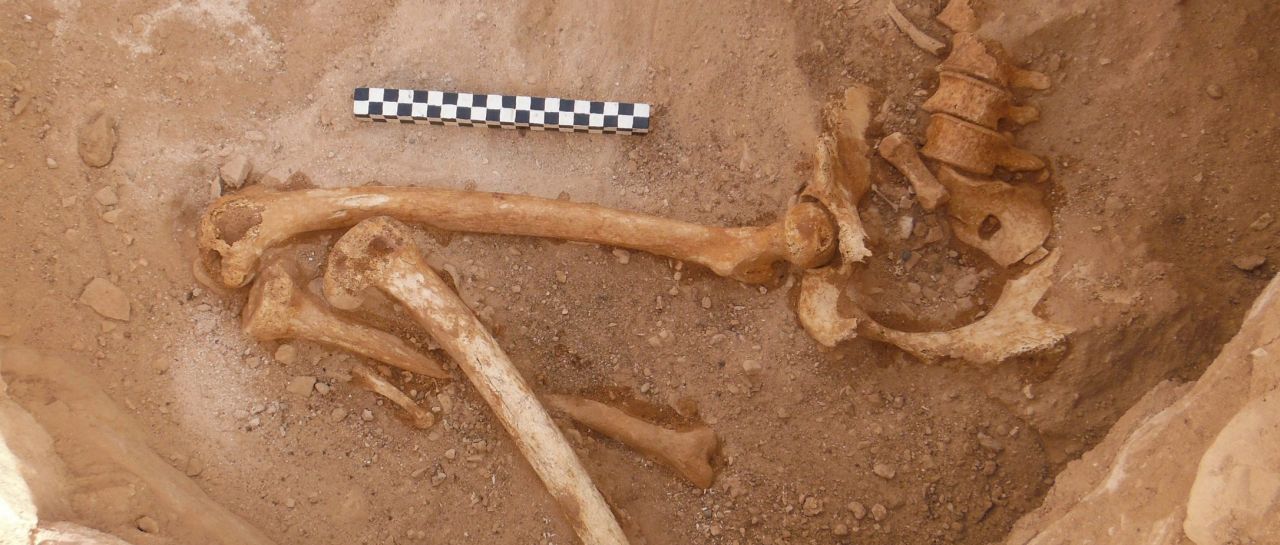 Photo: haaretz.com
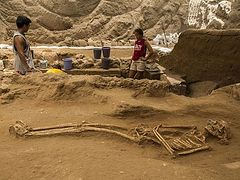
 Archaeologists are shocked by their most-recent discovery at King Solomon’s Mines. Digging in the ancient copper mines in southern Israel’s Timna Valley, scientists unearthed the 3,200-year-old remains of a pregnant Egyptian woman. The desert landscape is not very welcoming and it was previously believed that women did not go there, Haaretz reports.
The woman was in the early stages of pregnancy when she died. The lower half of her skeleton, including the fetus, was unearthed by diggers, while it is assumed the rest of her remains were lost when the mines were raided sometime in antiquity. She was buried near an ancient Egyptian temple in the area traditionally known as King Solomon’s Mines, although this identification remains hotly contested. She was likely in her early twenties, although a precise date and cause of death are difficult to estimate due to the missing bones, and the lack of collagen in the bones, which is used for radiocarbon dating.
Human remains were last found at the mines in 1964, and this is the first time female remains have ever been found. A combination of the harsh climate and the exploitation of the mines over centuries explain the scarcity of human remains at the site.
“There are no water sources in Timna and it is very inhospitable, so no one ever settled there permanently,” archeologist Erez Ben-Yosef says. “Home was close to water sources, and people only came for brief expeditions during the winter to mine copper.”
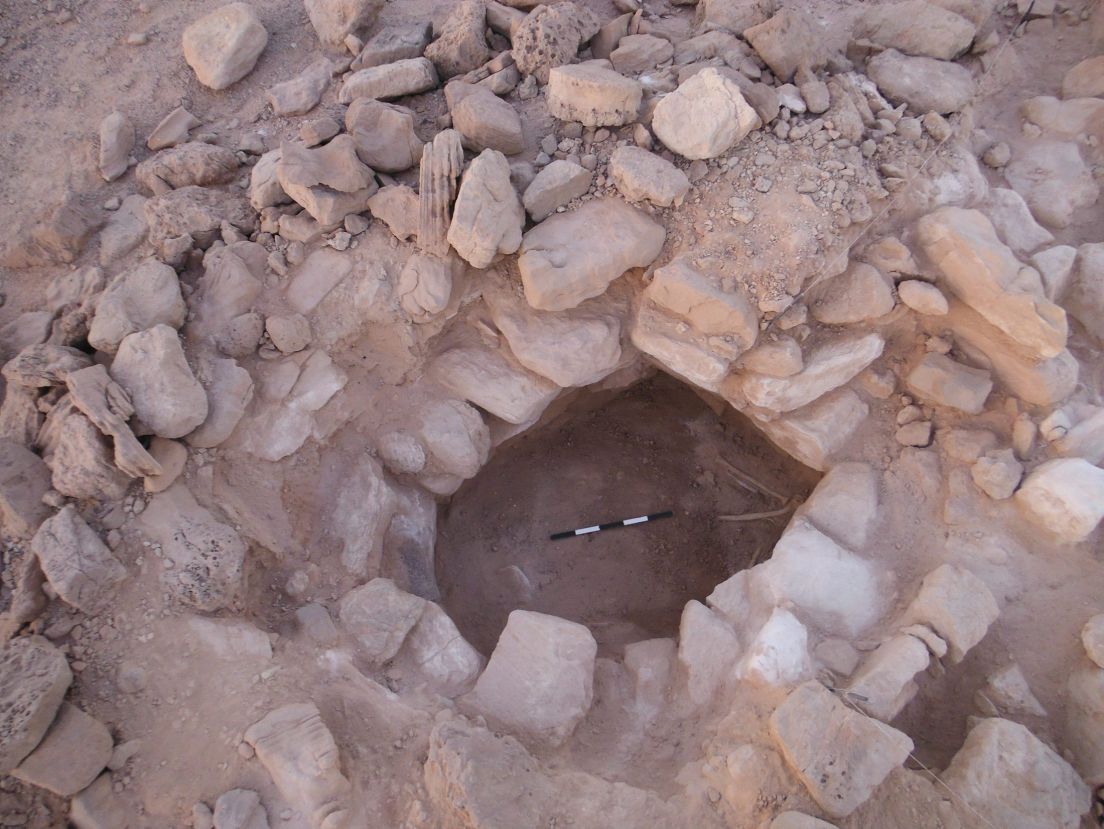 Photo: haaretz.com
 That may be why most of the tombs in Timna are usually found empty: for once the ancient graves were probably not extensively looted, they were simply cleaned out. “Our hypothesis is that people would be buried there temporarily and their bones would be taken back home by a later expedition,” Ben-Yosef told Haaretz after presenting the find during a conference at the university on Thursday. “There aren’t that many tombs because only important people were buried: if some poor slave died they probably just threw the body down a shaft in the mines and that was that.”
Given that the woman was buried, scientists believe she must have been someone important.
The bones were first discovered on the last day of the winter digging season, but were finally extracted this summer with the help of physical anthropologists Israel Hershkovitz and Hila May from the Tel Aviv University Faculty of Medicine.
Although the woman’s remains themselves are hard to date, archaeologists also found two tiny glass beads that they believe have helped them pinpoint an accurate date. According to Ben-Yosef, such beads were previously found at the temple of the Egyptian goddess Hathor, just 220 yards from the tomb, where the deity was worshiped from the 13th to 12th centuries BC, when Timna was under Egyptian control. Egyptologist Deborah Sweeney has suggested that the woman traveled into the heart of the desert to serve as a musician at the temple. Her remains are the first indication that women were actually present in the mining expedition as well.
“Unfortunately, she must have died there for some reason and was buried close to the temple, so that Hathor would protect her,” Sweeney says. “It's actually quite sad. She was probably quite adventurous to go so far away from home, which was rare for women in Egypt—but she never came back.”
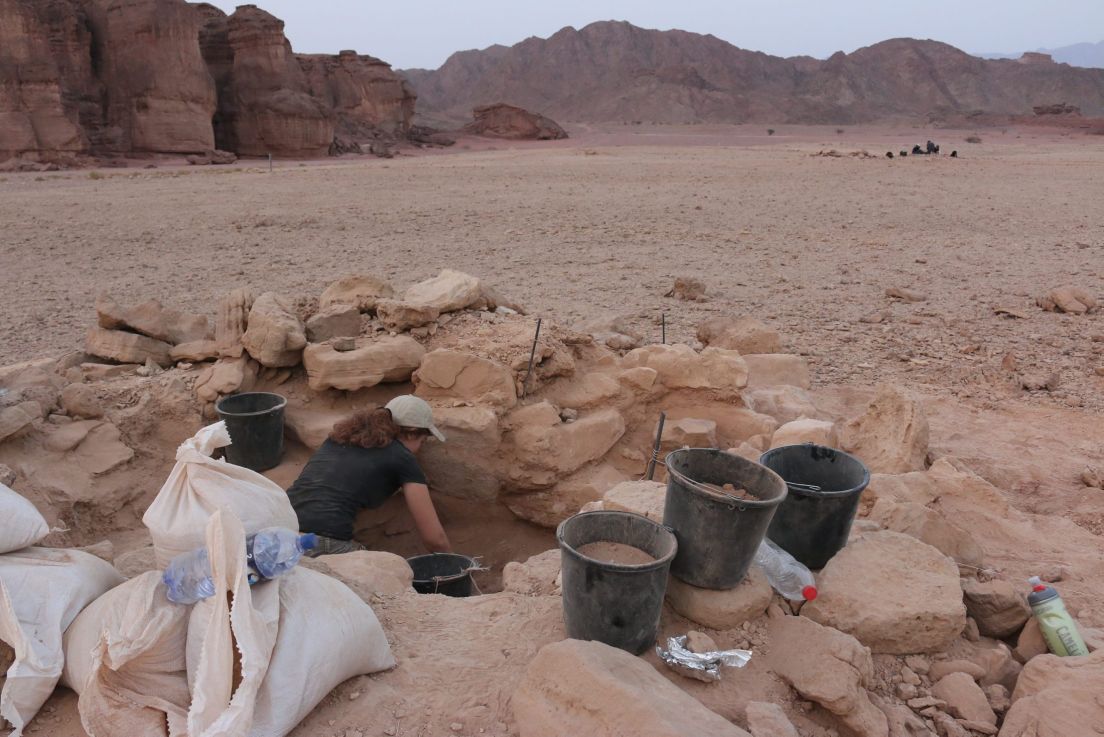 Photo: haaretz.com
 Previous finds at the Timna Valley mines include fragments of “remarkably preserved” 3,000-year-old fabrics, leather, and seeds dating to the time of Kings David and Solomon, unearthed in February of last year. Ben-Yosef said the fabrics, which vary widely in weaving style, color and ornamentation, provide “new and important information” about the Edomites, the descendants of Esau who often fought against the Israelites and mined in Timna.
Workmen at the site characterized that discovery as “an affirmation” of Biblical texts, “bring[ing] the desert culture of that period alive.”
Additionally, in January of this year, researchers have discovered the ruins of an ancient patrol tower, including donkey stables, dated to the time of kings David and Solomon, which indicates a highly organized system of defense and the importance of trade with distant settlements.
"Fetus" and "child" need not be mutually exclusive.
American Politcal Correctness in orthochristian is disappointing.