We have read chapter 15 of Revelation. It’s small but filled with mysteries that cause fear in our souls, no matter how much we’d like to understand them. But we shouldn’t feel fear; it’s better for us to reflect on the fact that we’re in this world to acquire salvation, to be vouchsafed the Kingdom of God. Let us labor to this end.
We don’t know what will happen to us even a second from now. All of us, big and small, have such moments in our lives when our salvation depends on us saying “yes” or “no.” A holy martyr with a saber over his head: “Do you renounce Christ?” “No.” And his head is cut off, and he becomes a martyr for Christ. “Do you renounce Christ?” “Yes.” They let you live another five or six years, but you’re lost for eternity. Salvation is in our “yes” or “no.” And there will be moments in our lives when our salvation in eternity depends on whether we say “yes” or “no.”
We see that many things are happening—many challenges and provocations. Perhaps it won’t be a direct call to renounce Christ; perhaps they won’t ask us: “Do you renounce Christ?” But as our elder said: “Our forefather Adam didn’t renounce God. The devil didn’t tell him: ‘Renounce God and say He doesn’t exist.’ He didn’t say anything like that. He said: ‘Renounce the commandment of God,’ which means breaking your connection with God.” Adam renounced the commandment of God. It wasn’t a simple lack of faith, not confessing God. Even the devil doesn’t deny God; he doesn’t say there is no God. The devil believes in God, and the demons believe and tremble, as Scripture says (Jas. 2:19). But what do they lack? They don’t love God. And when a man transgresses a commandment, he essentially rejects the love of God. Violating God’s commandments is practically a renunciation of God. That’s why we’re called to keep the commandments with all precision and confession, so we might have a place in the love of God and His Kingdom. There are many circumstances in our lives that can be simple, or they can be very confusing and seem very uncertain to human eyes. But it doesn’t matter. What matters is a pure conscience before God, our love for Him, and how we’ll be connected to Him in eternity.
—Geronda, some modern fathers say that one of the signs of the end of the world will be the Third World War. Some say that after this war, peace will come for a time (Elder Ephraim of Arizona, for example) and that St. John III Doukas Vatatzes will rule the world. Other fathers say that after the Third World War the antichrist will appear. And those who say that St. John III Doukas Vatatzes will reign prophesy that after his reign will come the time of the antichrist. What does the Church say about it? And are our times today the times of Revelation?
—Our era, like all other eras since the time when the Apostle John saw all these things, is the time of Revelation. Everything that’s described in Revelation will unfold throughout all ages, not in a single moment. Some things have already happened, some are happening now, and some are yet to be determined. We can’t know such things. The Church Fathers avoided giving temporal definitions of events. Of course, any father can say what he feels, what’s true and close to him.
But what we need to know isn’t the time of the Second Coming, not when the world war will begin. God has hidden this from us. Christ Himself said: But of that day and hour knoweth no man, no, not the angels of Heaven, but My Father only (Mt. 24:36). Only the Father knows—even the Son doesn’t know according to His humanity. No prophet can know exactly when the Second Coming will happen. When it happens, we’ll see and understand, but not in advance. We can’t say: “The Second Coming will happen in a day, a week, a year.” But why don’t we know about it? Because that isn’t what God has predetermined for us. God knows, but He doesn’t determine. God didn’t plan that on March 25th in the year three thousand and so the Second Coming will occur. God never said such a thing. Man determines. If man cultivates repentance, if people abide in the Church and strive for salvation, if they become sanctified and are saved, if the Church exists, then the time of this world’s existence will be extended. But if people don’t strive for salvation, then there’s no reason for this world to exist.
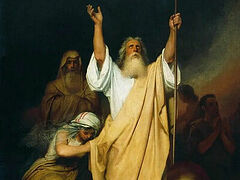
 Second Coming, Igor Simonov
Do you remember how the Prophet Jonah in the Old Testament was sent by God to Nineveh to tell the Ninevites that their city would be destroyed in three days? Because Jonah was a prophet and knew what was going to happen, he told God: “I won’t go there! I know that You’re good, generous, and full of mercy! As soon as I tell them that their city will be destroyed, they’ll begin to fast, weep, and repent, and I’ll end up looking like a liar. Who will believe me then? You’re telling me the truth now. But You’ll forgive them, and I’ll be the one they have complaints about.” But Jonah went to them anyway, because God sent him to do it. And everything happened as he had supposed. He went to the Ninevites and told them that in three days their city would be destroyed. They panicked, rushed to fast, pray, keep vigil. God saw their repentance and extended their life, and poor Jonah ended up looking like a liar. But he wasn’t a liar—he told the truth, but that’s how everything worked together.
It’s man who determines the course of things. But God also leaves man in absolute ignorance about some things. If He were to say that on such and such a day of such and such a month everything will end, the Second Coming will come, that would mean God determines everything regardless of whether we repent or not. We determine the course of things. That’s why God said no one knows about the day and hour. Since God said so, our speculations about when the Second Coming will occur are futile—no one knows. But we also don’t know when everything that will precede this will happen. At some point it will happen, and if God enlightens us and we understand it, then good. But no one knows the timing in advance.
What we know for sure is our own end, our personal demise. We’re all going to die, we all have an expiration date. We’re not forever, like some products that say they can be stored forever. We’re coming to an end, so we have to carefully reflect on our departure from this world, and only then about when the Second Coming will happen. Those who will be alive then will understand and prepare. And we should think about ourselves—this is what Scripture wants to tell us—that we should be in constant vigilance, constantly in connection with our God the Father.
I remember a few years ago there was a fuss in Greece about the number 666. I was at a monastic conference in one metropolis. One old nun got up and started telling the bishop: “You’re not standing against it; you’re allowing this number 666 to be marked on us! Tell me, what will happen to us?” The poor bishop didn’t know what to say to comfort her. She said a lot of things: “The antichrist is coming. The Second Coming is coming! They’re putting seals on us.” I suggested that the bishop allow me to speak, and he did. I said: “Mother, how old are you?” Everyone smiled. “Eighty-six.” “Eighty-six, and you’re still worried about when the antichrist is coming? It’s time for you to sing: ‘Alleluia!’ Don’t you realize that you’re going to leave this world soon? Do you think the number 666 has appeared and you have to get a passport and go deposit money in the bank to live? If someone who was twenty-five were talking about this, it’d be understandable. But should we be worried about this at the end of our lives? These things disorient us and make us look ridiculous.”

Chapter 16 talks about Armageddon and the terrible war that will happen before that. But that doesn’t mean we have to start worrying about when it will happen. It doesn’t concern us. What concerns us is that at the moment when it all begins, we must remain faithful to God, ready to confess our faith and love for Him. This is what we should focus on. Whether we believe or not, whether we’re waiting for it or not, everything will happen with mathematical precision, as the Apostle John described it. How and when exactly is known only to God.
—Geronda, I’d like to ask about what was said at the beginning. In the prologue, the Apostle John writes: Blessed is he that readeth, and they that hear the words of this prophecy, and keep those things which are written therein: for the time is at hand (Rev. 1:3). But you’re saying we don’t have to think about when all this will come…
—Of course, we must take care to keep the word of Scripture. The time was at hand already in the time of St. John the Theologian. 2,000 years have already passed, and the time is still approaching. The question isn’t about our time. For God, everything is in the present.