In the name of the Father, and of the Son, and of the Holy Spirit!
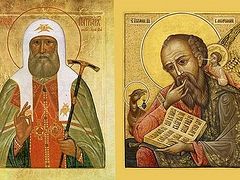
Dear brothers and sisters, today we prayerfully honor the memory of the Apostle John the Theologian and St. Tikhon, Patriarch of Moscow and All Russia.
Two saints of God, two apostles of our Lord Jesus Christ, two ascetics of spiritual life, and two preachers of the Gospel teaching. A long period of time—almost nineteen centuries—separates their earthly journeys. The worldview and attitudes of each of them were developed differently, different events and personalities surrounded them, but there was also something that they shared, something that unites and will always unite them. What makes them so similar and close to each other is, of course, the faith that brings all Christians together—all disciples and followers of the Savior.
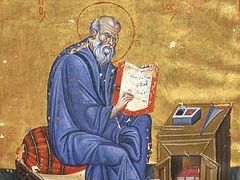
But what unites and distinguishes these two men? It is their love—love for God, love for people, love for the Church and for the whole universe. St. John the Theologian was even called the “apostle of love”, because the texts of his Gospel and his Epistles say more about love than the other three Gospels of the New Testament. St. John explains the reason for the incarnation of our Savior Jesus Christ as follows: For God so loved the world, that He gave His only begotten Son, that whosoever believeth in Him should not perish, but have everlasting life (Jn. 3:16), which is understood as the deliverance from the bondage to sin and the law of death, and the opening of the gates to the lost Heavenly Kingdom for man. And the foundation of this mystery of Divine economy is love—the love of God for man.
God’s love for people can and should be supported by our love for God. To clarify this, St. John recalls the Redeemer’s instructions on this subject: He that hath My commandments, and keepeth them, he it is that loveth Me: and he that loveth Me shall be loved of My Father, and I will love him, and will manifest Myself to him… He that loveth Me not keepeth not My sayings (Jn. 14:21, 24). The Apostle also repeatedly recalls the principal commandment of the New Testament: A new commandment I give unto you, that ye love one another; as I have loved you, that ye also love one another (Jn. 13:34). Elsewhere in the Gospel, we read the words of Christ: This is My commandment, That ye love one another, as I have loved you (Jn. 15:12), that is, love for one another is an indicator of human sanctification by the grace of God.
Further, testifying to the importance of fraternal love for a proper spiritual life, the apostle quotes God’s words about the distinctive feature of genuine Christians: By this shall all men know that ye are My disciples, if ye have love one to another (Jn. 13:35). And, of course, it is worth remembering the words of our Heavenly Teacher, quoted by the Apostle John: Greater love hath no man than this, that a man lay down his life for his friends (Jn. 15:13). In his three Epistles, St. John continues the theme of Christian love and proclaims: Beloved, let us love one another: for love is of God; and every one that loveth is born of God, and knoweth God. He that loveth not knoweth not God; for God is love (1 Jn. 4:7–8).

Continuing this theme, he writes: He that loveth his brother abideth in the light, and there is none occasion of stumbling in him (1 Jn. 2:10); and He that loveth not his brother abideth in death (1 Jn. 3:14). My little children, let us not love in word, neither in tongue; but in deed and in truth (1 Jn. 3:18), writes the holy apostle—that is, love must be active. If we only say that we love the hungry, the cold, or the sick, it won’t make them feel any better.
And, of course, the following words are the quintessence of all his Epistles: God is love; and he that dwelleth in love dwelleth in God, and God in him (1 Jn. 4:16). As you can see, for St. John the Theologian love is the core of spiritual life, the main guideline leading to God, and an important means in the fight against sin and its father—the devil.
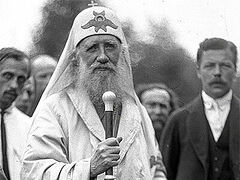
St. Tikhon, Patriarch of Moscow, in his life set an example of the fulfillment of the teaching on Christian love, which the Apostle John carefully passed on to his contemporaries and future generations. Reading St. Tikhon’s Life, we come across memories of what he was like in his family, what he was like when he studied and later taught at the seminary. And all these remembrances speak of him as an extraordinarily meek, calm and peace-loving man, who gave himself up wholeheartedly and entirely to God and his neighbors, to those whom the Lord sent him on the path of life.
When St. Tikhon became a priest, he showed this love through his pastoral care to those who came to him. When he became a bishop, he instilled the love of God in his dioceses, love between all members of the Church, so that love could be the cementing quality that holds the monolithic body of the Church together by each brick, by Christians. Such were the illustrative features of St. Tikhon’s ministry when he arrived in North America. At first living in San Francisco, he could have said to himself that funds were coming from the Empire to support church life, and in the Synodal period bishops did not stay in the same place for long, so “maybe it is better to wait and then return to the motherland?”
But no: he went to Alaska, to places difficult of access so that those who had not heard the word about the crucified and risen Christ would hear this word, be enlightened by the Gospel truth, be taught what is the key to salvation, and receive this key. Of course, the conditions there were not very comfortable, to put it mildly, but out of his love for the Church, for the children of the Church and for God, he set out on this journey and served as an apostle.

When St. Tikhon returned to Russia, he served in the Diocese of Yaroslavl, and he labored so much that when he was being transferred to another cathedra, the city Duma petitioned for Bishop Tikhon (Belavin) to be awarded the title of honorary citizen of Yaroslavl. Contemporaries said that it was an extraordinary event; there was no such thing as a bishop being awarded such a title as “honorary citizen”—only exceptional people were privileged to receive it. Back then, awards were not given often, and therefore everyone knew the value of medals, orders and titles. And St. Tikhon, then still a bishop, was awarded this title.
When the hard times came and the Provisional Government issued a decree that now the clergy in the dioceses would elect their own archpastors, the Moscow flock chose Archbishop Tikhon of Vilna and Lithuania as their head. St. Tikhon began to serve here in Moscow with zeal, and the Local Council elected him Patriarch, thereby confirming this love. Surprisingly, he was the third candidate for the Patriarchal throne, but by the Providence of God, revealed through Elder Alexei (Solovyev) of St. Zosima’s Monastery, he was chosen Patriarch of Moscow and All Russia. And it was then that—even if someone had not seen it before—they saw how much St. Tikhon loved his native Russian Orthodox Church. Because the times were turbulent, but he did not emigrate; he did not leave with the retreating White officers, but stayed here, in conditions that, to put it mildly, were uncomfortable and harsh. But he took all this upon his shoulders and moved forward with those whom he sincerely loved, since he knew that ordinary people, parishioners of the Church of God, truly loved him as well.
And he endured all these trials and temptations with dignity, saying, “Let my name disappear from history, if only it will be useful for the Church.” In these words we see an allusion to what the Apostle John the Theologian proclaimed: that there is no greater love than if someone lays down his life for his friends. And St. Tikhon laid down his life so that the Russian Church could survive and the enemy of the human race could not destroy it.
Of course, this is all good, but what conclusions can we draw—ordinary people living here and now? How can we acquire the virtue of love in our lives? The Holy Fathers give us advice. Beyond all doubt, we know how to love our family and friends, people who are agreeable to us, and we have this love. But how can we love those whom we see for the first time in our lives and will probably never see again? How can we love our enemies? The Holy Fathers teach us that, firstly, the most important thing is not to wish another person ill. By not wishing ill, we give ourselves a chance to wish another person well from the bottom of our hearts. And secondly: we must be ready to help, even if our enemy, who does us harm, suddenly finds himself in a difficult situation, stands on the edge of a precipice and turns to us for help, stretching out his hand with which he struck us, and the wounds from these blows are still fresh, but he is sincerely asking for help. If we want to acquire Christian love, we must extend a helping hand to him, grip and rescue this person, even if he was an enemy to us.

It’s not an easy task—it’s complicated. So, dear brothers and sisters, let’s turn today to St. John the Theologian, the “apostle of love”, and to St. Tikhon, Patriarch of Moscow and All Russia, so that they, who came to know Christian love and learned it, can help each one of us acquire and develop this fundamental virtue of spiritual life; so that, having learned to love, we can draw closer to God and know Him; because we are aware, thanks to the Apostle John the Evangelist, that God is love.
Happy feast to all of you! May God bless you!