Part 1
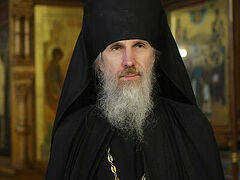
On October 11/24, the Russian Church commemorates the Synaxis of All the Saints of the Optina Monastery. The elders of Optina were skilled spiritual physicians who penetrated into the very depths of the human soul. We continue our talks about their experience, letters, and gifts with Bishop Joseph (Korolev), the current Abbot of the Optina Monastery.

—The school of hesychasm presupposes strict asceticism. In the early Byzantine era, hermits were called hesychasts, and in the later period, monks who devoted themselves to absolute stillness and inner work were called hesychasts. All the Optina Elders were spiritual mentors also of laymen. Why did the elders, who chose the path of silent monastic life, pastor not only monks, but also laypeople?
—Yes, indeed, this is not the hesychasm that St. Gregory Palamas wrote about in the fourteenth century—that is, Athonite hesychasm. There is a concept of Russian hesychasm. Hesychasm does not generally mean the experience of spiritual contemplation and concentration known to Orthodox asceticism from time immemorial, but a spiritual and prayerful practice, connected with the teachings of St. Gregory Palamas. During the period of the State of Muscovy, it was determined that hesychasm in Russia was developing primarily within the framework of cenobitic monasticism.
I wrote an article entitled, “St. Paphnutius of Borovsk and Russian Hesychasm.” There I consider this phenomenon in Russian monasticism, when an ascetic combined the unceasing Jesus Prayer with abbacy, as was the case with St. Paphnutius of Borovsk (1394–1477). I prove that he was a hesychast who performed the Jesus Prayer continuously and even fell asleep with a prayer rope. The tradition of hesychasm in Russia still flourished in the fifteenth century. Then it returned, including through Optina, but it was not that Byzantine one. This is Russian hesychasm: when the unceasing Jesus Prayer, helping people, and ruling the monastery are combined. Elder Macarius was the head of the skete, led the brethren, prayed incessantly, and received laypeople. The Lord gave him strength. Our elders could combine unceasing prayer and work. True, it’s not total stillness—we won’t see it at the Optina Monastery. But there was the path of cenobitic monasticism, there was monastic life in the skete and there was eremitic life. The skete is the “middle path” of monasticism: on the one hand, you are in solitude, and on the other hand—with the brethren. They have their own rule, which presupposes a more secluded and stricter life and less communication with people, which is more conducive to the creation of a prayerful mood. Such was the rule at St. John the Baptist’s Skete of the Optina Monastery.
—Vladyka, do the brethren who struggle at the skete take on themselves additional labors of obedience, such as a vow of silence and strict fasting?
—Yes, living at the skete implies a stricter rule. Services at the skete start earlier than at the monastery—at four in the morning. In the evening, a bell rings to remind the skete brethren to perform their private rule, which includes a certain number of Jesus Prayers with prayer ropes. There are schemamonks and monks who recite at least 5,000 Jesus Prayers a day.
—Eldership is a kind of spiritual feat, a difficult feat of serving others. Feigned foolishness for Christ’s sake is another feat, which is no less difficult. Among the Optina Elders there were those who clothed their clairvoyance and the gift of discernment in “insanity”, for example, St. Nectarius (Nektary) the Confessor of Optina (1853–1928). He wore colored sweatshirts over his cassock, played with toys, and confused the brethren at meals—he would pour something sour, sweet, and salty into the same bowl and say how good it was. Vladyka, why did the elder, who was already performing a complicated asceticism, start behaving like a fool?
—Ascetics began to feign “foolishness” in order to avoid vanity, fight against self-exaltation and conceal their spiritual gifts. Elder Nectarius had a special path in monastic life. He had been trained for eldership, and he read a lot, including secular literature, in order to speak with intellectuals. For twenty years he lived in semi-seclusion without talking to any of the monks except his father-confessor. He had the elders’ blessing for “foolishness for Christ”.
But he didn’t always behave like this. For instance, Vladimir Pavlovich Bykov (1872–1936), a former psychic, changed thanks to a conversation with Elder Nectarius and afterwards became a spiritual writer. Here is what Vladimir Pavlovich said after his first visit to Elder Nectarius: “When I left (the elder’s cell), to the obvious delight of the cell-attendant and the visitors who were waiting for their turn, I was already a different person. I broke off with my past forever… When I came out of the skete, and its Holy Gate was closed behind me, I realized that now I had been given everything I needed.”
—There is the following expression among the Orthodox: “Those who want experience go to Optina, those who prefer strictness should go to Sarov, those who are stubborn should go to Valaam, and those who want flicks and kicks should go to Solovki.” Vladyka, what kind of “experience” in Optina are we talking about?
—About the experience of spiritual life that the elders left us. The period of eldership at the Optina Monastery lasted for exactly 100 years. Despite the fact that it was disrupted by the era of godlessness, we know several dozen former Optina monks who served in parishes and became spiritual fathers during the Soviet era. People were drawn to them, as they saw in them the successors of the Optina Elders. For example, St. Sebastian of Karaganda (1884–1966), who is regarded as the last Optina Elder, inherited spiritual treasures from Elder Joseph, as he used to be his cell-attendant.
And if the monastery had not been closed, and almost forty monks had not been shot, then the succession of the Optina Elders would not have been interrupted. Imagine what fruits they would have yielded! Every monk here should know the saints of Optina well and study their legacy in order to inherit the spirit of monastic life of the past when the Optina Monastery flourished. It was the “campfire” by which the whole of Russia warmed itself.
And now the monastery has been open for thirty-seven years: it is a long period over which you can educate a galaxy of spiritual ascetics. And I believe it has already been done by the ever-memorable Metropolitan Evlogy of Vladimir (Smirnov; 1937–2020) and Archimandrite Benedict (Penkov; 1939–2018), who made an enormous effort to revive the monastic traditions and the spirit of the old Optina. Now we can see good, humble and well-mannered monks.
As for modern life, now most of the monks come from cities. In the 1990s, people were different, accustomed to hardships and physical labor, had different professions and education. But now it’s a different time, and fewer young people are coming. Urbanites are rather impractical and have not mastered working professions. Every new novice who enters the monastery performs his obediences on the farm, in the cowshed. It is important to change externally through interaction with earth and nature. The soul changes here after urban life in a megalopolis.

We know monasteries where they work hard and don’t have the opportunity to attend services. But it is vital for every brother to attend services and read books in his free time. For us, the inner life and prayer are more important. This is how the experience is gained and passed on to the next generations of monks who come and join our brotherhood. I always talk to newcomers. Such experience is valuable when those who come to a monastery learn from the experience of their older brethren—hieromonks and monks. Most of the brethren have lived at the monastery for over twenty years now.
—You are talking about experience for the brotherhood. And what about people from the world who visit Optina? What kind of experience can they acquire?
—Laypeople are looking for real, experienced father-confessors. They are not tourists, who mostly come to us, but pilgrims from all over Russia. Most of them have their parish priests, but they are looking for experienced monks, and we have a great responsibility in pastoring them so that the hieromonks who hear their confessions might be competent and experienced. It is important for our clergy to be spiritually educated and give the right advice, which is why all of our fathers have a theological education (at a seminary or academy). And the experience of living at a large monastery is also helpful. This is the kind of experience that people come to confession for, and, of course, for the spirit that is expressed in our services and church singing. People feel it and are drawn here.

—There is an opinion that people do not come to Optina by chance, but only by inspiration or at the call of the Optina Elders. We often hear stories from pilgrims that they had dreams of Optina, one of its elders or New Martyrs, before traveling there. Vladyka, how can this be explained?
—I’ve also heard this a number of times. Something resonates with people, something close and dear to them. This is the Russian “genetic code”, our Russian sanctity. When a person hears about Optina, he wants to come here; its voice, grace and elders call him here. And those who have been here regard Optina as their home. For some it is a church, for others—the monastery. That is, it depends on what resonates with their hearts.

—Vladyka, at the age of sixteen you came to Optina in the hope of struggling here. Then, by Divine Providence, you were refused and advised to go to St. Paphnutius’ Monastery in Borovsk (the Kaluga region) where you lived until 2021. Thus, after twenty-seven years—in December 2021—you were appointed Abbot of the Optina Monastery of the Entry of the Mother of God into the Temple. What kind of experience do you think the Optina Elders wanted you to obtain first at another monastery?
—First and foremost, I lived monastic life with an elder. Few monks who adopted the experience of monastic life of the pre-revolutionary era have lived up to now. Schema-Archimandrite Vlasy (Peregontsev; 1934–2021), the father-confessor of St. Paphnutius Monastery in Borovsk, had absorbed these very monastic traditions at a monastery in Western Ukraine from Elder Hilarion (Rybar).1 In the USSR, it was almost impossible to live at a monastery, but he lived in the world as in a monastery, pastoring people. Through Fr. Vlasy I gained the experience of monastic life and nurturing people spiritually. Crowds of believers kept coming to the elder all the time. I obtained practical experience during the construction of the school, the restoration of the dependency and building a community there. This is what is missing in our parishes now—the community life like that of St. Alexei Mechev (1859–1923). He brought people together.
Of course, acquired experience in academic work is important to me as well. This is studying at the Moscow Theological Academy, working at the Publishing Council with Metropolitan Clement of Kaluga and Borovsk, and so on. I worked with the manuscripts of St. Theophan the Recluse and reviewed books at the Publishing Council for six years. I’ve read and reviewed a lot of books. I was the editor-in-chief of St. Paphnutius Monastery’s publishing house. I hope this experience will prove useful in my life. I have traveled to Mt. Athos many times in order to adopt the experience of monastic life at Athonite monasteries. And now I really need it.

—Vladyka, please tell us how monastic life is organized in Optina. How many monks do you have? What obediences do you perform?
—Now we have almost 200 monks and a large farm—almost 700 hectares of land. Publishing is very important for Optina Monastery. Back in the nineteenth century, Optina was the first monastery where large-scale publishing activities were organized by Elder Macarius. And we are the successors of all this. We try to publish over thirty books a year. This is one of the most important areas of our activity, as the monastery must be a light to the world; through the publishing house, through our website, and through social media. These sources of information mean a lot to our parishioners. They see our activities, read, look at photos, etc. It is very interesting for our parishioners, as they cannot always come to the monastery. They are pleased to look at the photos from our festive services, they’re interested in what’s going on in our farm, they worry for us and rejoice when we have a rich harvest. That’s encouraging too. Of course, the brethren have a lot of work and obedience, since we have our own fields, grain, mill, flour, bread, prosphora bakery, and candle shop where we make wax candles.
We try to keep the brethren busy in our bookshops so that they can find the right literature for guests. Our hieromonks also have to hear a lot of confessions, as a large number of pilgrims come. This is a hard obedience as well. However, we must remember that the main thing for a monk is not external activity, but inner spiritual life—acquiring prayer.

—Vladyka, please tell us about your skete.
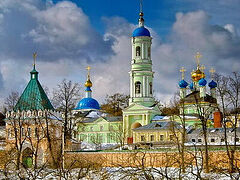
—In some sense, St. John the Baptist’s Skete is the heart of our monastery. It was here that all the Optina Elders stayed and received people. There are currently twenty brethren living at the skete. According to its rule, services begin there at four in the morning. They have less contact with the laity, and they go to the monastery for the festal Vigil.
—Despite the large number of pilgrims, the spirit of asceticism is felt in Optina. How do you manage to maintain it? Wouldn’t the brethren like to retire to the skete?
—Thank God that this spirit is felt. Yes, many monks long for solitude, and the huge number of pilgrims can be confusing. But we console the brethren. It shouldn’t affect their life. We assign obediences that involve communication with laypeople (in the shop and in church) to those who are already prepared for it. We try to assign people to more experienced monks, whom they won’t harm. The Lord helps them. A mere novice or a riassaphore monk do not need this. If a brother humbles himself in such obediences and does not grumble, he will benefit greatly from it. If he grumbles, it means it’s too early for him to do it. In any case, no matter what obedience he has, it will be of great benefit. After all, you cut off your will, break down your pride and acquire humility through this. Of course, the abbot has a lot of responsibility here. He must have the discernment to assign a monk an obedience that is within his capacity so as not to harm him. Someone needs a “greenhouse”, and someone else is ready to be “planted out”, as it were. The [spiritual] laws are such that you can never relax, and anyone can be harmed.
—Vladyka, what would you say to those who are reading this interview?
—Now it is a decisive time for our country—we must unite. It depends on us what will happen to our motherland and the Church next. If we are worthy Christians, the Lord will have mercy on us and our Russian land. Thanks to such holy places that, like beacons, point the way to salvation, we can be guided in the right directions. Therefore I call on everyone to visit holy sites, such as the Optina Monastery, more often, and the Lord will not deprive us of His grace. Amen.