Denver, CO, November 10, 2025
 Photo: Antiochian Orthodox Christian Archdiocese of NA
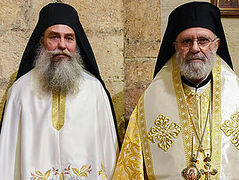
His Eminence Metropolitan Saba, primate of the Antiochian Orthodox Christian Archdiocese of North America, delivered a comprehensive presentation on the phenomenon of converts to Orthodoxy at the 14th meeting of the Assembly of Canonical Orthodox Bishops of the United States of America on November 7.
Metropolitan Saba traced the evolution of Orthodoxy in America from ethnic immigrant communities to a faith attracting significant numbers of converts, particularly since the 1980s. “By the end of the twentieth century, we almost thought that the century of immigration for Orthodox Christians in America had ended and that the century of evangelization had begun,” he said, noting that Orthodoxy was no longer, as his predecessor Metropolitan Philip once called it, “the best kept secret in America.”
The Metropolitan identified several motives drawing people to Orthodoxy, including Protestant seekers disillusioned by denominational divisions who are looking for “the faith once delivered to the saints.” He emphasized that “many find in the spirituality of the Orthodox Church both accountability and discipline amid the decadence and compartmentalization of contemporary life.”
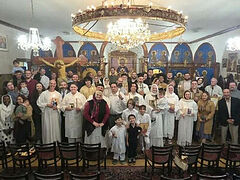
A striking aspect of current conversions is the influx of young people aged 15-30. Metropolitan Saba cited the example of the Antiochian cathedral in Brooklyn, which now has “more than fifty university-age catechumens or very recent converts of every race and religious background—or even of no religious background at all.” These young people, he explained, “were looking for a real spiritual life, and we found it in Orthodoxy.”
However, the Metropolitan also outlined significant challenges. “The truth is that the Orthodox world in general lived for centuries under persecution, which made the preservation of the faith and the continuity of Orthodox existence the priority overshadowing all else,” he said, noting that this history left many Orthodox unprepared for large-scale evangelization. He warned of dangers including fundamentalism, lack of pastoral follow-up, and what some have termed “internet fundamentalism,” calling it “a new heresy.”
The current influx is straining church resources. “I do not visit a parish without meeting catechumens there; in some parishes, they number more than one hundred,” Metropolitan Saba reported. Some parishes are so crowded on Sundays that “they exceed the fire code, and parking lots cannot fit any more cars.” He noted that many priests describe themselves as “burned out” under the increased workload.
Metropolitan Saba stressed that acquiring the Orthodox mindset requires more than instruction alone. “The Orthodox Faith is not an idea but a lived experience of repentance and communion with God,” he emphasized, calling for personal discipleship, spiritual guidance, and integration of teaching with practice through attendance at services, fasting, confession, and prayer.
His Eminence concluded by calling this moment a historic opportunity and responsibility. “The hardships of history forced us, as Orthodox, to forget the basic commandment: ‘Go into all the world and proclaim the Gospel to all people,’” he said. “But the Holy Spirit reminds us today that, in this blessed land, we now have the freedom and the means to accomplish what the Lord asked of us—what centuries of persecution prevented us from doing.”
The Antiochian Archdiocese also published a video of the Metropolitan’s talk:
Follow OrthoChristian on Facebook, Twitter, Vkontakte, Telegram, WhatsApp, and MeWe!