Brothers and sisters, unfortunately, anyone can become an egoist. In His infinite love for man, God allowed suffering for him so that sin should not take full control over His creation and destroy it completely. Suffering and death exist in this world as the aftermath of sin. But if they didn’t exist in our world, no one would stop sinning and this world would become an unbearable hell.
A believer often experiences total, ontological helplessness in suffering and humbles himself. Such a person begins to realize his sin and sets about fighting it, even unto blood: Ye have not yet resisted unto blood, striving against sin (Heb. 12:4). Such a Christian heeds the Apostle Paul’s words: Let not sin therefore reign in your mortal body, that ye should obey it in the lusts thereof (Rom. 6:12). However, a human being weakened by sin is subject to falls over and over again: For a just man falleth seven times, and riseth up again: but the wicked shall fall into mischief (Prov. 24: 16). The spiritual life of a Christian is that of ups and downs, mortification of the flesh and passions, right up to the physical death and individual resurrection. I die daily (1 Cor. 15:31), says the Apostle Paul.
In his struggle with sin, a believer is never alone for a single moment. On the contrary, he is constantly strengthened by the grace of God. He receives it in the prayerful atmosphere of church, and, above all, through Communion of the Body and Blood of Christ. But he also receives grace through the prayer of a small church—that is, his family. This happens in prayer that he performs at all times and in all places, fulfilling the commandment of the Apostle Paul: Pray without ceasing (1 Thess. 5:17).
The human heart is the place where the Lord likes to rest. It contains all the integrity of the human being in all its powers or energies, physical and mental. And in order for our minds to descend into our hearts prayer must be accompanied by fasting and abstinence from worldly pleasures. Otherwise, the mind (nous), which is the energy of the heart, cannot be focused on prayer, but extends outward.
The warfare against various thoughts and imagination that distracts us in the reality of this world is the most difficult one. It is only through pure prayer, untainted by extraneous thoughts, that we experience God as compassionate Love extending to all people and all creation. Prayer is undoubtedly the greatest feat of Christians. We need it for our hearts to be filled with the grace of God and to experience the joy of unity with God.

The grace of God never abandons us completely. But God wants us to turn away from sin and regain the fullness of His grace through repentance. The Apostle Paul even said, But where sin abounded, grace did much more abound (Rom. 5:20). If a person struggles with sin, grace helps him overcome it. But if he is in a state of sin that can lead to rebellion against God, the grace of God inspires his heart with an aversion to sin and a sense of repentance. When some people become hardened in their sins until death, this does not mean that grace did not work in their lives. For grace is in itself a gift from God.
Pride, this demonic desire to be like God, but without Him, inherited from Adam, is a great temptation for people. A person wants to be free from any power that dominates him, wants to be the master of himself and of the world around him. But freedom from God also creates in him a lack of freedom from carnal desires and the blessings of this world, which enslave him. “I am become my own idol, and have injured my soul with passions, O merciful Lord, but accept me in penitence and recall me to awareness of Thee. May I never be the possession or food of the enemy. O Savior, have compassion on me,” says Ode 4 of the Great Canon of St. Andrew of Crete on Thursday of the first week of Lent.
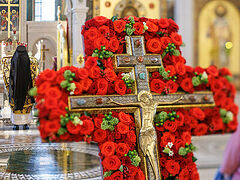
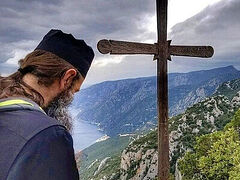
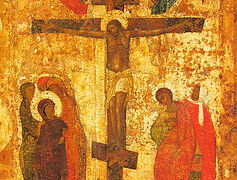
He who commits sin becomes a slave to sin. You can be truly free in God alone. Only humility and obedience make you truly free. All our life’s trials, illnesses, and sufferings are allowed by God so that we may acquire humility through them. And lest I should be exalted above measure through the abundance of the revelations, there was given to me a thorn in the flesh, the messenger of satan to buffet me, lest I should be exalted above measure (2 Cor. 12:7), writes the Apostle Paul. It is only through suffering endured with faith and hope that our old man, corrupted by passions and illusory desires, decays, and the new one rises from the dead as one created in the image and likeness of God. But God forbid that I should glory, save in the cross of our Lord Jesus Christ, by Whom the world is crucified unto me, and I unto the world (Gal. 6:14), the apostle writes again. The Cross is a unique theologian!
But there is also the mystery of the sufferings of the innocent, which we are going to examine in connection with the great mystery of the Church. The Body of Christ is the Church. All people are potentially members of an enormous body of the Church. If one member suffers, the whole body suffers as well. Likewise, healthy members of the Church help bear the sufferings of sick ones: We then that are strong ought to bear the infirmities of the weak, and not to please ourselves (Rom. 15:1). If suffering is a result of sin, then the innocent sometimes suffer because of the sin of their fellow human beings. This is how the Lord is glorified. It also reveals the mystery of man who carries everything within himself and is not separated from anyone or anything. If there were no suffering, we would not understand what compassion is.
Acquiring a compassionate and merciful heart that prays and sympathizes with the suffering is ultimately one of the main tasks of spiritual life. But it is precisely compassion transformed by the grace of God, not something painful or destroying the soul. “For behold, through the Cross joy hath come to all the world,” as we sing at the Sunday Vigil. Joy came to the whole world through the Cross.

The human personality becomes wise and develops thanks to the trials and sufferings that it voluntarily takes on or even chooses. The saints of the Church lived in such a way that they were able to make the transition from a purely individual existence to a hypostatic one in the image and likeness of the Second Person of the Most Holy Trinity. The hypostasis and the Cross distinguish the Mother of God and all saints, monks, martyrs, and believers clothed in deep faith and full trust in Christ. They followed Him in all their freedom. The example of the righteous, saints, pious laypeople, and good pastors of God demonstrates that their earthly sufferings were transformed through the Cross. But, according to the Holy Scriptures, the suffering of unrepentant sinners is everlasting. And righteousness lives by the hope for a blessed meeting with the Risen Christ. He is the true Light, which lighteth every man that cometh into the world (Jn. 1:9).
The liturgical and sacramental prayer of the Church and reflections on suffering from the perspective of the Cross are essential for the support of the suffering in our time. Today our world is suffering especially hard, but Christians believe in the Second and Radiant Coming of the Word—the Son of God. I invoke the grace of the Holy Spirit upon you all, so that you may serve the Lord and your suffering neighbors with even greater love. Amen.