The Great Canon of Repentance by St. Andrew of Crete is read twice during Lent. It is read for the first time in the first four days of the first week of Lent. And it is read for the second time on the feast of St. Mary of Egypt—on Wednesday evening of the fifth week of Lent. Along with this canon, the Life of St. Mary of Egypt is read at the service. That is why this long service is often called the “Standing of St. Mary.”
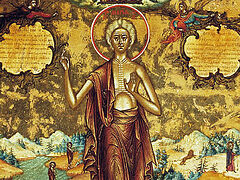
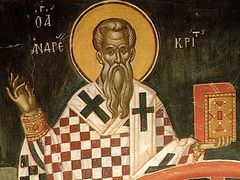
These two saints—Sts. Andrew of Crete and Mary of Egypt—are often depicted on icons side by side. However, they never saw each other in their lifetime, and their lives were absolutely different.
From his youth, St. Andrew loved stillness and prayer. He was brought up in one of the strictest monasteries in Palestine—the Lavra of St. Sabbas the Sanctified. There, in zealous ascetic struggles, he found that spiritual treasure, which, in the words of Christ, is more precious than the whole world. Having attained the heights of spiritual perfection, St. Andrew planned to spend the rest of his life in his beloved Monastery of St. Sabbas; but by Divine Providence he was appointed bishop of the island of Crete.
In his old age, adorned with numerous spiritual gifts and having performed many miracles, he wrote the principal work of his life—The Great Canon of Repentance. For all generations of Christians, this work will remain a manual, the ABC of repentance. This canon cannot be retold—it must be read. Read slowly and attentively. And then the soul will discover that it was written about it.
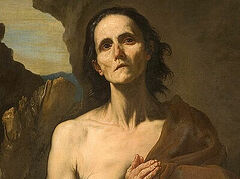
St. Mary of Egypt had a totally different life. In her youth, she chose the life of a free harlot. She confessed later that she did not even take money from her “clients”, believing that the meaning of life was in the enjoyment of bodily pleasures. She lived in unrestrained debauchery for seventeen years, until the Lord revealed the true meaning of human life to her.
The turning point in St. Mary’s life came when an invisible force prevented the inveterate harlot from entering the church of God, which St. Mary had attempted to enter out of curiosity. Realizing the depth of her sinfulness, she prayed to the Mother of God right at the entrance to the church, which she could not enter. The sinner’s sincere repentance was accepted: the Most Holy Theotokos showed St. Mary the path of salvation.
Immediately after that, the former harlot retired to the Transjordan desert (a desert east of the Jordan River), where she lived in prayer and repentance for several decades, enduring all the hardships and sufferings of such an austere life. She suffered the sweltering heat of the day and the freezing cold at night. She was tormented by hunger, inner passions, and memories of her former life. After seventeen years of such struggles, the future saint felt inner freedom from passions and sin. Over the long years of her following ascetic life, St. Mary tasted of the Heavenly joy of perfect prayer and the blessedness of closeness to God.
In this state, St. Mary was met by the holy Elder Zosimas, who had gone to pray in the desert during Lent. She told him the story of her life—the story of great sin and great repentance. When Fr. Zosimas asked the saint to pray, he was amazed to see that during prayer St. Mary had risen above the ground and was praying in the air.
After reading her life story, someone may argue: “Well, she sinned for so many years, and then repented... So we can indulge in sin, and then we will repent too...” No, it won’t be like that!
In her early life, St. Mary did not know the Truth and her lifestyle had seemed right to her. Once the Truth was revealed to her, she rejected sin without hesitation. We know the truth. Although most of us were brought up in the Soviet Union with its atheism [or in some other non-Christian environment], in our childhood we were told what is good and what is bad. Whenever we commit a sin, we act against our conscience.
Anyone who sins consciously in the hope of subsequent repentance lies to God. God cannot be deceived—repentance won’t be given to such a person.
So what do Sts. Andrew of Crete and Mary of Egypt have in common? Why did the Church unite them in one long service? One was a righteous man from youth, the other was a repentant sinner.
Both of them are great teachers of repentance, and the example of both shows that repentance is vital for everyone. There is no one who does not need it. Whether you have lived your whole life in a monastery or spent it in incessant sin, you nevertheless need to repent. For sin is not only in human actions. It’s much deeper. It is in the heart, and like a worm in an apple, it can eat away the whole heart from the inside, even without visible external manifestations.
And these saints also reveal another great truth to us: Let no one despair of salvation. God listens to both the righteous and sinners, and He looks for the desire to reform in the most hardened heart, waiting for and joyfully accepting the repentance even of the very last sinner.