Tirana, June 2, 2026
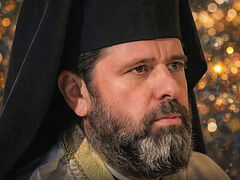
 Photo: knfsh.al
The Interreligious Council of Albania, which includes the Albanian Orthodox Church alongside Catholic, Evangelical, and Muslim representatives, has issued a public statement calling on government institutions to justify and disclose the basis for newly approved clinical guidelines on hormonal treatment for transgender persons.
The Council’s statement was prompted by the Ministry of Health and Social Welfare’s approval of the Clinical Practice Guide “On the Hormonal Treatment of Transgender Persons,” issued under Order No. 304 on April 28, 2026. While acknowledging the constitutional authority of public health institutions, the Council argues that “issues of this nature, due to their social, ethical, medical, and anthropological impact, require full institutional transparency, broad professional consultation, and informed public debate.”
The Council calls on responsible institutions to make public the scientific and medical basis on which the guidelines were drafted, the reasoning that justified their approval through an expedited procedure, the legal basis and competencies underpinning their adoption, and the criteria by which minors were included in the regulations.
The statement also raises questions about the legal framework authorizing medical personnel to administer hormonal treatments, noting that “current Albanian legislation doesn’t provide a specific legal framework that regulates in detail the legal status, clinical criteria, medical procedures, and treatment standards for this category of persons.”
The Council calls for “broad national debate and multidisciplinary consultation with experts in medicine, bioethics, psychology, law, and representatives of civil society” to ensure transparency, legal certainty, and public trust.
The statement also sets out the Council’s religious position, affirming that “human identity and the distinction between man and woman are considered a fundamental part of human nature given by God,” and expressing “reservations and concern regarding medical interventions or practices that aim at the artificial modification of biological sex characteristics.”
This is not the first time the Council has weighed in on a policy matter of this kind. In May 2024, the Interreligious Council—then chaired by His Beatitude Archbishop Anastasios of Albania—issued a statement objecting to Albania’s draft “Sexual and Reproductive Health” law, also citing a lack of prior consultation with religious communities and other stakeholders.
Follow OrthoChristian on Facebook, Twitter, Vkontakte, Telegram, WhatsApp, and MeWe!