Though I speak with the tongues of men and of angels, and have not charity, I am become as sounding brass, or a tinkling cymbal.
(1 Corinthians 13:1)
In the modern world, the word “nightmare” is strongly associated with horror movies, serial killers, or otherworldly phenomena. However, Anton Pavlovich Chekhov, with his subtle perception of the Russian soul, wrote several stories with such profound psychological insight that the true horror lies not on the screen, but within one’s own heart.
Without love, life turns into a nightmare. And the worst part is that we turn it into a nightmare when, instead of reaching out to help, we demand that others conform to our selfish fantasies.
Three of Chekhov’s short stories, written from 1886 to 1887—“The Witch,” “The Nightmare,” and “The Cossack,” depict this human tragedy in its progression. Arranged in chronological order, they present a chilling portrayal of the spiritual degradation of a person devoid of love.
“The Witch”: Diagnosis—Lack of Love
 Illustration by Alexander Apsit for the story "The Witch"
The first story, published in the newspaper Novoye Vremya on March 8, 1886, was “The Witch.”
The story takes place in a winter blizzard, in a secluded parish house. Saveliy Gikin, a gloomy and distrustful deacon, lives with his young wife, Raisa. Their marriage has long been a living hell, with Saveliy constantly accusing his wife of infidelity and calling her a witch. One day, a lost postman and a coachman stop at the lodge to wait out the blizzard. Raisa, exhausted by her husband’s loneliness and coldness, suddenly comes to life, becomes beautiful, and tries to get the postman to stay. Saveliy sees this not as a woman’s longing for warmth and attention, but as a “demonic possession” and witchcraft. He watches his wife with hatred. The postman leaves. The couple is left alone again, two people who hate each other and are forced to live together. The torture continues.
What do we see? A man of the clergy who knows the church calendar and performs the rituals, but does not know the most important thing—love for God and his neighbor. Without it, everything in his life is poisoned:
-
By mistrust, and watches his wife’s every move with suspicion;
-
by cunning—he is unscrupulous, but he judges others;
-
by pride—he considers himself a sufferer, and her a devil;
-
by judging—he doesn’t try to understand what his lonely young wife wants, but immediately labels her.
She answers him in kind. She considers him the main culprit of her ruined, unhappy life.
Judge not, that ye be not judged (Matthew 7:1). Saveliy constantly judges his wife, but he never judges himself. It is easier for him to believe in demonic schemes, magic, and “sabatoge” than to honestly look into his own heart and admit, “I am responsible for my own unhappiness.”
Here, Chekhov touches on a surprisingly important spiritual theme. Behind all the superstitions, the belief in witchcraft, the evil eye, and sorcery, lies the same thing: the unwillingness to look at oneself honestly and to repent. It is easier and more pleasant for a person to blame others than to admit the truth about himself.
Behind all the superstitions, the belief in witchcraft, the evil eye, and sorcery, lies the same thing: the unwillingness to look at oneself honestly and to repent.
“The Witch” is not a story about mysticism. It is a story about how a person drives love out of their life and calls it, “fighting evil.”
And though I have the gift of prophecy, and understand all mysteries, and all knowledge; and though I have all faith, so that I could remove mountains, and have not charity, I am nothing. (1 Corinthians 13:2). Saveliy has his ordination, but without love, he is nothing. Raisa, with all her sinful impulsiveness, lives, dreams, and longs for warmth. But he only smolders in anger. Without love, a person is doomed to an empty, angry, and resentful existence, destroying himself and everyone around him.
We will not be saved by any spiritual title, education, or work—by any earthly achievements. Only love saves, which beareth all things, believeth all things, hopeth all things, endureth all things. (1 Cor. 13:7).
“Nightmare”: the disease strikes another
 Illustration by V. F. Vasilyev for A. P. Chekhov’s short story "Nightmare" Just three weeks later, on March 29, 1886, the short story “The Nightmare” appeared in the same newspaper. It is not a horror story, as the title might suggest.
Pavel Mikhailovich Kunin, a member of the Committee on Peasant Affairs, arrives in the village of Borisovo and takes on the task of opening a parish school in Sinkovo. However, after failing to find funds for the school and becoming disillusioned with the local priest, Fr. Yakov (who appears to be slovenly and indifferent), Kunin writes a denunciation of Fr. Yakov to the bishop. Later, Fr. Yakov approaches Kunin with a request that he hire him as a scribe for 10 rubles per month due to the family’s dire financial situation. After that, Kunin feels ashamed of his denunciation and his own past expenditures, and his impulses for “useful activity” fade away.
What is this story about? It is not only and not so much about the difficult life of village priests in pre-revolutionary Russia. The main point is that we should always strive to understand another person and their real life, rather than substituting this understanding with our own fantasies.
Kunin has already created a portrait of what a priest is in his mind. When reality does not match this image, this egotist falls into judgment. Egoism, fantasies about others or about how to properly save them, often become an insurmountable barrier preventing us from helping others.
Before you can save others, you must first walk this path yourself. Without it, salvation is impossible.
Before you can save others, you must first walk this path yourself. Without it, salvation is impossible. You cannot understand others without understanding yourself. You cannot do good for others without being truly kind, in your heart, and not just on the surface.
The climax is the priest’s candid account of his poverty and his request for a scribe’s job. Kunin is “almost horrified” to learn about the young priest’s starving family, the doctor’s impoverished situation, and Fr. Yakov’s integrity—the financial support he provides to a seminarian brother and an elderly priest. At this moment, the truth begins to emerge through the husk of the nobleman’s contempt: Be ye therefore merciful, as your Father also is merciful. (Luke 6:36). Kunin finally sees not the image he made up, but real suffering. But the cost of this insight is such that in reality his life seems to him a dark, dreary nightmare. This is not because of the village squalor. This is about the state of the soul that wanted to love, but could not because of its selfishness.
“The Cossack”: The Point of No Return
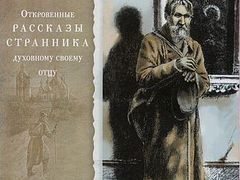
 "The Cossack", a short story by Anton Chekhov. Cover. Published by the Parish of the Descent of the Holy Spirit Finally, a year later, in April 1887, the third story, “The Cossack,” was published. Chekhov wrote it in Taganrog, and it appeared in the Petersburg Gazette on April 13.
The action takes place on Pascha night. Maxim, a young tenant of a farm, is returning home from church with his young wife. He has a freshly blessed Easter cake in his cart. He is filled with Paschal joy, and everything around him seems bright, cheerful, and happy. On their way, the couple encounters a red-haired Cossack sitting on the ground. It turns out that the Cossack fell ill on the road while traveling home for a visit, and now he lacks the strength to continue his journey. He asks the passers-by for a small piece of “holy Paschal cake to break the fast.” Maxim immediately wants to share it with him, but his wife forbids him to cut the kulich, believing that it is “not proper” to do so and that the consecrated Kulich should only be eaten at home, during the festive meal. The couple leaves without giving the poor man anything. From that moment on, Maxim’s joy disappears. His conscience begins to torment him. He cannot sleep, cannot pray, and cannot celebrate the Resurrection of Christ.
The couple leaves without giving the poor man anything. From that moment on, Maxim’s joy disappears. His conscience begins to torment him. He cannot sleep, cannot pray, and cannot celebrate the Resurrection of Christ.
He tries to drown his sadness in wine, and ends up drinking himself to death. As a result, his previously happy and prosperous life is shattered.
This is chronologically the most recent story. And it is here that Chekhov shows the most tragic ending. While in “The Witch” we see a soul that is already dead, and in “The Nightmare” a soul that is poisoned by selfishness, in “The Cossack” we see a man who had everything—the joy of Pascha, the love of his wife, and his faith—but lost it all in a single cruel act, a single refusal to show mercy.
Blessed are the merciful: for they shall obtain mercy (Matthew 5:7). Maxim did not show mercy when it was most important, when it was truly needed. And mercy was taken away from him.
What is Chekhov talking about? He is talking about the fact that Paschal joy can be lost in an instant. And it can be lost without committing a mortal sin, but “just” by being heartless. Maxim did not kill or steal, he simply listened to his wife and did not show mercy by giving the Cossack a bit of kulich. However, God does not look at appearances, but at the inner workings of the heart. Essentially, this was a fall from grace similar to the first fall in human history.
Essentially, this was a fall from grace similar to the first fall in human history.
And here’s another Chekhovian insight: People often drink because they’re trying to drown out the tormenting voice of their conscience. Many people don’t want to admit their guilt, don’t want to repent and come to Christ, so they seek oblivion in alcohol, work, entertainment, or anything else but the Church. And it all starts with a seemingly small unkind act. An Apocalypse of Small Sins…
What unites these three stories?
“The Witch,” “The Nightmare,” and “The Cossack” are three different stories with three different main characters. However, each story revolves around a person who has not fostered love in his heart.
-
Saveliy (“The Witch”) did not cultivate love, and he turned his own family into hell by accusing his wife of witchcraft instead of repenting of his callousness.
-
Kunin (“Nightmare”) did not cultivate love, and the world around him became a nightmare because he saw not people, but his fantasies about them.
-
Maxim (“The Cossack”) did not cultivate love, and he lost his Paschal joy, which was replaced by melancholy and drunkenness.
Chekhov’s main lesson is that only love makes life happy, meaningful, whole, and saving.
Chekhov’s main lesson is that only love makes life happy, meaningful, whole, and saving. However, love depends primarily on us, our free will, efforts, and labor. If a person has not cultivated love for God and their neighbor, they are doomed to an empty, spiteful, and resentful existence, leading to the destruction of themselves and everyone they come into contact with.
Understanding and pity
According to researchers, the main feature of Chekhov’s vision of reality is his sincere love for his characters, no matter who they are. He did not write “hagiographies,” but rather wrote about us. He did not have any villains. Instead, he portrayed unfortunate individuals. Saveliy is unfortunate due to his suspicious nature. Kunin is unfortunate due to his selfishness. Maxim is unfortunate due to his guilty conscience. Chekhov completely lacks a judgmental attitude towards people.
This is the secret of Chekhov’s approach. He doesn’t judge anyone in his works, but he tries to understand and sympathize with them because he loves them. And he succeeds because he sees the main disease: the absence of love. He points out the only cure: to let go of your prejudices, to look into the face of someone close to you, and to ask them what they truly need.
Charity suffereth long, and is kind; charity envieth not; charity vaunteth not itself, is not puffed up, doth not behave itself unseemly, seeketh not her own, is not easily provoked, thinketh no evil; (1 Cor. 13:4–5).