Tallinn, July 8, 2026
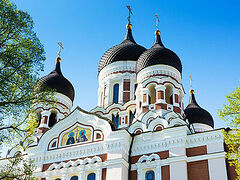
 St. Alexander Nevsky Cathedral in Tallinn. Photo: err.ee
Estonia’s Ministry of the Interior has given the Estonian Christian Orthodox Church, which is an autonomous, self-governing Church with the Moscow Patriarchate, six months to appoint a new Metropolitan and cut its ties with His Holiness Patriarch Kirill of Moscow and All Russia, or face potential forced dissolution.
The deadline follows the entry into force on June 27 of amendments to Estonia’s Churches and Congregations Act, which bar religious associations in the country from maintaining affiliations with a religious leader based in a foreign country deemed a threat to Estonia’s national security, reports err.ee.
The law was passed by Estonia’s Parliament on April 9, 2025. President Alar Karis twice declined to promulgate it before it was passed a third time on September 17, 2025, after which Karis petitioned the Supreme Court in October, arguing the law was unconstitutional. On June 8 of this year, the Supreme Court ruled that the amendments do not unconstitutionally restrict religious freedom, rejecting Karis’s challenge and clearing the way for enforcement. Six of the court’s seventeen justices dissented, arguing the law fails to meet constitutional standards of legal clarity.
Tarmo Miilits, Secretary General of the Ministry of the Interior, has now sent letters to all religious associations in the country notifying them that they have until December 28 to bring their activities into compliance with the new requirements. The Interior Minister may otherwise initiate proceedings to forcibly dissolve a noncompliant association.
While the letter was sent to all religious associations, the primary focus is the Estonian Christian Orthodox Church, formerly known as the Estonian Orthodox Church of the Moscow Patriarchate. His Grace Bishop Daniel of Tartu said in a written response that over the next six months, the Church plans to seek clarity on how the law will be implemented before deciding how to proceed.
Ilmo Au, an adviser at the Ministry of the Interior, said the Church must first appoint a new Metropolitan, since no cleric or member of the Church’s governing board may be someone whose residence permit was denied renewal on national security grounds within the past 10 years. The Church’s current leader, His Eminence Metropolitan Evgeny, was required to leave Estonia in early 2024 after the Estonian Internal Security Service claimed that his activities posed a threat to national security.
A further obstacle involves removing references to the Moscow Patriarchate from the Church’s governing documents. Under its current statutes, Pat. Kirill must approve with his signature all decisions made by the Church’s General Assembly, including its annual report, budget, and the election of members of the Church administration.
Tartu University Associate Professor of Church History Priit Rohtmets noted that the Church’s situation is further complicated by a 1993 tomos issued by His Holiness Patriarch Alexei II, which serves as the Church’s founding document, establishes its rights, and defines its place within the hierarchy of the Moscow Patriarchate. The tomos is the source of the requirement that decisions of the Church’s General Assembly be approved by the Patriarch and that the Metropolitan be nominated and confirmed by the Patriarch of Moscow. Rohtmets said the Church may remove references to its subordination to the Moscow Patriarchate from its statutes but is unlikely to want to remove references to the tomos itself.
Rohtmets said the broader process is likely to lead to new legal disputes this winter, with courts having to determine whether the Church has genuinely severed its ties with the Russian Orthodox Church and whether grounds exist for forced dissolution.
Rohtmets also said it is unlikely that the Russian Orthodox Church would agree to release the Estonian Church. However, under the amended Churches and Congregations Act, the Estonian Church is no longer legally required to seek Moscow’s approval to make such a decision, according to Au.
Follow OrthoChristian on Facebook, Twitter, Vkontakte, Telegram, WhatsApp, and MeWe!