Konitsa, Epirus, Greece, July 13, 2026
 Photo: Romfea
The feast of St. Paisios the Athonite was solemnly celebrated on Sunday throughout Greece and the entire Orthodox world. In Konitsa, the town where the Elder grew up, the feast was celebrated by the Holy Metropolis of Dryanoupolis, Pogoniani, and Konitsa.
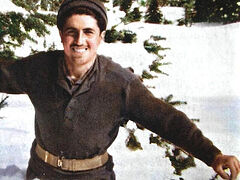
St. Paisios was born on July 25, 1924, in Farasa of Cappadocia in Asia Minor. Following the population exchange between Greece and Turkey, his family relocated to Greece and eventually settled in Konitsa, in the Epirus region, where he was raised.
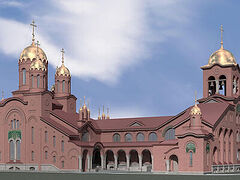
On the eve of the feast, Great Vespers was celebrated at the Holy Pilgrimage Church of St. Kosmas of Aetolia, with Metropolitan Kallinikos of Kastoria presiding and Metropolitans Hierotheos of Nafpaktos and St. Vlasios and Alexios of Dryanoupolis concelebrating, reports Romfea.
In his homily, Met. Kallinikos described St. Paisios as a living witness to God’s presence in the world and a genuine fruit of the Greek Orthodox tradition. He said the saint’s life was “applied theology,” in which love is expressed as self-sacrificing offering with humility and filotimo, without any expectation of return, and that true Christian love is not identified with the claiming of rights but with free, sacrificial offering to one’s neighbor.
 Photo: Romfea
Vespers was followed by a procession of the icon of the saint through the streets of Konitsa, passing by his family home, with the participation of clergy, civil and military authorities, and a large number of faithful.
On the feast day itself, the Hierarchical Divine Liturgy was celebrated with Met. Hierotheos of Nafpaktos and St. Vlasios presiding and delivering the festal address. He recalled his attendance at the consecration of the Church of St. Kosmas of Aetolia years earlier, as a spiritual child of the late Metropolitan Sebastianos of Dryanoupolis, Pogoniani, and Konitsa.
He described St. Paisios as a unique global spiritual phenomenon of the Church, attributing this to three factors: his theological formation as a person made in the image of God and destined for likeness to God within the Church’s tradition; the blessed environment of Cappadocia and later Epirus, which nurtured him in the Greek Orthodox tradition, asceticism, and filotimo; and his own free cooperation with Divine grace.
He also spoke of the saint’s enduring teaching on filotimo, spiritual nobility, and courage, particularly in times of temptation.
Following the Divine Liturgy, Metropolitan Hierotheos delivered a talk at the Konitsa municipal hall titled “My meetings with St. Paisios.”
Follow OrthoChristian on Facebook, Twitter, Vkontakte, Telegram, WhatsApp, and MeWe!