İznik District, Bursa Province, Turkey, July 28, 2026
 Photo: heritagedaily.com
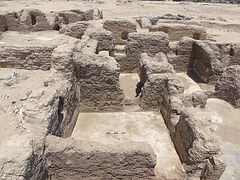
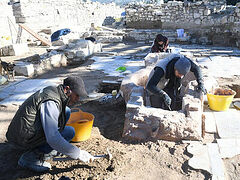
Archaeologists excavating in the İznik District of Turkey’s northwestern Bursa Province have uncovered structural remains believed to belong to the Church of St. Neophytos, the church that hosted the First Council of Nicaea in 325 AD, offering what researchers describe as the strongest archaeological evidence to date for the location of the historic gathering.
The newly found remains, including wall sections, floor paving and a column base, were discovered beneath the ruins of a later lakeside basilica that was named one of the world’s 10 most significant archaeological discoveries in 2014 by the Archaeological Institute of America, reports Hurriyet Daily News.
Professor Mustafa Şahin, head of the Archaeology Department at Bursa Uludağ University’s Faculty of Arts and Sciences, said the team’s goal this season was to determine whether a floor discovered in previous years, inside the church’s prothesis chamber, extended beyond the walls of the existing church. A new trench opened east of the chamber confirmed within the first week that the paving continued outside the existing walls, indicating the present church was built over an earlier structure.
Şahin said the newly uncovered foundations and floor can now be identified as belonging to the Church of St. Neophytos, a small church described by Eusebius of Caesarea, a bishop who attended the council and later wrote in Vita Constantini that the gathering was held in a modest church that seemed miraculously able to accommodate so many bishops.
According to Şahin, the Church of St. Neophytos was destroyed in an earthquake in 368. A new church, the Holy Fathers Church, was built on the same site after 380 to commemorate the bishops who took part in the council and to preserve the site where it was held.
Separately, Italian researchers are continuing excavations in the basilica’s central nave, where earlier seasons uncovered eight burials, including two directly beneath the bema wall, the elevated area reserved for senior clergy. Mortar traces on the skeletons showed the graves predated the church’s construction, while coins found in two burials date to the reigns of Roman emperors Valens and Valentinian, evidence previously used to date the Holy Fathers Church to around A.D. 380. Şahin said this year’s work in the central nave is expected to provide further evidence about the basilica’s earliest phases.
Follow OrthoChristian on Facebook, Twitter, Vkontakte, Telegram, WhatsApp, and MeWe!