Christ is in our midst, dear readers!
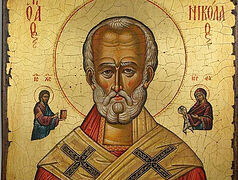
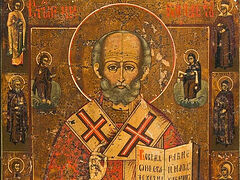
 Photo: foma.ru I congratulate you with the feast of the Nativity of the great God-please, St. Nicholas the Wonderworker. Today [August 11] we recall not only the day of his earthly birth, but also the whole mystery of sanctity, which filled his life with unearthly fragrance—that very fragrance of Christ about which the apostle Paul spoke in his words today: For we are unto God a sweet savour of Christ, in them that are saved, and in them that perish:16 To the one we are the savour of death unto death; and to the other the savour of life unto life (2 Cor. 2:15–16).
The apostle is giving an amazing image that his contemporaries understood. In antiquity, when the triumphant Roman general returned from his victorious battle, a smoking censor was borne at the head of the procession. This sweet smoke was for the victors the fragrance of life, triumph, and joy. But for the captives in irons walking at the rear, who awaited execution, this same smell was the harbinger of inevitable death.
St. Nicholas became this living fragrance of the Lord. Why does sanctity produce such a dual effect? Spiritual fragrance is not just a beautiful metaphoric expression. It is the presence of divine grace in the human heart. When a person purifies his soul through repentance, when his mind ceaselessly reaches for God, and his heart is filled with mercy, his very person begins to radiate Christ. St. Nicholas did not seek human glory; he hid his good deeds, throwing the bag of gold through the window of those who needed it, under the cover of night. But grace cannot be hidden. It penetrates every dark place and manifestly transfigures the world around it.
 Photo: journalpp.ru
For the sinful heart that nevertheless thirsts for correction, a meeting with this sanctity is the the savour of life unto life, and in it hope is born. Sanctity inspires, heals, and calls us to goodness. It proves that the Gospel is not a distant ideal but real life, accessible to each of us.
But why did the apostle say that this fragrance can become the savour of death unto death? Divine light, reflected in the saints, does not leave space for neutrality. When the pure holiness of St. Nicholas encounters pride, deceit, and a consciously unrepented sin, it reveals all the ugliness of sin. A person who has become hardened in sin and does not want to change, in proximity to sanctity experiences not joy, but the scorching judgment of his own conscience. For him, purity becomes unbearable. This is why St. Nicholas’s rebuke of the impious brought either deep repentance, or fury. Light exposes darkness, and those who love darkness condemn their own selves to spiritual death.
My beloved, on the day of the Nativity of St. Nicholas each of us should ask ourselves an important question: “What does my life smell like?”
What proceeds from our heart when we are with our family and friends, when we encounter injustice, when we are left alone with our thoughts? Do we radiate the fragrance of meekness, patience, love, and forgiveness? Or do we disseminate the stench of egoism, murmuring, judgement, and anger?
We bear the name of Christian, and that means that we are called to be a continuation of the fragrance of Christ in the world, which is suffocating from anger and indifference. It is thirsting for a gulp of pure, holy life. St. Nicholas shows us that the path to this fragrance lies in small but sure steps: secret charity, sincere prayer for those who offend us, restraint from evil words, and standing steadfast in God’s truth. Through the prayers of the holy hierarch and wonderworker Nicholas at the throne of God for each of us, may we be granted the gift of spiritual renewal. May the Lord purify our hearts, so that our lives too may become a fragrance pleasant to God, bringing to those around us not bitterness and death, but light, joy, and life eternal.