In the Name of the Father, and of the Son, and of the Holy Spirit!
Wealth and the pursuit of wealth have become one of the most important goals in people’s lives, a driving force behind much of what they do. We hear about it constantly and everywhere, and people are offered all sorts of ways to become rich. Indeed, our children go to various schools and learn different trades; they pursue higher education, among other reasons, in order to become wealthy and secure their future. And their parents place these same hopes in them.
 Photo: Ru.freepik.com
Of course, there are other goals as well: to become educated, well-rounded individuals. Yet today, perhaps as much as sixty percent of these aspirations are still driven by the desire to become wealthy or, at the very least, comfortably well-off.
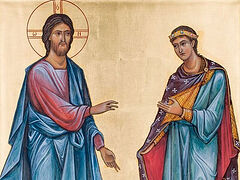
The fact is that today’s standard of material comfort exceeds what previous generations of Christians—and indeed, previous generations of people in general—would have considered extraordinary wealth. And it would seem strange today if, at the entrance to a school of economics or business, or at some professional development course, there were a sign saying—or if the instructor announced at the very first class—that it is difficult for a rich man to enter the Kingdom of Heaven. Yet this is what Christ said to a young man who asked Him, What good thing shall I do, that I may have eternal life?
Wealth and the pursuit of wealth have become one of the most important goals in people’s lives.
This young man was good, sincere, believing, and devout. He knew the Law of God and observed it. When he came to Christ with this question, the Lord told him: Keep the commandments... Thou shalt do no murder, Thou shalt not commit adultery, Thou shalt not steal, Thou shalt not bear false witness, Honour thy father and thy mother. And the young man replied that he had kept all these things from his youth.
He had not been involved in these sins; he had not been defiled by them, as most young men and women are today. Only a small proportion of young people give any thought to these commandments or even know that they are commandments of the Lord. Unfortunately, most would merely smirk and say, “What is all this about? What does any of this have to do with anything?”
So this young man lived what we today might call a holy life. He had kept himself from sin; he honored his father and mother, did not commit adultery, did not lie or bear false witness, did not kill, and did not deceive anyone. But when the Lord told him, Sell that thou hast, and give to the poor... and come and follow Me, the young man went away sorrowful. He no longer followed Christ or asked Him, “What must I do to inherit eternal life?”

It was then that Christ spoke the words that so frightened the Apostles. We must understand that the Jews—the people who surrounded Christ—regarded wealth as a blessing from God. Indeed, in the Old Testament we find many examples of the Lord Almighty visibly rewarding the righteous with flocks, herds, wealth, and servants. And suddenly Christ tells these people, who regarded such prosperity as a visible sign of God’s blessing, that it is exceedingly difficult—almost impossible—for a rich man to enter the Kingdom of Heaven: It is easier for a camel to go through the eye of a needle, than for a rich man to enter into the Kingdom of God.
There are many interpretations concerning this camel and the eye of the needle. According to one of them, the “eye of the needle” was the name of a gate in Jerusalem. But how is a camel to pass through the eye of a needle?
For a Christian, wealth is not the purpose of life at all. If wealth comes into a Christian’s life, it is a trust, a calling to serve his neighbor. He should not regard that wealth as something that belongs to him personally. If this is his attitude, he will not become its slave.
People who possess great material resources often complain themselves—and know perfectly well—that the more wealth they have, the less freedom they possess. What does a man tell himself as he accumulates wealth? “Once I’m rich, I’ll be able to do anything I want. I’ll travel, afford whatever I like, relax, take care of my health and my children’s health.”
Yet in reality, the richer a person becomes, the more often he becomes unhappy, because he has become a slave. He can no longer simply go out somewhere, sit down with someone, and have a conversation, because he is afraid. The head of his security detail will tell him, “Absolutely not! Have you lost your mind? You can’t possibly do that.”
And so everything around him becomes covered with cameras and protected by locks, while he hides away both his life and his wealth.
Sometimes people build themselves a fine, spacious house while they have the money—while the husband is working and the wife is able to devote her life to caring for the home. This often happens, incidentally, with well-known people. Then the husband develops cancer and dies, or simply reaches the end of his life because he is no longer young, and his wife and children are left with this house and no longer know what to do with it. She cannot earn enough to maintain the house and pay all the staff. And so she is forced to take up employment that will enable her to maintain the property, rather than do what she herself would like to do.
Also, very often people—especially when they take out various loans—find themselves acting against their conscience because the sword of Damocles is hanging over them. These people are honest, kind, and sincere; they reflect on the affairs of this world in a Christian way. But when some trial comes, you suddenly realize that they may cross the line into betrayal far more easily, simply because they have already become slaves to these economic and financial obligations.
It is a terrible thing for a person to lose his freedom. Above all, we must not lose the freedom to be Christians and to confess Christ. Unfortunately, wealth has taken possession of our minds and souls; indeed, the very preoccupation with wealth draws us away from Christ and from the freedom to be true Christians. Whenever an opportunity to become wealthy presents itself, our first thought should be that if this is a blessing from God, it has been given to us as an opportunity to help others. And when a person begins to do this, his life begins to change, and deeper meanings begin to reveal themselves to him.
It is difficult for a rich man to enter the Kingdom of Heaven, but it is even more difficult for one who is spiritually impoverished to enter it. Neither wealth nor poverty is any guarantee that we remain with Christ. There are poor people who are also unbelievers, and this is perhaps one of the saddest things to see, because those who are wealthy and unbelieving at least enjoy certain comforts and pleasures in this world. But there are also people to whom the Lord gives neither wealth nor health nor what we ordinarily call happiness, and yet they still do not come to Christ; they do not see Him. This is very bitter indeed. One cannot help but feel sincere compassion for such people.
Whether we are rich or poor, the important thing is that we should regard nothing we possess in this life as our own, but rather as belonging to Christ and His Church. Above all, we must serve our neighbor as ourselves. Then we will never know the sorrow that took possession of the heart of the young man in the Gospel us, and we will only know the joy of unity with our Lord Jesus Christ.
Amen.