Moscow, July 25, 2025
 ibtrussia.org
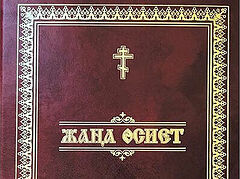
The Institute for Bible Translation has published the first complete Bible in the Kurmanji dialect of Kurdish using the Cyrillic script, marking the completion of a translation project that began in the early 1980s, the Institute reports.
The Kurds are an ancient people with a global population of approximately 40 million, residing primarily in the historical region of Kurdistan, which spans Turkey, Iran, Iraq, and Syria. According to the 2021 Russian census, 50,701 Kurds live in the Russian Federation, concentrated in Moscow, the Krasnodar and Stavropol regions, the Republic of Adygea, and several other areas.
The majority of Kurds (62%) speak the Northern Kurdish variant of Kurmanji. The Caucasian dialect of Kurmanji is widespread in Armenia, Georgia, and Russia. While Kurds traditionally used Arabic script, Roman/Latin and Cyrillic scripts became widespread in the 20th century, with Cyrillic adopted in former USSR countries.
 ibtrussia.org
The translation project began when Nadr Ozmanyan, educated in Soviet Armenia, was inspired by an Armenian-Kurdish edition of the Gospel of Matthew. Initially working alone with handwritten drafts in a small notebook, Ozmanyan eventually connected with the Institute for Bible Translation in the early 1990s.
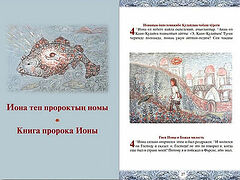
An international team of Biblical and Kurdish language specialists worked for over three decades to complete the project. The Gospel of Matthew was published in Kurmanji in 1993, followed by Luke and Acts. The complete New Testament appeared in 2000. Old Testament books were gradually released: Ruth, Esther, and Jonah in 2009; the Pentateuch in both Cyrillic and Roman scripts in 2010; and Psalms and Proverbs in both scripts in 2016.
In 2022, The Conversation of St. Seraphim of Sarov and 101 Quotations of the Holy Fathers, translated from Russian into the Kurmanji dialect, were also published.
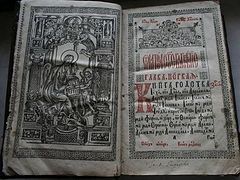
The complete Bible edition includes supplementary materials such as a detailed illustrated dictionary, tables of ancient weights and measures with modern metric equivalents, photographs of ancient Biblical manuscripts, maps of the Ancient Near East and St. Paul’s missionary journeys, and diagrams of Jerusalem’s Temple structure. An electronic version is available on the Institute for Bible Translation's website.
Follow OrthoChristian on Twitter, Vkontakte, Telegram, WhatsApp, MeWe, and Gab!