Monk Damian (Țâru) (1892–1964): Secu Monastery in Neamț County
Life
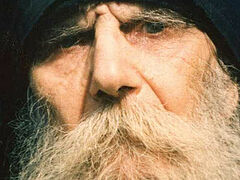
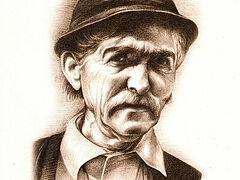
 Secu Monastery Monk Damian (Țâru) was a great ascetic and unsurpassed hesychast of our days. He was born in the town of Târgu Ocna, Bacău County, into a family of God-fearing peasants. After finishing elementary school, he was apprenticed to a local carpentry workshop. However, chosen by the Holy Spirit, he decided upon monasticism in 1915. He first went to the strictest monastery—Frăsinei, to withdraw from the world as much as possible. After ten years of obedience, the thirst for silence led him to Turnu Monastery in Vâlcea County. He remained there for just four years.
In 1930, guided by the providence of God, he returned to Moldavia and entered Țibucani Skete in Neamț County. Meanwhile, his sister also dedicated herself to the monastic life. In 1935, he was tonsured a monk with the name Damian, and in 1940, he moved to Secu Monastery, where he labored until his repose. There, Fr. Damian achieved great spiritual success and surpassed the whole monastery in obedience, prayer, and humility. He departed this life on January 20, 1964, and was buried in the Secu Monastery cemetery.
Deeds and Sayings
Fr. Damian wanted to serve Christ from childhood. His disciple spoke about how when he was a boy, he would sneak out of the house and lock himself up in the village church. He would spend the whole night there, praying and reading sacred books with candle in hand. When dawn would break, then he would return home. His mother beat him more than once to make him tell her where he was going at night, but he endured it all for the love of Christ.
When he lived in Turnu Monastery, the abbot once asked him:
“Brother Dumitru, when would you like to become a monk?”
“Father abbot,” he said, “I would like to remain a novice until death. I came to the monastery to become a monk not in name, but in deeds. When I do the works of a monk, then I’ll take my vows.”
Fr. Damian labored at Țibucani Skete in Neamț County for several years, bearing the obedience of a carpenter. He worked masterfully but never accepted any praise. If someone told him: “This piece is wonderful,” he would get very upset. But if someone said: “This wasn’t made properly,” then he rejoiced and thanked that person.
After moving to Secu Monastery to find increased silence, he once told his disciple:
“Fr. Nicodim, I came here not for the sake of Secu Monastery, but because of Coroi Ravine. I’d like to hide there in the dense forest so I’d never see a human face, conversing with God alone and feeding upon the plants in the wilderness. But since I haven’t attained that measure yet, I chose a cenobitic monastery. However, l’m trying to do here but what I should have been doing there.”

Another time, he told his disciple:
“My father, I’d like to seal up the door of my cell completely. I’d leave only a small window through which I’d communicate with just one person until my death.”
“And who would you talk to, Fr. Damian?”
“Only with my spiritual father.”
The Elder also told his disciple:
“For many years, I sought a spiritual guide everywhere but couldn’t find one. Then I started reading Holy Scripture and the Holy Fathers, and there I found what I was looking for. Thus, I’ve found consolation in the sacred books my whole life.”
He also said:
“It’s not enough for monastics just to have the Horologion and Psalter. They must constantly read Holy Scripture and the teachings of the Holy Fathers in order to know how to labor for their salvation.”
Fr. Damian read a lot at night. Besides the Homilies of St. Isaac the Syrian and The Ladder of Divine Ascent by St. John. Climacus, he read the lives of the saints and the liturgical books, such as the Menaion, Triodion, Pentecostarion, Otoechos, and others. One evening he told his disciple:
“Fr. Nicodim, I have tasted great sweetness and wisdom from reading the sacred books. I could never part from them now, even if I wanted to.”
Another time he told his disciple:
“Prayer and reading are my only consolations. Sometimes I start reading in the evening, and when I’m deep in a book, I forget to eat and go to sleep. Once I asked myself: ‘Why isn’t my lampada burning anymore?’ I looked out the window and the sun was already coming up.”
His disciple said that Fr. Damian never ate sitting down but only standing. Sometimes, when he brought him food from the trapeza, the Elder would say:
“Won’t you stop coming with this food?”
“Take it and eat it, Father! It’s warm!” his disciple would admonish.
He would try it a bit right there in the carpentry workshop and say:
“There’s something missing in this food. It doesn’t even have any flavor. Put it over there on the shelf. I don’t know who seasons it there, but by the evening it becomes very good.”
However, in the evening, Father would forget to eat and his disciple would take the food back.
Fr. Damian’s cell was located in the monastery garden. But everyone says he never went out into the garden to look at the flowering trees or the birds of heaven, and no one ever saw him even pick an apple, because the joy of the Holy Spirit filled his heart.
One day, the Elder was assigned to look after the monastery apiary. And for the whole five years that he bore this obedience, he never even tried the honey, so abstemious and disciplined he was.
His disciple said that for his last twenty years, he didn’t want to take a single penny from anyone, to the point that he didn’t even know what one looked like. And if some layman tried to pay him to make him something in the workshop, the Elder would sternly respond:
“Get out of my cell with that.”
Sometimes his disciples, seeing him tired after his obedience and vigil, would tell him:
“Fr. Damian, lay down a bit. You’re quite old and infirm.”
“I can’t sleep anymore, Fr. Nicodim. Sleep has fled from me. I barely sleep two or three hours at night. Then I get up, say my prayers, read, and start working in the workshop. And I become so absorbed in my work that I don’t even notice the day going by.”
His disciple also said:
“I never saw Fr. Damian lying down or resting while sitting. He was either working in the workshop with prayer on his lips and in his heart or reading and writing in his cell. He used to make things for all the monks and novices: a table, a chair, a drying rack—but he didn’t take anything from anyone.”
During the war, some of the monks were worried, thinking about where and how to save their lives. And his disciple asked him:
“Fr. Damian, are you ready? Where will we go?”
“I’m ready to go to the very ends of the earth!” and he calmly continued working in the workshop. Everyone was amazed and edified by his faith and hope in God.
His disciple said that Fr. Damian would work in the workshop for ten to fifteen hours without a break. He was silent the whole time, working and saying the Jesus Prayer. Then he’d retire to his cell.
One day, a monk from another monastery went to see this pious Elder. He went into the workshop and said:
“Fr. Damian, I’ve heard about your holiness and have come to see you.”
And the Elder, thin and feeble, slowly turned around and replied:
“Well, you’ve seen me!” Then he went silent and went back to work.
One day the monastery abbot said:
“Fr. Damian, all the monks come out of their cells for some fresh air, take a break, admire the beauty of nature, listen to the singing of the forest birds, and talk with one another. Only you, your holiness, never come out of your cell at all. You always go about with your eyes cast down, avoiding people.”
“Father Abbot, I have to cultivate my field. I live by it, I pay my debts from it, I pay for food and a roof over my head from it. After all, I came here to pay off my entire debt. So how can I go outside when I haven’t finished working my field?”
 Frăsinei Monastery
Another time, he told his disciple:
“If you’re healthy and not working, you’re definitely still a sinner.”
The disciple said to the Elder:
“Fr. Damian, what would you say, your holiness, if someone from the monastery came and tried to force you to become a priest?”
“If they did that, I’d kick them out of my cell.”
Another time, he asked him again:
“How are you, Fr. Damian?”
And the Elder, setting aside his work for a minute, answered him:
“Fr. Nicodim, in mine affliction Thou hast enlarged me (Ps. 4:2). If, by the grace of God, we’re given peace and joy, then no matter what temptations or sorrows may befall us, let us be bold, for we shall not be put to shame.”
Another time, he was suffering from rheumatism, his disciple said to him:
“Father, don’t you want to go to the sauna? You’re very sick.”
“Eh, Fr. Nicodim! Sickness comes because of my sins. If I want to be delivered from my disease, then I’ll remain with my sin. It’s better for me to patiently accept everything that God gives me.”
One summer, the Elder was very sick for fourteen days. That whole time, he didn’t eat, didn’t sleep, didn’t speak, and didn’t sit on his bed. He only stood, leaned on the wall, and prayed.
“How are you feeling, Fr. Damian?” his disciple asked.
“Fr. Nicodim, I was tempted by demons last night!”
Another time, the Elder told his disciple:
“Fr. Nicodim, last night, while I was reading the Psalter, I heard the devil laughing loudly in my cell. Then I began praying tearfully and I didn’t hear him anymore.”
A monk once asked him to give him a word to benefit his soul, and the Elder said:
“Once upon a time, Pharoah gave the Jews more and more work so they’d forget God and wouldn’t pray. And now there’s an invisible Pharaoh who incites monks to multiply their possessions, cares, and labors, so they’d have no time to pray to God day and night, as promised.”
A monastery novice came to the Elder one day and said:
“Fr. Damian, temptations have multiplied for me and I can’t endure them anymore. What can I do to get rid of them?”
“Brother, if you flee from temptations, you flee from salvation. Let us rather think during temptation that tribulation worketh patience (Rom. 5:3), according to St. Paul. So let us pray more and the temptation will pass. After all, everything is done for our salvation.”
Another day, one brother said:
“Fr. Damian, what should I do? I’m beset by temptations.”
The Elder comforted him, saying:
“Don’t give up prayer, brother. Prayer is as necessary as air. No one can live without it. Pray as you can, even if you’re in turmoil and the temptation will immediately flee.”
Another brother said to him:
“Fr. Damian, what should I do? My mind is scattered during prayer, and I don’t feel any sweetness.”
“Accustom yourself to short prayers, especially the Jesus Prayer, and your mind will certainly be gathered.”
One day, a brother told him:
“Father, I’m in turmoil. Give me a word for the good of my soul.”
And the Elder, realizing his pain, took the Patericon from his cell and told him:
“Accept this sacred book and read it carefully. You’ll find many remedies for your soul in it.”
Another day, the Elder saw a sad monk. When he found out why he was sad, he went to his cell, wrote down several verses from Holy Scripture and a few words from the Holy Fathers, and when he met the monk again, he told him:
“Father, accept this little spiritual recipe. It will be very useful for you.”
The Elder said to his disciple:
“Fr. Nicodim, I was reading the life of St. Mary of Egypt last night. Then I dozed off a bit and woke up sobbing.”
He also told his disciple:
“When I was young, I was plagued by carnal thoughts. And one night, while praying with tears, I drifted off for a bit and heard a voice: ‘From now on, you will no longer struggle with such thoughts.’ From that hour, by the gift of Christ, they left me.”
 Țibucani Skete. Photo: Ciprian Kiritse
Fr. Nicodim told us about his teacher:
“Fr. Damian couldn’t stand it when people murmured or condemned others. If a brother came to him and started grumbling or condemning, the Elder would lower his head, stop working, and start sighing. The brother would see this and be ashamed of his words and ask forgiveness.”
A hieromonk from another monastery went to see the Elder and hear a soul-profiting word from him.
“Are you Fr. Damian, your holiness?” he asked. “I’d like to meet with you. Tell me, Father, how can I learn the Jesus Prayer?”
However, the Elder didn’t give him any advice. He stood with his eyes downcast and his hands on the table. Then the visiting priest left the cell distressed.
His disciple later asked him:
“Why didn’t you give him any advice? He departed from your holiness sad.”
“Fr. Nicodim, as soon as he came in and started praising me, I felt that his spirit was alienating me from the Spirit of God. That’s why I didn’t say anything.”
His disciple also said that Fr. Damian always stood in church, with the Jesus Prayer on his lips and his gaze cast downward. Sometimes, especially during the Doxology, he would shed tears.
It was said of him that when they were reading the Synaxarion or some soul-profiting word, the Elder would stand closer to the kliros.
“Fr. Damian, did you come to sing with us?” they’d ask.
“Forgive me, brothers. I didn’t come to sing or read, but to listen to the words, for I greatly delight in the sufferings of the holy martyrs and monastic saints.”
One day, his disciple asked him:
“Fr. Damian, I know you used to commune less often. And now I notice that you commune every week. What’s the best way for us to receive Communion?”
“If it wouldn’t cause the monastery fathers to fall into temptation,” the Elder said, “I’d commune every day. But I chose the middle path: once a week. When I was a bit younger, I was in a struggle and didn’t dare to unite with Christ more often. And now, in my old age, I feel great peace and spiritual joy in my heart. Therefore, I wish to unite with the Body and Blood of Christ as often as possible.”
Another time, his disciple asked him:
“How are you, Fr. Damian?”
“Fr. Nicodim, I’m thinking about death. The remembrance of death takes hold of me more and more. I only grieve that I’m not ready.”
 Secu Monastery cemetery. Photo: Oana Necifor
His disciple said that in his last years, the Elder achieved complete spiritual dispassion. His heart was pure as a child’s, his face shone with unspeakable joy, and his body, exhausted by asceticism, no longer wanted anything: neither rest, nor food, nor clothes. When food was brought to him, he would reply:
“Father, have I not eaten at all? How much can I eat? My teeth are worn out from so much food over the course of seventy years.”
Shortly before his repose, his disciple asked him:
“How do you feel, Fr. Damian?”
“Fr. Nicodim, I’ve been waiting for death to come since I was young. I don’t know why it’s so late!”
“No, Fr. Damian! I pray to God that you live longer.”
“Oh, Father, what a great gift death is! What a punishment it would be for man if he didn’t die. Earth would become a prison for him.”
After his departure from this life, his disciple had this to say about his teacher:
“If I’ve received any benefit from anyone in my life, it’s been from Fr. Damian. The very sight of him strengthened my soul. He prayed unceasingly, worked with his hands all the time, and was silent all the time. The most excellent virtues that I saw in him were non-acquisitiveness, silence, stillness, unceasing prayer, fasting, reading of sacred books, vigilance, patience in illnesses, and perfect humility.