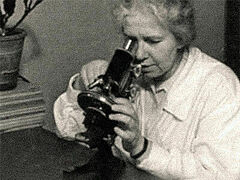
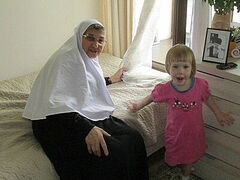
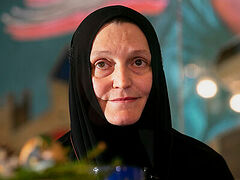
On July 1, 2025, Abbess Olympiada (Baranova) of Holy Protection-Khotkovo Convent turned seventy-five. The previous years also saw significant dates for her. 2022 marked the thirtieth anniversary of the resumption of monastic life in the ancient Holy Protection Monastery—the place of the monastic labor and resting place of Venerable Cyril and Maria, the parents of the abbot of the Russian land St. Sergius of Radonezh. From the very first days, Mother worked there to revive both the walls and the prayerful service. In 2023, the thirtieth anniversary of her abbatial obedience was solemnly celebrated. A year ago, forty years had passed since the most important event in Mother Olympiada’s life—her taking of monastic vows.
The Moscow Patriarchate’s Monastic Herald publication shared with its readers her memories of the monastic school she went through in Riga, in the famous Holy Trinity-St. Sergius Monastery under the leadership of Abbess Magdalena (Zhegalova). Mother Olympiada was among the twenty young abbesses whom this “All-Russian abbess,” an outstanding ascetic of our time, raised up for the monasteries that were opening during the Church spring of the 1990s.
Abbess Olympiada shared her story about her spiritual mother and her experience of the continuity of the traditions of Russian female monasticism.
 Of course, you look at how it was then and how it is now in our monasteries—it’s Heaven and earth. Could we ever object to our abbess?! If something serious happened, Mother would call for the sisters one by one to explain what was wrong. She had the tradition of coming out to all of us after the evening prayer to talk with us for ten or fifteen minutes. Of course, she spoke most of all about humility and behavior. It seemed like she was paying attention to externals: “You can’t walk the way you walk—swinging your arms, running, laughing. It’s not monastic. Why are you always smiling?” (And I was so joyful that I didn’t even notice that I was smiling. And I’d run up the stairs two steps at a time, even though I was already appointed dean.)
The discipline was very strict. Vladyka also monitored this. His episcopal chambers were across from the church and the abbess’ house. The sisters would be walking from somewhere, stop, and start talking. Vladyka would say: “What’s this, Mother? Who’s chattering there in the middle of the street?” This isn’t even considered a sin anymore—it’s a different era, with people of a different disposition. But back then, such strictness was the norm. But you know, what love there was then! How we loved Mother, how we all wanted to do something nice for her, to at least make her smile.
When I left Riga for Khotkovo, I wept… I arrived at the Riga rail station and sat there for nearly five hours, like I was paralyzed. It was a real tragedy for me. I mean, Mother was really very kind and affectionate. And everyone was her “child”: “My child, bring me my glasses…” But she didn’t put up with familiarity. For all her kindness, she sometimes sternly taught us to be strict with ourselves.
She treated me like a mother; I always felt it. In all the twelve years that I lived in Riga, my mother could only come visit me twice—she had a bad heart and money was tight. When she did come, at first she only saw how we were constantly working, at our obediences. And we didn’t have any guest cells—I gave my mother my bed and went to sleep on a bench in the refectory. All this upset her and she cried a lot over me. Mother Magdalena was sympathetic and even allowed me to accompany my mother to Moscow, to go with her to the Holy Trinity-St. Sergius Lavra. After speaking with my spiritual father, Fr. Naum (Baiborodin), my mother was comforted a bit.

When Mother was older and had become very weak, I’d take her under the arm and lead her around the whole church, then around the monastery. I’d tell her: “Mother, you're my ‘little one.’” If I had to go see my mother because of another heart attack, I’d be torn apart: I couldn’t abandon my mother, but I worried about Mother, and she’d ask me to return quickly. But in general, you could only leave the monastery briefly for such extraordinary circumstances—there were no vacations, as I said. And no one saw anything wrong with that.
 Mother Magdalena (center) with her nuns who also became abbesses
“I have to answer to God for you”
Mother never missed the services. She’d go directly from her cell to the kliros, stand there reading the commemorations, singing very beautifully, and conduct the choir. When the monastery started filling up with younger sisters after me—thirty of them came—we organized a lovely choir. I remember one day Patriarch Alexei, Metropolitan of Leningrad at the time, came to a feast-day service. He heard the singing and said if they sent such singers to St. Petersburg, they’d close the conservatory… Now those choir-directing sisters have been abbesses for a long time; some have even reposed… Twenty sisters were taken from Riga to be abbesses in monasteries that were opening up. They’d leave, taking one or two sisters with them to the new place.
I can’t help but tell you how Mother died. It was the eve of the autumn feast of St. Seraphim in 1996. The day before, Mother told the sisters: “I feel weak. Take care of Vladyka—he’s your helper and patron today.” The sisters sang beautifully at the festal service, then they went to Mother, took her blessing, prostrated, and asked forgiveness. Then Mother suddenly said: “Look, I haven’t taught you reverence; you’re mangling your holy names,” (indeed, we had started calling each other diminutives instead of our full monastic names then) “and I’ll have to answer to God for your other sins too, and it’ll be very embarrassing and bitter for me. I’m removing the mantias from all the tonsured nuns, and you’re all going to fast for forty days after the feast of the Protection.” The sisters were stunned, of course: They’d never experienced such strictness before. And on October 10, on the eve of the feast of Sts. Cyril and Maria, Mother had a stroke. They called a priest that night, and he confessed and commune her (and very characteristically for Mother, seeing the priest without his epitrachelion, which he’d forgotten in his haste, she ordered that his epitrachelion be brought right away—so that everything would be done properly). And immediately after Communion, Mother quietly reposed.
The sisters remained under penance for forty days. There was a whole sea of tears. All the former sisters who had become abbesses came. We carried her coffin, and the sisters just wept. And just before Mother’s fortieth day, they endured this penance, fasting and praying earnestly, as she had asked, that she might pass through the toll houses. This is how the soul senses its responsibility before God.
I’m very grateful to my abbess, and I thank God that He led me to her.
***
Now everything’s different; we have so much “running around,” we hurry, hurry... Maybe life is just like that: It seems you used to get something done in one day, but now it takes two. Time has diminished... On the other hand—we have a working monastery, a large operation, and the sisters are hardworking: You need someone for the kitchen, then the cow barn, the ponds, the bees... and to receive tourists—many people visit us, and we have to care for the girls from the shelter. But the monastery isn’t gaining sisters, and we need to take care of those we have... It’s difficult to live in a monastery, of course, but salvific.