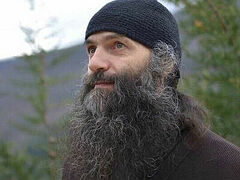
Metropolitan Serafim (Joanta) Dear fathers, brothers and sisters! The word that I would like to say to you on the threshold of Lent concerns, first of all, the confession of sins before a priest who has received from God the power to forgive human sins. After His Resurrection, our Savior Jesus Christ appeared to His holy disciples, the apostles. According to the Gospel of John, He breathed on them, and saith unto them, Receive ye the Holy Ghost: Whose soever sins ye remit, they are remitted unto them; and whose soever sins ye retain, they are retained (Jn. 20:22-23). Thus, the apostles received the power to forgive the sins of believers and passed it on through consecration to bishops and priests in continuous succession up to the present day.
The sacrament of confession has been performed since the time the Church began to exist. In the first centuries of Christianity, confession was an open, public act. Each believer confessed his sins in front of the entire community, and the bishop or priest pronounced the prayer of Absolution over him. Later, confession began to be performed by a priest, who, according to Church canons, is obliged to keep what he heard during confession a secret. The sacrament of confession is called a second Baptism, and this is God's great mercy to us sinners. We repeatedly break the promise we made at Baptism to renounce the evil one and be united to Christ. During the sacrament of Baptism, the priest asks the candidate if he renounces the evil one and all his works. And the candidate or his sponsors (if an infant is being baptized) answers: "I renounce!" Then the question follows: "Have you united yourself to Christ?" And he answers: "Yes, I have." Immersion in water three times during Baptism mystically shows our death and resurrection with Christ. This sacrament makes us members of the Church--that is, Christians. And every day throughout our lives we must strive to fulfill the promises made at Baptism. For Christian life is the constant fulfillment of these vows. But, alas, we violate them.
The holy Apostle Paul calls the Christians he addresses in his Epistles "saints”. Through Baptism, we receive the grace of God and the strength to live a holy life. All Christians become saints through the sacrament of Baptism. Unfortunately, the way of life of most Christians does not align with holiness, since in our daily lives we all sin in word, deed or thought and feelings, mental and physical. But God takes no pleasure in the death of the wicked: Say unto them, As I live, saith the Lord God, I have no pleasure in the death of the wicked; but that the wicked turn from his way and live: turn ye, turn ye from your evil ways; for why will ye die, O house of Israel? (Ezek. 33:11). God knows the weakness of human nature. He knows that man is tormented by passions, and his mind is easily directed to evil, so God prescribes sinners a means of salvation--to repent as long as they are alive.
Every time we confess a sin, the Merciful Father waits for it. He wants to forgive us. In the sacrament of confession we must promise God not to repeat sin, fighting it to the death. We must come to confession with a deep awareness of our unworthiness before Him, with sincere remorse for the sins we have committed, and with a promise to God not to repeat them. These are the following conditions for receiving forgiveness from God: sincere confession of sins, wholehearted repentance, and a desire not to repeat them. The priest can give you penance (it includes certain prayers, additional fasting, alms, etc.) and then he pronounces the Absolution: "May our Lord and God, Jesus Christ, through the grace and bounties of His love towards mankind, forgive you, my child, all your transgressions. And, I, His unworthy priest, through the power given unto me by Him, do forgive and absolve you from all your sins. In the name of the Father, and of the Son, and of the Holy Spirit. Amen." Penance received during confession should not be understood as a punishment for sins committed, but as a means of healing from sin and its consequences.
 The Apostle Paul Grave sins include fornication, cohabitation outside of marriage, abortive interference of any kind, unnatural sins, hatred of one's neighbors, and others. In this case, the priest can tighten the penance aimed at the person’s repentance. Such penance may consist in special prayers with prostrations, daily reading of the Psalter and the New Testament, the Canon to the Most Holy Theotokos, stricter fasting, and more generous alms. In case of such grave sins, the priest may also refuse to give a person Holy Communion for a while until he shows with his life that he has been cured of them. If we take Communion without deep repentance, we receive communion unto judgment and condemnation. The Apostle Paul says in this context: For he that eateth and drinketh unworthily, eateth and drinketh damnation to himself, not discerning the Lord's Body (1 Cor. 11:29).
Sin is the most painful experience of man, because it destroys the harmony that God has put into His creation. God has imprinted His laws in nature, including human nature, so that harmony can reign in everything and everywhere. The stars in the universe fully obey the Divine laws written in their nature: Let them praise the name of the Lord: for He commanded, and they were created. He hath also stablished them for ever and ever: He hath made a decree which shall not pass (Ps. 148:5-6). That's why there is harmony in the cosmos. If the myriad celestial bodies, each of which moves (rotates) in a wonderful dance around its axis and around major axes, did not obey the laws of God, great chaos would reign in the universe. And only man violates the laws of God, so there is no harmony in his life and in the life of mankind, but there is chaos.
 The Apostle John the Evangelist Any sin committed in word, deed, or thought is unnatural--that is, against the laws of nature, and has a negative impact on our physical and mental health. The Apostle John the Evangelist says, Sin is the transgression of the law (1 Jn. 3:4), therefore sin is rebellion against the laws of God.
There are natural laws and laws given to mankind--the Ten Commandments of God. When we violate God's commandments, it turns against us with all kinds of suffering. God does not punish us for sins, because He is love. On the contrary, God suffers together with us and waits for us to return to Him in repentance, because He wants to save us from sin and disease. People often turn to God especially when suffering or illness befalls them. In this state, we realize our total helplessness, and the consciousness of our sinfulness awakens in us. Then we begin to cry out for God's help. And it will surely come provided that we confess our sins with tears and repentance. But let's not wait for trials and tribulations to turn to God!
Beloved, Lent is about to commence. It prepares us for the Resurrection of Christ. But we can hardly enjoy the "feast of feasts”, which is the Lord's Pascha, unless we prepare ourselves for it by fasting, prayer, and repentance. In the Holy Gospel, the Savior asks us to forgive the sins of our neighbors, so that He may forgive us our transgressions as well: Forgive, and ye shall be forgiven (Lk. 6:37). He exhorts us to fast with joyful faces, without outwardly displaying our abstinence: When ye fast, be not, as the hypocrites, of a sad countenance: for they disfigure their faces, that they may appear unto men to fast (Mt. 6:16). He also asks us not to store up our treasures on earth, but in Heaven: But lay up for yourselves treasures in Heaven, where neither moth nor rust doth corrupt, and where thieves do not break through nor steal (Mt. 6:20). For after death we will take nothing with us but our good deeds: And I heard a voice from Heaven saying unto me, Write, Blessed are the dead which die in the Lord from henceforth: Yea, saith the Spirit, that they may rest from their labours; and their works do follow them (Rev. 14: 13).

Let us wholeheartedly forgive those who have offended us, as the Savior instructed. Let's strive to fast with joy throughout the coming Lenten season. Let's not cling to material things, but overcome our avarice by giving alms to those in need. For God will judge us precisely by the good that we have done to our fellow humans in need and distress: And the King shall answer and say unto them, Verily I say unto you, Inasmuch as ye have done it unto one of the least of these My brethren, ye have done it unto Me (Mt. 25:40). May God and our Savior Jesus Christ bless you all for the coming Lenten feat. Amen.