Moscow, May 15, 2026
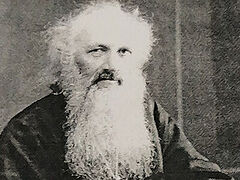
 Newly glorified confessor St. Athanasy Saiko. Photo: patriarchia.ru
By decision of the Holy Synod of the Russian Orthodox Church, two new saints of the 20th century were canonized yesterday.
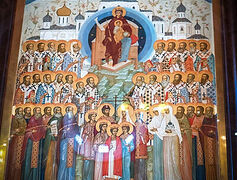
In particular, after hearing reports from the Synodal Canonization Commission, the Synod formally added the Monk-Martyr Vladimir (Elizarov) and the Confessor Athanasy Saiko to the Synaxis of the New Martyrs and Confessors of Russia, dubbing them “newly glorified,” reports Patriarchia.ru.
St. Vladimir was executed on February 20, 1930, for actively opposing the planned closure of the Holy Ascension Church where he served as watchman. His feast day is set as the day of his martyrdom.
St. Athanasy, a fool for Christ, endured repeated arrests, imprisonment in concentration camps, and over 18 years in psychiatric hospitals for his faith and religious activities under Soviet persecution, while continuing to minister to believers throughout his suffering. His feast day is set as April 22/May 5, the day of his repose.
For both saints, the Synod orders that should their remains be uncovered, they are to be regarded as relics and venerated as such.
Further, it orders “to commission icons of the newly glorified saint[s] for veneration, in accordance with the determination of the Seventh Ecumenical Council.”
St. Vladimir was also added to the Synaxes of Ekaterinburg and Perm Saints, while St. Athanasy was also added to the Synaxis of Oryol Saints.
***
St. Vladimir was born in 1877 in the village of Bykova, Novgorod Province, into a peasant family. In 1904-1905 he participated in the Russo-Japanese War. From 1907 he was a laborer at the Solovetsky Monastery, and in 1911 he transferred as a novice to the St. Nicholas Belogorsky Monastery of the Perm Diocese.
In 1914-1917, he was drafted to serve in World War I. In 1917, he returned to the monastery, and on June 1, 1919, he was tonsured as a riassaphore monk, receiving the name Vladimir.
He remained a resident of the Belogorsky St. Nicholas Monastery until its closure in 1923. That same year, St. Vladimir was arrested, but on October 15, after almost seven months in custody, he was released under a signed pledge not to leave the area.
Working after the closure of the Belogorsky Monastery as a watchman at the Holy Ascension Church in Mikhailovsky Zavod (now the city of Mikhailovsk, Sverdlovsk Region), St. Vladimir actively opposed the planned closure of the church, for which he was arrested again in January 1930.
He conducted himself courageously during interrogations, and by resolution of the Troika of the OGPU Plenipotentiary Representative for the Urals on February 16, 1930, he was sentenced to capital punishment. He was executed by firing squad on February 20 of the same year. He is probably buried in a common mass grave in the vicinity of Ekaterinburg, on the territory of the OGPU shooting range.
***
St. Athanasy was born in 1887 in the village of Danichevo, Volyn Province, into a civil servant’s family. From 1905 to 1908, he served in the military.
In July 1920, he was arrested and interned in the city of Oryol in concentration camp No. 1, where he remained until November of the same year. After his release, he settled in the bell tower of the Holy Theophany Cathedral in Oryol and from that moment began the feat of holy foolishness.
In the early 1920s, after being healed from a serious illness, he entered a monastery with his spiritual father’s blessing. From 1926 to 1931, he sang in the choir of the Holy Resurrection Church of the former monastic cemetery in Oryol.
In April 1931, he was arrested again, charged with “conducting agitation among the believing masses against the measures of Soviet power and the party in the countryside.” During interrogation, St. Athanasy confirmed that when people asked him about joining collective farms he answered negatively, but he rejected the other accusations. On October 28, 1931, the criminal case against a number of persons, including St. Athanasy, was closed due to lack of proof of criminal activity.
In 1932, he was placed in the Oryol Psychiatric Hospital, where he spent 9 years. Many believers came to him in the hospital for advice and consolation. From 1941 to 1948, the ascetic lived in Oryol, sang in the church choir, and helped the city’s residents with household tasks. During the war years he strengthened the people, gave spiritual advice, warned of troubles, and told of the fates of soldiers and prisoners.
From 1948 onward, he was arrested several times and placed in psychiatric hospitals, where he spent another 7 years. In the medical records, doctors invariably noted St. Athanasy’s religiosity, calmness, sociability, and kind disposition. Throughout his entire period in the medical facilities, people came to him as before for help and advice.
On May 5, 1967, at the age of 81, St. Athanasy reposed in the Lord. He was buried at Krestitelsky Cemetery in Oryol.
His example of Christian virtues—meekness, gentleness, patience, humility—served as edification for those who came to him. Veneration of the confessor began during his lifetime and continues to this day, more than 55 years after his death. There is evidence of his miraculous help, including cases documented by medical records.
Follow OrthoChristian on Facebook, Twitter, Vkontakte, Telegram, WhatsApp, MeWe and Gab!