In the name of the Father, and of the Son, and of the Holy Spirit!
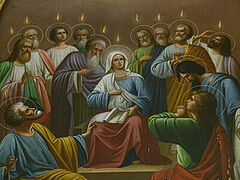
Dear brothers and sisters, today we honor the memory of the Synaxis of the Twelve Apostles, the closest disciples of our Lord, God and Savior Jesus Christ. Those who, having received the keys to the Heavenly Kingdom and the commandments of the New Testament for earthly life, showed the path to God for their contemporaries, subsequent generations and for all of us.

Today we thank the Twelve Apostles and messengers who preached the Gospel of the Savior’s Resurrection and eternal life, who built our Church as a kind of Noah’s Ark in which everyone who believes can be saved from the turbulent sea of passions and hostile enemies, both visible and invisible—and also from their own foolishness, thirst for sensual pleasures, and this inclination to seek and find dubious adventures.
Interestingly, these twelve men, who became great saints of God, had their own character traits, strengths and weaknesses, levels of education and wealth, but they were united by Christ, just as He unites all of us standing and praying in this church now. The fishermen, a publican, and a lawyer were not immediately cleansed of their sins, and they did not become pillars of the Holy Church overnight. There were doubts, worldly ambitions, cowardice, betrayals, and arguments with each other, as it often happens among us. But the apostles were able to become free from the passions and rise above all vain things, and they call on each one of us to do the same.
Reading the Gospel, Acts, and the Epistles, we see how the apostles were transformed, grew, and strengthened spiritually, gradually ridding themselves of their old selves, becoming filled with new things, imbued with the grace of God, and enlightened by the Holy Spirit. Perhaps my words will seem too bold to some of you now, but to some extent we are the apostles of the twenty-first century and successors of those twelve who are honored by the whole Church today.
But if our conscience is awake, it must condemn most of us. Our conscience must expose the paucity of our apostolate and our inability to even approach the labors and the sublime service of those whom we venerate. Why is that? Because, unfortunately, our words have no inner power; they are often unconvincing and superficial when we speak about God. And our actions often come into conflict with our words, thereby devaluing everything that we say about God.
 Hieromonk Agafangel (Davlatov) So as not to feel so ashamed when looking at the icon of the apostles and to have hope and confidence of being shown mercy at the Last Judgment, we need to meet God within us in the same way as the apostles met Him. After all, how many people met the Lord, but passed by, or turned away from Him, turning around and walking away! And few are they who experienced the presence of God, came to know God and surrendered to Him.
And the apostles, having learned it themselves, passed on their skill to us so that we could feel and know God and let Him inside us. The apostles taught us to repent, to confess our unrighteousness, our mistakes, and to cleanse ourselves from sin, giving place to God. The apostles taught us to gather for the breaking of bread, when, by the power of the grace of God, bread and wine are transformed into the Body and Blood of the Savior in a mysterious and incomprehensible way. And by receiving these Holy Gifts, we unite with God not only spiritually, but also physically. And the apostles also passed on to all those who had not known Christ the Beatitudes of Christ, the commandments of the New Testament—instructions, which, if we follow them, we can inherit the Heavenly Kingdom for which all Christians strive.
And we thank the Twelve Apostles for all this today. Let us ask the holy apostles to strengthen us in faith, to help us internalize the legacy they have left behind, and to intercede with the Lord at the Last Judgment so that our sins may be forgiven and God’s mercy may redeem what we could never redeem with our lives. Greetings to you on the feast!
Amen.