Woe unto them that call evil good, and good evil; that put darkness for light, and light for darkness (Is. 5:20).
 Brave New World, Aldous Huxley’s novel. The cover of the first edition Aldous Huxley’s dystopia Brave New World (1932) does not look fantastic today. And the further human history advances, the more alarming it becomes. The author scrutinized events of his time, identified worrying trends and projected them into the future with the frightening sobriety of someone who understands where the world is heading, rejecting God and proclaiming man the master of his own fate.
The novel is set in the middle of the third millennium—600 years after the birth of Henry Ford (who is regarded as a godlike figure because of his technological contributions to society), but how modern it sounds! Huxley called 2014 the date of the first mass use of hypnopedia—that is, “sleep-teaching.” Today we call it differently: neuro-linguistic programming, memetic engineering, and omnipresent advertising that shapes our desires. The essence is the same: The person is brainwashed with “right” ideas while asleep. More precisely, while he believes he’s awake.
“Incubators” in Huxley’s novel evoke strong associations with test-tube babies, surrogacy, cloning, and genetic engineering. For Christians, this is not just scientific and technological progress, but an encroachment on the natural way of human reproduction established by God, and thus on the very image of God in man. The Lord said, Be fruitful, and multiply (Gen. 1:28), blessing marriage. In Huxley’s world, there are no parents as such; children are a product of industrial assembly lines, biotechnology and strict control at all stages of their development.
The History of Writing: A Dispute with Wells’ Utopia
 Men Like Gods, a novel by H. G. Wells. The novel was written in just four months—from May to August 1931—in the small French town of Sanary-sur-Mer. Huxley himself directly pointed to his main literary incentive: Brave New World was conceived as a polemical response to H. G. Wells’ novel Men Like Gods (1923). He wrote:
“I’m writing a novel about the future of a brave new world, about the horror of Wells’ utopia and the rebellion against it.”
If Wells portrayed the future “scientific” society with a tone of optimism, then Huxley, with his piercing satirical gaze, saw this project as a threat. In 1931 Huxley, who had already grown as a brilliant social satirist, used all his literary skills and remarkable knowledge to turn a utopian dream into a frighteningly plausible dystopia. Published in 1932, the novel, permeated with the author’s anxiety regarding scientific and political progress, became not only a turning point in his career, but also a warning voice for the entire twentieth century.
The title of the book is an ironic quote from Shakespeare’s tragicomedy, The Tempest. The enthusiastic exclamation of Miranda (who was raised on a deserted island) at the sight of new people: “Oh brave new world!” here sounds as a mockery of the artificial and sterile “happiness” imposed by the “World State”. Twenty-six years later, Huxley himself wrote the essay, Brave New World Revisited (1958), bitterly admitting that reality was moving towards his dystopian vision much faster than he had ever imagined.
Huxley’s Religious Evolution: From Agnosticism to Universal Mysticism
Criticizing modernity through the image of his future dystopia, Huxley proceeded from his religious quests. He was raised in a family that belonged to the British intellectual elite. His grandfather, Thomas Henry Huxley (1825–1895), was not only an outstanding biologist, but also the one who coined the term “agnosticism”, arguing that in a strictly scientific sense, the existence of God can neither be proved nor disproved.
In his youth, Aldous himself was a humanist, a pacifist and a satirist. But he famously had an unquenchable thirst for knowledge of the truth in all possible ways: from sciences to philosophy, from religious teachings to mystical practices and even experimental psychonautics. Afterwards, he got carried away by Eastern philosophy—in particular, neo–Vedanta, and became an adherent of the so-called “perennial philosophy”—an esoteric teaching that, as he believed, underlies all world religions.
Later in his life, he eclectically synthesized elements of Hinduism, Buddhism, Taoism and Christian mysticism in his spiritual quest. His attitude towards historical Christianity was generally negative. Researchers noted that he called Christianity a “cruel religion”, while gravitating towards Eastern mystical practices.
By the end of his life, Huxley had not become a Christian in the traditional sense, but a universalist and mystic who sought a universal spiritual experience in the synthesis of all religions. For a better understanding of the novel, it is important to understand the position of the author himself, who proceeded from religious and philosophical idealism rather than church faith.
The Three Pillars of the Anthropocentric World
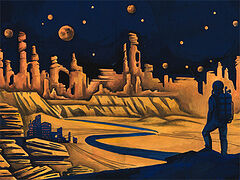
 Illustration to the novel Brave New World by Aldous Huxley Huxley was a futurologist. He took three major trends of his time, magnified them and projected them into the future:
1. Henry Ford’s conveyor belt is a symbol of the ultimate mechanization of life. Man is no longer the image and likeness of God, but a cog in the machine. For other foundation can no man lay than that is laid, which is Jesus Christ (1 Cor. 3:11). In Huxley’s world, the foundation is Ford who replaced Christ.
2. Sigmund Freud’s psychoanalysis, which reduces man’s behavior to sexuality. Because the carnal mind is enmity against God (Rom. 8:7). In Brave New World, carnal pleasure has been elevated to a cult, and shame has been eliminated as a harmful relic.
3. The cult of drugs and permissiveness—“soma” (a State-controlled hallucinogenic happiness drug) as a substitute for repentance, prayer and the sacraments. Why seek grace when you can take a pill and feel fine?
In Huxley’s world, the Bible and theological works are considered “indecent books”, and many people have never even heard of them. It is claimed that “God is incompatible with machines, scientific medicine and universal happiness.”
The result is an anthropocentric, global, mechanistic, and totalitarian world with a rigid caste system. There are no families, no nation-states, no high culture, and no religion there. There are only “stability and community”. People worship Ford, go to “temples of distribution of soma” and “find happiness” in forced ritual orgies where there is no place for love, fidelity, or the mystery of marriage, and therefore for humanity as such.
Suffering As the Price of Personality: to Be Human or to Be Happy?
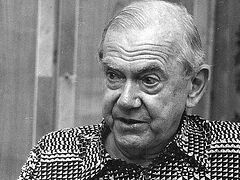
 Aldous Huxley By the end of the novel, it becomes clear that for the author the main conflict is not between the “good” and “bad” characters, but within human nature itself. On the one hand, the Ford-Freud civilization is formally prosperous, secure, and trouble-free. Here, everyone is fed, everyone is busy, everyone is given “soma” and is never lonely. There is no hunger, no wars, no jealousy, and no longing for God. On the other hand is humanity with all its complexity: culture, morality, philosophy, religion, art, family, motherland, loneliness, physical and mental pain, aging, faith, doubt, and death. And most importantly, there are the insoluble “whys” of life: why do I live? What are good and evil? Does God exist? Why do I suffer?
For representatives of the “new world,” history is “nonsense.” High art (with Shakespeare as its symbol) is “obsolete”; science as a desire for a deeper understanding of our universe and reshaping our life is a “menace to stability”; and culture in all its contradictory nature is “savagery.” Its representative, John the Savage, an outsider who grew up on Shakespeare’s poetry in a savage reservation, appears to be a living moral indictment of this civilization.
Huxley poses a chilling dilemma: to be human or to be happy? Exactly like that and no other way. Ford’s world provides painless, “conveyor-belt” happiness without suffering. But the price of this happiness is standardized depersonalization. You become a function, not a person. You are programmed from the time you are an embryo, and you know neither love, nor ascetic labors, nor repentance, nor prayer. You just “feel fine”.
And what is the alternative? Pain, suffering, doubt, loneliness, and Shakespeare’s tragedy instead of the idyll of a trouble-free existence where everything is pre-determined for you. It is suffering, according to Huxley (and according to Fyodor Dostoevsky, by whom he was profoundly influenced), that makes us human. It is through pain, loss, and yearning for the infinite that a person truly finds his soul and spirit, turns to God, creates, and transcends his earthly existence.
A Hamlet of Our Time: Suicide as the Only Answer
John the Savage is a deeply Hamletian character, thrown into a society completely alien to him. He tries to fight; he defiantly refuses “soma”, preaches freedom to the lower caste, and goes into seclusion to pray, read Shakespeare, and practice self-denial. But the civilization of “happiness” finds him there, too—it comes to him with cameras, crowds of onlookers and orgies. And John the Savage breaks down because he cannot stand alone against the hostile world.
And then he commits suicide. Why? Because in a world where there is no faith in God, no Cross, no redemption and Resurrection, suffering becomes meaningless. If you have given up on “prescribed happiness” but have not found the Living God, you will be crushed by suffering. Huxley gives John the Savage no hope. He sentences him to death in a noose—the protagonist hanged himself.
And here is the deepest tragedy of the novel. The author paints a terrifying picture of the well-fed herd of the future, but does not know how to oppose it and prevent its formation. He sympathizes with the suffering loner, but can offer him nothing but death. For Huxley himself, as for many Western intellectuals of his age, authentic culture had already been divorced from authentic faith. Shakespeare is still there, but the Bible is no longer there. A culture severed from its religious roots is doomed to perish in a depersonalized consumer society.
The Pursuit of Happiness Is Dehumanizing
Huxley formulates a paradox that every Christian should know: Elevating the pursuit of earthly happiness to an absolute ultimately depersonalizes and kills you. Genuine happiness is not in the absence of problems, but in the presence of God. Christ says, In the world ye shall have tribulation: but be of good cheer; I have overcome the world (Jn. 16:33). Not “you will have no tribulation”, but “I am with you in tribulation.”
Aldous Huxley felt and realized with perfect accuracy that the pursuit of consumer hedonistic liberal happiness must eventually lead to the death of not only God, but also of the father and mother, of selfless sacrificial love for God and neighbor, and of individuality as such.
Huxley’s Brave New World is a world without a Cross. Therefore, there is no Pascha in it. Its inhabitants do not know and do not want to know that suffering can be redemptive, that pain is sometimes a door to repentance, and loneliness is a place of meeting with God.
From the Novel to Reality
Today we don’t read Huxley as a mere literary relic. Rather, we seem to be looking in a mirror. The modern world also promises us happiness—without commitment, without suffering, and without any sacrifices. It says, “Why do you need faith? Why fast? Why fight sin? Take a pill, distract yourself with entertainment, and relieve the pain; don’t ask questions—just consume.” In the novel we see the price that has to be paid for such “happiness”: It’s the loss of human individuality.
Christianity teaches the opposite: It is through voluntary suffering, through the cross of sacrificial service, through limiting our desires, and through renouncing false worldly happiness for the sake of Christ that we find ourselves, our immortal souls, and attain the likeness of God.
John The Savage committed suicide because he had no faith. But we have faith in Christ, the Giver of Life. Therefore, for Huxley the future is a dystopia of hopeless tragedy. For us Christians, who draw our vision of the future from the Gospel prophecies of Christ and from Revelation, the future is also dystopic and tragic, but not hopeless. After all, the closer we get to the dark end of history, the sooner Christ will come, bringing mankind the final deliverance from evil and death.
Behold, I come quickly: hold that fast which thou hast, that no man take thy crown (Rev. 3:11).