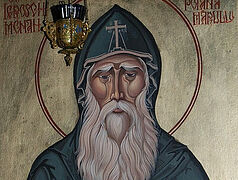
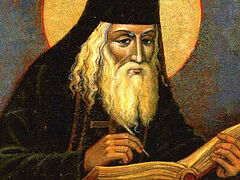
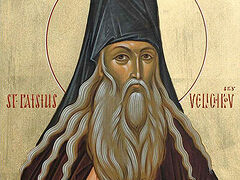
On November 15/28, the Orthodox Church honors the memory of St. Paisius (Velichkovsky; 1722–1794), translator of the Philokalia, abbot of Neamț Monastery in Moldavia, and reviver of eldership in Russia. On this day, we decided to partake of his spiritual teachings through an imaginary dialogue with an inquirer from the twenty-first century.

—Father Paisius, tell us, how can a layperson be saved?
—I advise you to read more diligently the Divine Scriptures and the teachings of our Holy and God-Bearing Fathers, to whom it has been granted by the grace of the Most Holy Spirit to comprehend the mysteries of the Kingdom of God—that is, the true meaning of the Holy Scriptures; in their spirit-enlightened teaching, you will find all that is necessary for salvation. And I, a sinner, according to my poverty of mind, answer your inquiry: the Most Merciful God accomplishes our salvation through the Orthodox faith, good works, and His grace.
The Orthodox faith without good works is dead, and good works without faith are likewise dead. Whoever desires salvation must possess both together… It should be known that Christ the Savior, our True God, Who desires all men to be saved, has established good works—that is, His saving Gospel commandments—as a law equally for all Orthodox Christians, both monastics and laypeople living with their wives and children; and He requires of all Orthodox Christians the most diligent fulfillment of them, for His holy commandments do not demand great bodily labors, but only a good disposition of the soul.
Such are the commandments concerning love for God and your neighbor, meekness and humility, peace with all and patience, forgiving your neighbor’s offenses from the heart, judging no one, harboring no hatred, loving your enemies, giving both spiritual and material alms according to your strength, and compelling yourself with all diligence to fulfill all the other commandments of Christ; and, imitating His meekness, to struggle even unto blood against the passion of anger.
Humility, which is the foundation of all the Gospel commandments, is as necessary for salvation as breathing is for life. Whoever wishes to be saved must wholeheartedly consider himself before God to be a sinner—the most sinful of all people, worse than any of God’s creatures—esteem himself as dust and ashes, reproach himself for everything in the secret of his heart, and blame himself alone for every sin he commits. By thus fulfilling all the Gospel commandments in humility of heart, and by praying frequently to God with a contrite heart for the forgiveness of his sins, a person is granted God’s mercy and the remission of sins; the grace of God visits him, and he is undoubtedly saved by the mercy of God.
—Where does the darkening of the mind—that is, lack of discernment—come from?
—The darkening of the mind comes from the passions: from talkativeness, from vanity and bustle, from immoderate care, from sorrow, from daydreaming, from gluttony, and from oversleeping. Often it also comes from demons—that is, from the confusion they stir up when they draw near to us. When these passions enter into us, the eye of our soul closes—that is, the vision of the mind is dulled. Then it no longer sees anything spiritual and loses discernment, just as someone with even a healthy physical eye cannot see in the darkness of night, sometimes stumbling and sometimes falling into a pit. Similarly, someone with a darkened mind falls into the pit of various passions: he succumbs to despondency, indulges in daydreaming, gives himself over to excessive sleep, and completely forgets that he is walking on the path to eternal perdition.
—How is abstinence beneficial?
—Abstinence is the mother and bond of all virtues. If you restrain your belly, you will enter Paradise, for abstinence is the slaying of sin, estrangement from the passions, the beginning of spiritual life, and the intercessor of eternal blessings. Conversely, overindulgence deprives you of spiritual gifts, because a full belly inclines you to sleep and arouses foul thoughts, leaving you unable to keep vigil, read, engage in manual labor, or perform any other good work… There are four degrees of eating: fasting, abstinence, sufficiency, and satiety. Whoever restrains his belly will not be deprived of dwelling in Paradise; but whoever fails to restrain himself becomes the prey of death, is stripped of all virtues, and is put to shame.
—Does the Holy Spirit dwell in a person ruled by passions?
—The Holy Spirit will not enter until a person is cleansed from passions of the soul and body. Only one can dwell within a person—either the Holy Spirit or the passions. Where the Holy Spirit is, passions do not come near; where passions are, the Holy Spirit does not dwell, but the evil one does.
—What must we do to begin acquiring eternal life?
—First of all, we must cleanse the soil of the heart and uproot the thorns of sin—passionate deeds—and soften it through sorrows and trials. Then we must sow the seed of virtues and water it with weeping and tears. Only then will the fruit of dispassion and eternal life grow. Above all, we must drive away self-love in all its forms.
In all things, we must humble and condemn ourselves. Humility never falls, for it lies lower than all. Likewise, it is necessary to subdue our flesh, afflicting it with ascetic labors of virtue and unceasing sorrows—and the bodily passions will fall silent. We must also restrain our tongue as the source of every evil and the destroyer of good; in this way, all passions of both soul and body will cease to act and will be subdued; we will become dispassionate and begin to acquire eternal life.
—Why are fasting and prayer important in this endeavor?
—Fasting and prayer drive away all sinful thoughts, cool the fevered mind, keep the intellect from turmoil, gather it from distraction, and enlighten it. Fasting and prayer cast out unclean spirits from us and heal the possessed, as the Lord said: Howbeit this kind goeth not out but by prayer and fasting (Mt. 17:21). Through fasting and prayer, the mind—which is often darkened by demons—is also cleansed. Fasting and prayer are weapons that block every entrance of demons into us. Prayer, like a spirit of grace, purifies our spirit, enlightens our mind, and grants zeal. Prayer with watchfulness of mind and heart is a guard for the mind, quenching its forgetfulness just as water quenches fire.
The heart cannot remain undefiled unless it is humbled by fasting; neither is it possible to preserve holiness without fasting, nor will the flesh submit to the spirit for spiritual labor, and prayer itself will neither ascend nor have power… Let us ever hold fast to fasting as a quiet harbor from the mental snares of the enemy; for fasting purifies the body, nourishes prayer, makes it mighty, and causes it to rise from the lips like a flame of fire. Joined with fasting, watchful prayer scorches the demons, so that, as if approaching a fiery furnace, they cannot draw near to harm a chaste soul…

—What is needed for the mind to always be occupied with God?
—If we do not acquire the following three virtues—love for God and people, self-restraint, and the Jesus Prayer—our mind cannot be wholly occupied with God; for love tames anger, self-restraint weakens lust, and prayer draws the mind away from thoughts and drives out all hatred and haughtiness. Remain constantly occupied with God, for God will teach you all things and reveal through the Holy Spirit what is above—the Heavenly—and what is below—the earthly.
—How should we regard earthly sorrows?
—Whoever gets into the habit of fleeing from sorrows, or moving from place to place, or waiting for the right time to begin his spiritual struggle, will never, in all the days of his life, find a place or time to gain spiritual benefit. Rather, we must look toward and hope in the mercy of God, remembering His glorious wonders from ages past and the help He has given to His saints who trusted in Him—that God will never forsake us in any need or sorrow, and will never allow a temptation beyond our strength. Therefore, with gratitude, for the sake of God and eternal blessings to come, we must courageously bear our cross and endure all afflictions in our present time and place.
It befits an ascetic, a servant of God, to be steadfast in every sorrow, setting his heart as upon a firm rock, rather than being weak like water. By walking this narrow path of sorrow, we will attain the highest perfection of patience; and in every place, we will not be deprived of what is spiritually profitable, but will receive it by the mercy of God and will not waste the time of our lives in vain.
Bibliography:
Teachings, Homilies, Rule, and Life of Elder Paisius (Velichkovsky), Compiled by Elena Noskova (Moscow: Synopsis, 2021).
Conversations of Great Russian Elders: On the Orthodox Faith, Salvation of the Soul, and Various Matters of Spiritual Life Moscow: Holy Trinity-St. Tryphon of Pechenga Monastery, Kovcheg, 2003).