July 5/18 is the feast-day of the holy Grand Duchess Elizabeth Feodorovna, who was martyred for the faith of Christ in 1918.
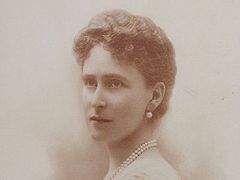
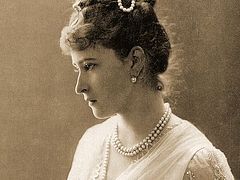
 Queen Marie of Romania said of Princess Ella of Hesse-Darmstadt, the future Elizabeth the New Martyr: “She was like a lily, her purity was absolute. You couldn’t take your eyes off her; after spending an evening with her, everyone would wait for the hour when they could see her the next day... If only it were possible to resurrect her even for one moment…”
On October 19/November 1, 1864, the future St. Elizabeth was born in Darmstadt. Her parents, Grand Duke Ludwig IV of Hesse-Darmstadt and Grand Duchess Alice, a daughter of the famous Queen Victoria of the United Kingdom, devoted much attention to their seven children.
Ella (Elizabeth) was very kind and beautiful. She and her younger sister Alice, the future spouse of Emperor Nicholas II of Russia, spent all their days studying literature, history, music, singing, ballroom dancing, horse riding, and gymnastics.
Grand Duchess Alice was primarily committed to the religious education of her children, who studied the Holy Scriptures from an early age and knew many prayers by heart. The children grew up among Protestants and devoted a great deal of time to charitable acts, following the example of their mother. On holidays, she would take her children to the hospitals she had set up, and the children would give flowers to sick people.
In her early youth, Princess Ella met Grand Duke Sergei Alexandrovich Romanov, son of Emperor Alexander II of Russia. Their acquaintance took place in Darmstadt, where Sergei and his mother, Empress Consort Marie Alexandrovna, came to visit their relatives. The Russian prince attracted Ella’s attention with his modesty, courage and desire to serve his Fatherland. He was well versed in painting and music.
Soon, their infatuation developed into pure mutual love.
The wedding ceremony was celebrated in St. Petersburg according to the Russian Orthodox rite. Those present welcomed the modest and beautiful Ella with joy.
The young couple spent much time in Ilyinskoye, the family estate of Grand Duke Sergei Alexandrovich, situated around forty miles west of Moscow. Every day St. Elizabeth Feodorovna spent many hours studying the Russian language, Russian literature and poetry. In her spare time, she admired the glorious Russian nature in the vicinity of Ilyinskoye. On Sundays and the great feasts, she and her husband attended Orthodox churches, where she watched with interest people of all different social strata offering prayers together to the Lord.
St. Elizabeth Feodorovna realized that the Russian land lived by the Orthodox faith. Sergei Alexandrovich told her a lot about Orthodoxy and read spiritual books aloud. But he never said that his wife must necessarily become Orthodox.
St. Elizabeth Feodorovna made this decision herself. She wrote a letter to her father in Darmstadt and asked for his permission to convert from the Protestant faith to Orthodoxy.
Emperor Alexander III was very happy with his daughter–in-law’s decision and blessed her with a precious icon of the Lord Jesus Christ “Not Made by Hands”, a gift that St. Elizabeth Feodorovna cherished until the final moments of her life. The Tsar’s decree, issued in connection with that event, said: “Today, our dear daughter-in-law, to our great joy, has embraced our Orthodox faith and has been chrismated. Announcing this to all our subjects, we command you to call her, “Her Imperial Highness, the Right-Believing Grand Duchess.’”
That significant event took place on April 25, 1891.
In 1891, the Emperor appointed Grand Duke Sergei Alexandrovich Governor-General of Moscow. Grand Duchess Elizabeth Feodorovna went with him to the capital, with prayer and enthusiasm.
Sergei Alexandrovich and Elizabeth Feodorovna did a great deal for the good of Moscow; the Museum of Fine Arts (now the Pushkin State Museum of Fine Arts), the Stroganov Art School (now the Moscow State Stroganov Academy of Design and Applied Arts), the Ekaterina, Suzdal, and Vladimir Halls at the Historical Museum were opened, and exhibitions of paintings by talented Russian artists, spiritual concerts, and much more were organized.
Thanks to the efforts of the Governor-General of Moscow Sergei Alexandrovich, the Imperial Orthodox Palestine Society was established. Now pilgrims from Russia, regardless of their social class, could visit holy sites in the Holy Land—Jerusalem, Bethlehem, the Jordan and others.
For St. Elizabeth Feodorovna, visiting these places was unforgettable. The Grand Duchess gazed at Golgotha with great reverence, and she received the Holy Body and Blood of Christ in Jerusalem. She admired the beauty of the Russian Church of St. Mary Magdalene Equal-to-the-Apostles. When she came out of that church, she said, “Oh, how I wish I could be buried in this wonderful place!” She could not even have imagined that her wish would come true (now her incorrupt body rests in a white marble tomb near the altar at this very church). But that would come much later.
Meanwhile, in 1903, an event occurred that showed St. Elizabeth the great importance of the Orthodox faith for the entire Russian nation.
Emperor Nicholas II decided to canonize St. Seraphim of Sarov. Governor-General of Moscow Sergei Alexandrovich supported the Emperor in this matter. A great mulititude of people came to the town of Sarov for the celebration of his canonization. Many healings took place at the tomb of St. Seraphim of Sarov in front of numerous eyewitnesses. Among those who carried the saint’s coffin was Grand Duke Sergei Alexandrovich.

Until the end of her life, St. Elizabeth Feodorovna venerated the wonderworker of all Russia, who predicted Tsar Nicholas II’s martyrdom and glory in the Heavenly Kingdom. St. Seraphim of Sarov was a visionary who foresaw events of the distant future. Afterwards, St. Elizabeth Feodorovna had the lower church of the Holy Protection Cathedral at the Convent of Sts. Martha and Mary she had founded in Moscow dedicated to St. Seraphim of Sarov. And now, the revived convent still keeps as a great relic the half-mantia of St. Seraphim, which was given to Sergei Alexandrovich at the celebration of his canonization in 1903.
During those celebrations, St. Elizabeth Feodorovna learned about the ancient prayer rule that St. Seraphim used to perform: reciting the archangel’s greeting to the Most Holy Theotokos 150 times each day to seek Her protection, “O Theotokos and Virgin, rejoice! Mary full of grace, the Lord is with thee! Blessed art thou among women, and blessed is the fruit of thy womb, for thou hast borne the Savior of our souls.”
The political situation in Russia was heating up, as terrorists hunted down the best people and killed them. The Governor-General of Moscow Grand Duke Sergei Alexandrovich was repeatedly threatened with death, as they saw in him a defender of Orthodoxy and the monarchy, which the revolutionary plotters dreamed of destroying. The Grand Duke had a premonition of his death and made a will. St. Elizabeth Feodorovna, who loved her husband dearly, tried to accompany him everywhere in order to shield him from danger.
But on February 4/17, 1905, Sergei Alexandrovich left in a carriage without his wife. He was accompanied only by his devoted coachman Andrei Rudinkin, who shared his bitter fate with him1 when the terrorist Ivan Kalyaev threw a bomb at Sergei Alexandrovich’s carriage.
St. Elizabeth Feodorovna was immediately informed about this. Ten minutes later, she was at the scene of the tragedy. Frozen for a moment with grief and horror, she came to her senses and started gathering her husband’s scattered remains, praying for the repose of his pure soul.
The remains of the murdered Governor-General of Moscow, Grand Duke Sergei Alexandrovich Romanov, were buried at the Chudov Monastery within the Moscow Kremlin, and now they rest in the Romanov family vault at the Novospassky Monastery in central Moscow.
Remarkably, Grand Duchess Elizabeth Feodorovna came to prison to visit her husband’s assassin, giving him a Gospel and saying that she herself forgave him, and forgave him on behalf of her martyred husband. Next, she wrote to Emperor Nicholas II asking him to pardon the murderer. The sovereign also forgave him as a Christian, but as the Russian Tsar he could not pardon a criminal, and he was executed.
After Sergei Alexandrovich’s martyrdom, St. Elizabeth Feodorovna resolved to abandon the world with its vanity, and she chose the monastic path. Many of the Grand Duchess’s friends acquaintances did not understand her decision; however, she did not strive to please everyone, but acted according to the dictates of her heart.
 St. Elizabeth Feodorovna with Sergei Alexandrovich
In 1909, in the very heart of Moscow, in Zamoskvorechye,2 St. Elizabeth Feodorovna founded the Convent of Sts. Martha and Mary, which became a center of charitable works. St. Elizabeth Feodorovna, its first abbess, and the convent sisters provided aid to homeless children in Moscow, sick indigent women, orphans, and treated the wounded who came from the fronts of the Russo-Japanese War and then the First World War. St. Elizabeth Feodorovna founded several orphanages in the city of Tula, which she visited in 1915. The Grand Duchess visited all the Tula hospitals and infirmaries, including those located in the building of the Nobility Assembly, gave icons and Gospels to all the wounded soldiers, comforted everyone with kind words, and inquired about their families.
St. Elizabeth Feodorovna and her sister Empress Consort Alexandra Feodorovna turned the convent’s rooms and grand halls of the Kremlin Palace into massive workshops, where the convent sisters and many Russian women sewed everything necessary for soldiers who were on the battlefields.
St. Elizabeth Feodorovna worked from dawn until late at night. She often didn’t sleep a single minute of the day. The Grand Duchess drew strength from prayers to the Lord, the Most Holy Theotokos, and the saints of God. St. Elizabeth Feodorovna took care of the Convent of Sts. Martha and Mary, which housed the Church of the Protecting Veil of the Mother of God, painted by the great artist Mikhail Nesterov (1862–1942), an orphanage, a hospital, a school, and workshops. All that required tremendous strength and tireless care, but St. Elizabeth Feodorovna, with God’s help, coped with all the tasks and managed to do everything in time. It is no coincidence that the convent she founded was dedicated to the holy sisters Martha and Mary, who are perfect symbols of two virtues: caring for others and contemplative prayer. Like them, the Grand Duchess took care of everybody, comforted many in word and deed, and helped treat the sick and wounded.
Her active labors did not cease even after the October Revolution. For some time, the Soviet Government did not interfere in the quiet life of the convent, because the Grand Duchess’s authority was very high in Moscow and surrounding areas.
One day, a gang of hooligans who declared themselves “revolutionaries” broke into the Convent of Sts. Martha and Mary. St. Elizabeth Feodorovna met them with amazing calmness; the power of her love calmed them down, and they put down their rifles in front of the entrance to the church. When they left, she told the frightened convent sisters: “The Lord hasn’t deemed us worthy of a martyr’s crown.”
The Bolsheviks began spreading fake rumors that St. Elizabeth Feodorovna had secretly decided to move to Germany. She denied the vile slander and flatly refused to leave Russia when she had the opportunity to escape. “May God’s will be done,” she humbly replied to all who told her how dangerous it was to stay in Moscow. But worry and fear did not disturb her heart, because she always sought support in life in the Lord; so when they came to arrest her and take her away from the convent, St. Elizabeth Feodorovna was surprisingly calm and said: “I entrust my dear children, the convent sisters, to the Most Holy Theotokos.”
 The Convent of Sts. Martha and Mary, the late nineteenth century
St. Elizabeth Feodorovna was accompanied by her faithful cell-attendant, Novice Nun Barbara (Yakovleva). They, along with Grand Dukes John (Ioann), Constantine and Igor Romanov, were brought to Alapaevsk, a small town in the Urals (now the Sverdlovsk region), and held as political prisoners in the Napolny School.
Even there, St. Elizabeth Feodorovna spent all her time working—she dug up the ground near the building they were held in, made garden beds and flower beds, watered and weeded them, wrote letters to the Convent of Sts. Martha and Mary, and painted at her leisure. She went often to the local church until she was forbidden to do so.
Locals sympathized with the saint and would bring her and the other prisoners rustic food, which St. Elizabeth Feodorovna accepted with gratitude, and prayed for all of them.
On July 18, 1918—on the feast of St. Sergius of Radonezh and the following day after the brutal murder of the Royal Family—St. Elizabeth Feodorovna, along with the other prisoners, were brought to abandoned mines in a remote place around twelve miles away from Alapayevsk. Iron ore used to be mined there, and dark shafts of deep mines could be seen everywhere.
All the prisoners, including the women—Sts. Elizabeth Feodorovna and Novice Nun Barbara—were brutally beaten with rifle butts. Then, exhausted and wounded all over, the martyrs were thrown alive into a 200-foot-deep mineshaft. There was a ledge in the shaft at a depth of fifty feet. Grand Duchess Elizabeth Feodorovna and Grand Duke John Constantinovich fell on that ledge, while the other sufferers fell to the very bottom.
Having cast the last defenseless prisoner into the mineshaft, the murderers were about to leave. But suddenly they heard Paschal hymns and realized with horror that the church chants were coming from the mine. Enraged, they started throwing grenades, rocks and burning sulfur into the pit.
Being on a small ledge, suffering from severe pain due to numerous fractures, and risking falling to the bottom of the mineshaft, St. Elizabeth Feodorovna removed her apostolnik3 from her head and bandaged the wounds of John Constantinovich, who lived for several more hours.
 When Admiral Alexander Kolchak’s army took control of Alapayevsk, his soldiers recovered the bodies of the slain martyrs from the mineshaft. Two grenades were found beside St. Elizabeth Feodorovna, which miraculously had not exploded. She was holding on her chest an icon of the Savior—to Whom she had prayed and Whom she had served until the last moments of her life.
Admiral Kolchak ordered the martyrs to be solemnly buried at the cathedral of Alapayevsk. But later the bodies of the martyrs were transferred first to China, and then to Jerusalem. It was done to prevent their desecration by representatives of the godless Government.
Finally, the holy New Martyr Grand Duchess Elizabeth Feodorovna found her resting place at the Church of St. Mary Magdalene Equal-to-the-Apostles in Jerusalem.