Part 1. On the “First Russian Revolution” and Terrorism
Part 2. Long traditions of Anti-Russian lies
8. Priest Georgy Gapon and the Technology of Leadership
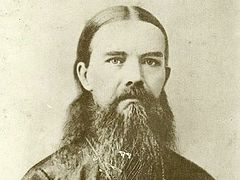
 Priest Georgy Gapon. Portrait by an unknown artist In the situation into which Russia had fallen in 1905, the war against the autocracy was waged by the hands of terrorists who called themselves revolutionaries. As in any war, well-thought-out strategies and tactical methods were needed. In this war, the press was used on a massive scale, which created on the pages of its newspapers and magazines a description of the battle of noble fighters against evil and the unmotivated violence of the cruel Russian government. Parallel to this, the intelligence services of hostile countries financially prepared armed provocations, when the state’s defense against banditry and armed terror was portrayed as an attack on peaceful people. According to this scheme, informational attacks were built, connected with the activities of terrorists over several years. This was the “big lie,” into which representatives of the journalistic and creative elite of many countries were drawn.
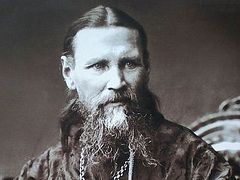
To avoid being unsubstantiated, I will cite just one example, using materials from historians. In descriptions of the “Gapon rebellion,” journalists sometimes exaggerated hundreds of times over the number of those killed on January nine by bullets from soldiers defending the Winter Palace; they described in detail the murder of many small children and students on the streets of Petersburg; they asserted that this was supposedly a procession led by four priests; they showed (for example, in The Daily Mirror) a photograph of Fr. John of Kronstadt as one of the killed priests. The myth of the procession, about which English, French, American, and liberal Russian newspapers wrote, was needed to create the lie about the exclusively peaceful nature of the workers’ procession and the troops’ unjustifiable reaction to this procession.
In the situation into which Russia had fallen in 1905, the war against the autocracy was waged by the hands of terrorists who called themselves revolutionaries.
By the evening of January nine, the beginning of the Russian revolution was loudly announced in the English press. The next day, the well-known English correspondent of The Daily Telegraph, Emile Dillon—married to a Russian woman, a friend of the Chairman of the Council of Ministers S. Yu. Witte—invented the name for the events of January nine: “Bloody Sunday.”
Reuters correspondent Guy Beringer in a telegram of January nine reported rumors of twenty-four thousand killed and wounded; in The Daily Mail and the Parisian Petit Journal, it was reported that the number of killed and wounded in Petersburg exceeded thirty thousand people; the Spanish Heraldo de Madrid wrote about thirty cars with corpses taken out of Petersburg; the British agency Laffan reported two thousand killed and five thousand wounded; the newspaper Standard—about two to three thousand killed and seven to eight thousand wounded.
Later (January 26), the same Reuters agency, citing allegedly the Russian Minister of Internal Affairs, reported the exact figure—four thousand six hundred victims. This same figure appeared in V. I. Lenin’s article “Revolutionary Days,” and the same figure entered the article in the Great Soviet Encyclopedia.
As if by order from above, hundreds of newspapers in Europe and America began to compete with each other in false naturalistic descriptions of the atrocities of the Tsar.
As if by order from above, hundreds of newspapers in Europe and America began to compete with each other in false naturalistic descriptions of the atrocities of the Tsar, who allegedly ordered the killing of priests, students, and small children during the workers’ procession (for example, in The Daily Express of January 24, it was said that “five bullets entered the body of a deceased five-year-old child”). In the lists of the dead published in the Russian official press—by name, with indication of age and profession—there was not a single child; however, in numerous articles by English, Austrian, and French correspondents, with naturalistic details, mass targeted killings of children from five to fourteen years old were described. In the domestic liberal journal Vestnik Evropy, was written:
“It is known how, after the volley, the headless body of a little boy was hanging on the fence of the academic square.”
 One of the handwritten lists of the Workers’ Petition of January nine, nineteen hundred five. It was also written that Nicholas II with his family, for several days after January nine, fearing assassination, “moved from palace to palace” until he settled on the royal yacht Standart to sail to Denmark. This move was regarded in the press as abdication from the throne. In many European newspapers, fables were published that a “provisional government” had been created in St. Petersburg, that allegedly one hundred thirty-five thousand workers signed the petition to the Tsar, that fierce battles took place between the Kolpino insurgents and government troops with the use of artillery, and hundreds of killed and wounded, that writer Maxim Gorky’s appeal for mass defection of officers to the side of the people was spreading in the army, that Gorky himself was sentenced to hanging, and other similar lies. Behind all these false facts, a pre-planned scenario can be seen.
Simultaneously, in many countries of the world, mass manifestations and even armed demonstrations were organized near Russian embassies and consulates with slogans against the atrocities of the Tsar and the Russian government. They were noted in London, Liverpool, Paris, Stockholm, Rome, the Vatican, Naples, Trieste, Brussels, Bilbao, Prague, Vienna, Graz, Lemberg, Przemysl, Munich, Berlin, Athens, Washington, New York, Chicago, as well as Portugal, Argentina, and Uruguay.
However, after some time, many newspapers changed their frenzied tone in describing events in Russia for several reasons—economic, political, and diplomatic. But the main reason was the fear that the mythical revolution in Russia, inflated by the press, began to influence strike activity in many countries, and this resulted in an increase in demonstrations against their own governments. For example, the German newspaper Kreuzzeitung wrote:
“The troops were inspired by cruel discipline and the spirit of absolute obedience to the law. This saved Russia.”
However, that mass of slander and lies that was on the pages of the press required not only constant feeding but also constant justification, since exposure of the lies appeared through various channels, including diplomatic ones. In addition, terrorist acts uncontrolled by the West began to show absolutely unsystematic bloodthirstiness and often had as their goal the politically-motivated robbery of money amounting to millions. And one more aspect: Many foreign subjects, including diplomats, fell victim to the terrorist whirlwind. As an example, let us recall the attempt in Baku on the British vice-consul L. Erkart (September 1906), the murder of the Italian vice-consul M. Dollorso (Berdyansk, summer 1907).
At this time, an artfully concocted “autobiography” of Georgy Gapon appeared in English and French, with the main task of confirming hundreds of false facts previously published in European newspapers. From this moment, Gapon’s supposed book, The Story of My Life, is cited as an exclusively reliable testimony by a participant in the events, by all who write about the revolution of 1905–1907. The Russian translation of this book was never authorized by the “author,” since by the time of its publication Gapon had already been brutally murdered. In fact, this “autobiography” was a forgery, disinformation, a fake, concocted by the English “Society of Friends of Russian Freedom” (J. Perris, D. V. Soskis, F. V. Volkhovsky). By the way, the Russian emigrant D. V. Soskis, as a correspondent for the English newspaper, The Tribune, lived in Russia from November 1905 to 1908, then from the summer of 1917 he was again in Russia and became the personal secretary of Alexander Kerensky, with whom he fled from the Winter Palace during the October coup.
This was a time of great turmoil, the struggle of all against all. Revolutionaries from the eighteen parties that existed at that time wished to participate in this turmoil, but political methods in the first decade of the twentieth century were choking—sometimes workers simply drove out or even beat party emissaries who tried to interfere in conflicts between workers and the administration of factories and plants. Some political parties changed their way of influencing society—they gradually became terrorist combat detachments engaged in murders and robberies.
Under the influence of agents of the “Union of Liberation” and the Socialist Revolutionaries, Gapon’s trade-union-religious activity degenerated into politics.
The evolution of the talented charismatic priest Georgy Gapon is a vivid example of this. At first, selfless pastoral activity in prisons, orphanages, and workers’ organizations made him one of the most popular priests of that time. By 1904, his fame among the residents of Petersburg was comparable to the popularity of the holy righteous Fr. John of Kronstadt. Participation in the organization of the “Assembly of Russian Factory Workers of St. Petersburg” was fully supported by the authorities. His views could be characterized as patriotic and monarchical, close to the ideology of the future “Union of the Russian People.” It was his fame in the working environment that began to attract political opponents of the autocracy to him. They found in him certain human weaknesses (in particular, unrestrained vanity), which they tried to use for their own purposes. Under the influence of agents of the “Union of Liberation” and the Socialist Revolutionaries, his, conditionally speaking, trade-union-religious activity degenerated into politics. The terrorists decided to use him as the leader of the workers’ procession to the Tsar, knowing that demonstrations during the war were categorically prohibited and that the military would prevent the workers from advancing to the Winter Palace. In addition, after the attempt on Nicholas II on January 6, troops were drawn to the capital. Clashes were inevitable.
 Pinhas Rutenberg, ca. 1940. It must be taken into account that the Socialist Revolutionary P. M. Rutenberg assigned to Priest G. Gapon and other representatives of opposition parties introduced almost at the last moment frankly unfulfillable political demands into the petition to the Tsar. The provocation, which resulted in many victims, succeeded: The protest procession of January 9, 1905, led to the death of 130 and the wounding of 300 demonstrators (lists of victims by name—with indication of age and profession—were published in Russian newspapers a few days after the event). Gapon, perhaps, did not realize that he had become the main provocateur and instigator of these bloody events, and placed all the blame on Emperor Nicholas II. According to Rutenberg’s testimony, amid the chaos, Priest Gapon exclaimed: “There is no more God, there is no more Tsar!” Gapon was not even embarrassed by the fact that Rutenberg “quite by chance” had scissors with him, with which during their flight from the scene he cut off the priest’s beard and hair, changing his appearance almost beyond recognition.
The further moral fall and degeneration of Georgy Gapon became catastrophic for his immortal soul and his physical existence.
9. The Orthodox Church on the Events of January Nine
Several days after January nine, the Holy Synod published a message regarding this event (Appendix II). In it, Priest Georgy Gapon is referred to without mentioning his name as an “unworthy priest who daringly trampled upon holy vows.” It also speaks of instigators and enemies of the Fatherland, “domestic and foreign,” as well as those who caused the disorders, thanks to bribes “from Russia’s enemies,” in order to “produce internecine strife among us.”
On the same day, a determination of the Holy Synod was issued on the restoration in the Great Litany of the petition to “destroy all the furious seditions of adversaries acting against us.”
According to Metropolitan Anthony (Vadkovsky), the organizers of the disorders deceived the workers, telling them that they were leading them to a meeting with the Tsar.
Metropolitan Anthony of St. Petersburg (Vadkovsky) at a pastoral meeting of the capital’s clergy on January 14 informed the clergy of his view of the events of January 9, 1905. According to the metropolitan, the organizers of the disorders deceived the workers, telling them that they were leading them to a meeting with the Tsar. For this purpose, a religious procession was imitated. The “priests” were actually “laymen dressed in priestly clothing, which was revealed when they were wounded.”
 Metropolitan of St. Petersburg and Ladoga Anthony (Vadkovsky) On Sunday, January 23, the Metropolitan of PetersburgAnthony (Vadkovsky) served a moleben in the church of St. Nicholas and Empress Alexandra at the Putilov Factory and delivered a sermon on the events of January nine. This event had a prehistory. On Monday, January 10, the workers of the Putilov Factory turned to Metropolitan Anthony and requested an audience with the hierarch. On January twelve in the evening, he received a deputation of five Putilov workers. They had a lengthy conversation, during which Metropolitan Anthony received an idea of what had been happening at the Putilov Factory in all the preceding days, and he promised to visit the factory personally. In his sermon on January twenty-three, Vladyka Anthony repeated the thought expressed in the Synod’s message that the Petersburg workers had become victims of the betrayal of the enemies of the Fatherland:
“We were lazy and careless, and the enemies were vigilant… Malice always watches, and a good heart rests in peace. But while men slept, his enemy came and sowed tares among the wheat, and went his way (Mt. 13:25). Before the suffering of the Savior, in the Garden of Gethsemane, despite the repeated calls of the Lord, His devoted disciples could not overcome their sleep. But Judas, the evil traitor, was vigilant and accepted the pieces of silver. So it happened in our days. The traitors were vigilant, and we remained in careless trust.”
Lantern on February 20, 1905, in St. Isaac’s Cathedral in Petersburg a sermon on the Last Judgment was delivered by Bishop Anthony of Volhynia and Zhitomir (Khrapovitsky), in which, among other things, the events of January 9 were discussed.
In it, Met. Anthony’s unique prophecies were voiced:
“Let us multiply our prayerful sighs about this, <…> so that the people might remember that, should they waver, they will be the most unfortunate of peoples, enslaved no longer to the former harsh landowners, but to the enemies of all that is holy and dear to them in the foundations of their thousand-year life—enemies persistent and cruel, who will begin by taking away from them the opportunity to study the Law of God in schools, and will end by destroying holy churches and casting out the relics of holy saints of God, collecting them in anatomical theaters.”
In the same sermon, Met. Anthony emphasized that the goal of the “liberation movement” was the collapse of Russia, which would cease to exist as a whole state,
“For, deprived of its only morally unifying force, it would fall apart into a multitude of parts, starting from the outskirts and almost to the center <…>. Such a disintegration is impatiently desired by our western enemies, who inspire the rebels, so that they could then throw themselves like vultures at the disunited borders of our Fatherland, upon its hostile tribes, and doom them to the position of enslaved India and other Western European colonies.”
Here is not a hint, but a direct indication of England’s participation in the rebellions in Russia. This was a warning that the main task of Europe was Russia’s weakening and loss of sovereignty through its dismemberment (Appendix III).
In October 1905, the famous English journalist and publisher William Stead visited the capital of Russia. His letter was published The Times, in which he spoke about the attitude in Petersburg to the disorders of January 1905:
“There is a very widespread conviction that the revolutionary movement is mainly financed by the English and controlled from London. When I laughed at these absurd accusations in Petersburg society, I was importantly told that I was mistaken, that England paid for the January rebels, and that the English financed the strike.”
In another of his articles, William Stead directly points to one of the organizers of the rebellion of January 9, who dreamed of the “capture of Petersburg”—George Perris, a member of the executive committee of the English “Society of Friends of Russian Freedom,” the author and publisher of the fake autobiography of Georgy Gapon.
The six-month stay of the former priest Gapon in Europe was the pinnacle of his fame.
The six-month stay of the former priest Gapon in Europe was the pinnacle of his fame. He was met as a hero in the French parliament, at a reception with an English princess, in the highest political circles. In April 1905 he was elected chairman at the Geneva conference of eleven revolutionary parties operating in the Russian Empire, whose task was to prepare for an armed uprising. The provocateur Gapon, advertised by the European press, was recognizable on the streets of Geneva, Paris, and London. At meetings, people kissed his hands. Photographs and posters with his image hung in shop windows. In the same year, Gapon began to carry out assignments for Japanese and English intelligence, becoming an intermediary in arming terrorist groups in Russia. In addition, he personally ordered the murder of two people who had become objectionable to him.
His life ended dramatically—Gapon was killed precisely by those who had supervised him at the beginning of his political activity, falsely accusing him of being an agent of the Guard. His death was beneficial to all opposing sides without exception.