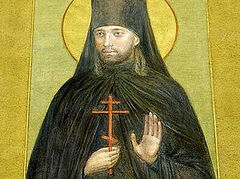
Hieromartyr Neophyte Lyubimov Part 1
Two years later, at Fr. Neophyte’s request, Metropolitan Vladimir (Bogoyavlensky; the future hieromartyr) of Moscow—Fr. Neophyte’s former classmate at the Kiev Theological Academy—transferred the priest to Moscow. In 1903, he was appointed rector of the Church in honor of the Renewal of the Church of the Resurrection of Christ and overseer of the Vagankovo Cemetery. It was Fr. Neophyte who developed and implemented the cemetery improvement regulations that later became mandatory for all burial grounds in Moscow. Once again, it was a period of non-stop construction. The saint was an excellent organizer.
In 1905, Fr. Neophyte was elevated to the rank of archpriest. In 1909, he was awarded the Order of St. Anna, 3rd Class; in 1913—the Order of St. Anna, 2nd Class; and in 1916—the Order of St. Vladimir, 4th Class.
From a letter written by the parish clergy to Metropolitan Vladimir, we learn how Fr. Neophyte served in the position where the Lord had placed him.
Every day by six in the morning he was already on the cemetery grounds, overseeing the work of his subordinates. He would then celebrate the Divine Liturgy, after which he made it a strict rule to inspect the graves in his assigned section. The other priests of the church did the same. He immediately fulfilled all requests from people visiting the graves of their relatives, and demanded the same from others. Any requests that could not be fulfilled were politely but firmly declined, leaving no room for discontent to grow.
However, the good shepherd did not care for the spiritual aspect of his ministry alone. He also raised the material well-being of the institution entrusted to him to a previously unimaginable level. He achieved this by establishing granite and marble workshops for manufacturing monuments, “the cemetery’s own floriculture, a locksmith and blacksmith workshop, and workshops for making various wooden and zinc crosses.” All this began to yield “an income that could not even have been dreamed of a few years prior.” Part of the money went to the Society for the Relief of the Poor Clergy—to support the families of priests who, for various reasons, languished in poverty or suffered from severe illnesses, as well as to support the widows and orphans of reposed priests.
In Moscow, Fr. Neophyte actively engaged in missionary work
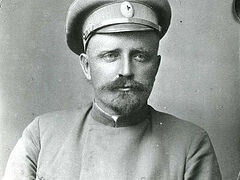
Here in Moscow, Fr. Neophyte actively engaged in missionary work. He gave frequent lectures, participating in educational readings for factory workers at the Moscow Diocesan House. He established a missionary publishing house that produced anti-sectarian scholarly works. It was through this missionary activity that he met Nikolai Varzhansky, a talented young missionary who would later become his son-in-law.
Fr. Neophyte once said: “Knowledge itself is a great power, and it therefore empowers those who possess it and know how to use it properly. Yet, however important and useful knowledge may be for you, it will remain incomplete, feeble, lifeless, and cheerless—and at times even harmful and destructive—if it is not anchored in and supplemented by the Word of God, quickened by the Spirit of Wisdom and Understanding, illuminated by the light of Christ’s faith, and guided by true Christian love.”
And now, with redoubled strength, he brought the priceless treasures of knowledge to life through the Spirit of God’s Wisdom, passing them on to ordinary workers in his lectures, through the work of the missionary publishing house, and by publishing collections of his sermons.
In 1909, Fr. Neophyte undertook another construction project—this time, a parish house with apartments for the staff of the Church of the Renewal of the Church of Resurrection, the prosphora bakers, the church reader, and the church caretaker.
In 1911, Fr. Neophyte became a member of the Moscow Diocesan Missionary Council and a deputy to the Diocesan Clergy Congress. In 1914, he was appointed rector of St. Spyridon’s Church beyond the Nicetas Gate,1 and in 1916—deputy to the Clergy Congress of the Moscow Diocese.
He clearly saw the abyss of social stratification in the early twentieth-century Russian Empire and understood that it could be used as a catalyst for an explosion
In 1909—long before the upheavals of 1917—Fr. Neophyte sensed the harbingers of catastrophe. A highly educated, experienced pastor and wise man, he clearly saw the abyss of social stratification in the early twentieth-century Russian Empire and understood that it could be used as a catalyst for an explosion. He pondered the possibility of achieving social equality, but his reasoning always led to a dead end:
“But where are we to find the capital necessary for distribution among all people, and especially the destitute? From the rich? No one will voluntarily agree to give away their wealth, earned by the sweat of their brow. If we take it from the rich by force, it will lead to untold disasters… The cause of human misfortune lies not in capital, but in man himself. Therefore, the entire teaching in this regard of our liberators—or, as they are commonly called, socialists, i.e. those who wish to organize communal life on the principle of equality of rights and property—is moving down a false path. This path leads not to the organization of social life, nor to its creation on the principles of reason and humanity, but to its destruction through violence, plunder, and the seizure of power. After all, these individuals do not believe in God, and therefore recognize neither Divine nor human laws. Their commandment is: ‘Strike down and destroy these cursed villains,’ even if they happen to be one’s father, mother, rulers, or military commanders.”
These reflections turned out to be prophetic in many ways…
In 1916, Fr. Neophyte came to the horrifying realization that the masses had grown absolutely indifferent to church services. With great sorrow, he noted that more and more people were not attending church at all, while many others would leave before the service was over:
“We are referring to a constant phenomenon that manifests itself every feast day and every Sunday. These violators of church order are predominantly the very same individuals for whom this disorder has become a custom, a bad habit. Both the educated and the uneducated flee from the church, dragging along children, teenagers, boys and girls. And for what reason do these people leave church services? It is a shame to say: to drink tea, to eat their fill, to steep themselves in tobacco stench, and to engage in empty deeds, idle chatter, and gossip.”
How can we not recall Alexander Blok’s 1914 poem, “Sin Shamelessly, Relentlessly…?” It describes a typical morally dissolute philistine who, almost by chance, steps away from his daily routine and slips “stealthily” into a church of God. Once inside, he is ashamed to make the sign of the cross or bow. The poem includes the words: “and secretly touch the spat-upon floor with a burning forehead.” The Revolution was still three years away, but Blok had already captured the unimaginable: Someone found it acceptable to spit on the floor inside a church…
Flight from the Church begins when the priest comes out to the ambo to deliver a sermon, and you leave
Fr. Neophyte lamented even more about people’s behavior during sermons:
“But flight from the church begins especially when your spiritual father comes out to the ambo to deliver a sermon and offer edification from the Word of God. Instead of standing closer to the ambo to better hear the teachings of their spiritual guide, many at this very moment rush toward any unlocked church door to get out. Meanwhile, others start talking during the sermon, making noise, coughing, loudly reciting prayers, groaning, sighing, stretching, or kissing icons—in a word, they begin to cause a disruption that is completely unacceptable in sacred church gatherings. What greater insult could there be for a preacher than when those who ought to be listening not only refuse to do so, but even prevent him from speaking?”
Does this remind you of anything?
And then Fr. Neophyte, like an experienced spiritual physician, delivered a grim diagnosis:
“Those who flee the church of God and refuse to listen to the sermon are proud, falsely learned, and half-educated people who consider themselves higher and better than the preacher in their understanding of life and the Word of God.”
We very often read similar conclusions in the Lives of the New Martyrs of Russia. Our early twentieth-century clergy—highly educated, wise, and loving their flock—could not help but see the sheer horror of the nation’s spiritual degradation. And virtually all of them understood that God’s longsuffering has a limit. Very often in these analytical essays by pastors—which read more like a cry from the heart—Sodom and Gomorrah are mentioned as a historical example of the unacceptability of unrepentant sin and lack of a living faith in God. All of them, priests of the Russian Orthodox Church, foresaw the impending catastrophe, just as any experienced helmsman senses an inevitable storm and predicts it by the slightest signs in nature. All of them proved to be absolutely right.
The year 1917 came. One after another, two revolutions broke out, destroying the Russian Empire like a fatal shot to a poor victim followed by a coup de grace to its maddened head.
Fr. Neophyte wrote:
“In Holy Russia, in the city of Moscow, in this pillar of Orthodoxy, godless men have appeared—new teachers and preachers who everywhere and without a shred of conscience shout and teach: ‘There is no God in the world! You can live without God...’ They do not consider any lawless deed a sin; for them, everything is permitted.”
Oh, dear Fyodor Mikhailovich Dostoevsky, how right you were back in your nineteenth century! “If there is no God, everything is permitted,” Ivan Karamazov deduced, and lost his mind.
And Fr. Neophyte was practically weeping during his sermons, speaking of the new regime:
“To kill, to plunder, to seek revenge, to burn the homes of peaceful citizens is more pleasing to them than to save, to show mercy, to do good, and to forgive. To instill fear and terror is far more pleasing to them than to cultivate peace, tranquility, and joy everywhere. How distorted the concepts of Christian morality become through this! Where are you, Christian love? Where is the freedom of the Russian Orthodox people?”
On May 31, 1918, Archpriest Neophyte’s son-in-law, Nikolai Varzhansky, the husband of his youngest daughter Zinaida, was arrested. It was then that the letter written by Fr. Neophyte to Lenin came to be.
The saint’s Life provides a detailed analysis of how Fr. Neophyte came to make such a decision. During his service in the Simbirsk diocese, prior to his ordination, he was well acquainted with Lenin’s father, Ilya Nikolaevich Ulyanov. At the time, he served as the principal of public schools for the Simbirsk governorate. Fr. Neophyte interacted with him both professionally and personally, as evidenced by the letter written by Fr. Neophyte and the transcript of his interrogation following his arrest. Fr. Neophyte taught Ilya Nikolaevich’s daughters, Lenin’s sisters. Archimandrite Damascene (Orlovsky), the compiler of the hagiography, notes that the Ulyanov family was deeply religious, Orthodox, regularly attended church, participated in the church sacraments, and had their own spiritual father. Yet, unfortunately, all the children of this large family rejected the path of salvation. Fr. Damascene does not blame the parents for this, but rather describes it as their great sorrow. Every human being is endowed with free will, and regrettably, parents’ religiosity does not always determine their children’s future.
Vladimir Ulyanov [Lenin] was a cruel, introverted, and distrustful child
The character of the future leader of the world proletariat is described separately: “Vladimir Ulyanov [Lenin] was a cruel, introverted, and distrustful child; in high school, he behaved arrogantly and mockingly toward those around him. He would drive his younger brother to tears and break his toys rather than play with them. His parents saw his flaws and tried their best to correct them, but their efforts ended in a crushing defeat.”
One could not have put it better: “a crushing defeat”…
In 1918, Lenin held the position of Chairman of the Council of People’s Commissars (Sovnarkom)—the body that served as the permanent government of the RSFSR, effectively the ruling state structure in the country.
And so, Archpriest Neophyte decided to write a letter to Lenin, pleading for the release of his son-in-law from confinement:
“In these sorrowful days of my personal life, I take the liberty of addressing you with a most humble request. As to my own person, I feel it my duty to report the following. I served in Simbirsk together with your father. He was the principal of public schools, and I was a teacher at the Mariinsky Girls’ School, the Cadet Corps, and the Theological Seminary. Your father was well known and familiar to me; I met him quite frequently in private homes and at gatherings where educational matters were discussed. He passed away in my presence; I prayed for him then, and I still pray for him now... I dare to address you in these days of my present difficulties... with a humble request: my son (son-in-law), Nikolai Varzhansky, was arrested by accident; he entered the apartment of Archpriest Vostorgov while a search was being conducted, was detained along with the others, and was sent first to preliminary investigative detention before being transferred to the Butyrka Prison. It was reported in the newspapers, and I have heard from trustworthy sources, that no guilt has been found in Varzhansky that would warrant his imprisonment.
“Your dear father’s family also faced hardships; they affected you as well, and you were deeply cherished by your parents. It is equally painful for me to endure the misfortunes of my daughter and my son (son-in-law). I humbly request that you kindly release my son-in-law from all persecution and imprisonment, or, laternatively, release him into my custody on bail. He is a well-intentioned man who recognizes and submits to the Soviet government; he has never engaged in any counter–revolutionary activities anywhere. He is simply a preacher of the Word of God—a missionary, and nothing more.
“I implore you... for the sake of your father’s memory and in light of my own services to your sister Maria Ilyinichna regarding her education and upbringing, to help me in my grief: release Varzhansky from prison and return him to his family. Under my personal guarantee, he will not flee anywhere, nor will he commit any illegal or anti-revolutionary acts...”
 Hieromartyr Neophyte Lyubimov with his family. At the top left stands his son-in-law, the New Martyr Nikolai Varzhansky
What was Fr. Neophyte counting on when he wrote his letter? Was he relying on Lenin’s fond memories of his parents, or perhaps of his father? Apparently, he was judging the situation by normal human standards, assuming the kind of relationship he believed should exist between any father and any son. I will not speculate here on the warmth of the parent-child relations in the Ulyanov family. Only one fact remains: Fr. Neophyte never received a reply to his letter. Nikolai Varzhansky was executed by firing squad.
Fr. Neophyte himself was arrested on July 21, 1918.
On the night of July 17, 1918, the Imperial Family was executed. On July 20, Patriarch Tikhon blessed the clergy to celebrate memorial services for the repose of those innocently slain. On July 21, Archpriest Neophyte celebrated such a service, and that very evening, he was arrested and interrogated. The pastor was seventy-two.
Is it truly Christian freedom when no one is allowed to freely do good
Surprisingly, the investigator found no signs of a “crime” in the testimony Fr. Neophyte gave during his interrogation. Instead, the charges against the priest stemmed from the content of his sermons. A fragment of one such sermon served as proof of the venerable archpriest’s “counter-revolutionary sentiments”:
“Is it truly Christian freedom when no one is allowed to freely do good, when people are constrained and persecuted for every noble aspiration, and when there is a desire to wipe from the face of the earth all guardians of faith, honor, and truth? Is it truly love when they love only murderers and robbers like themselves—standing up for them, applauding them as heroes, and granting them the freedom to commit crimes, while hating and persecuting the preachers of Christian, Gospel freedom and love according to the teachings of the Orthodox Church?”
In the indictment, the investigator noted, “Lyubimov is an avowed monarchist and an opponent of Soviet power,” and concluded with: “Shoot immediately.”
On October 30, 1918, at a meeting of the Presidium of the Collegium of the Department for Combating Counter-Revolution, the decision was made: Fr. Neophyte Lyubimov was sentenced to death by firing squad.
The new regime’s satanic hatred for the pastors of Christ’s Church was so intense that the executioners, rushing to carry out the death sentence, forgot to record the date of the execution. They were in such a hurry to end the life of the seventy-two-year-old elder that they failed to document the day of their bloody reprisal against him. It was not until 1927, during an archival cleanup, that the OGPU2 issued a resolution to officially establish October 30, 1918, as the date of Archpriest Neophyte Lyubimov’s death. Whether by coincidence or not, the exact date of death of Nikolai Varzhansky, Fr. Neophyte’s son-in-law, whom he had stood up for as if he were his own son—also remains unknown…
Archpriest Neophyte was shot in prison and buried in Moscow’s Kalitnikovskoye Cemetery, where his son-in-law Nikolai Varzhansky rests as well.
Two accidental deaths, you might say: One victim was randomly arrested in Archpriest John Vostorgov’s apartment, while the other had merely celebrated a memorial service for the Tsar. Yet, nothing is accidental with God. Both of them—Nikolai Varzhansky and Archpriest Neophyte Lyubimov—opposed sectarianism in its various forms, a doctrine beloved by satan. They both rescued human souls from hell, and both educated, enlightened, and called God’s people to Christ; for this, they were hated by hell and its prince. By worldly standards, hell triumphed: both were destroyed in this life, leaving their wives widowed, and in Nikolai Varzhansky’s case, his children orphaned. But God is not mocked (Gal. 6:7). Physical death brought them both to great glory in the mansions of the Heavenly King. Today, they both stand before the Throne of God, praying for us, our children, and our dear Fatherland, which is also theirs.
O death, where is thy sting? O grave, where is thy victory? (1 Cor. 15:55).
The Hieromartyr Neophyte Lyubimov and the New Martyr Nikolai Varzhansky were canonized in August 2000 by the decision of the Jubilee Bishops’ Council of the Russian Orthodox Church.